<?xml version="1.0" encoding="UTF-8" ?>

<rdf:RDF
 xmlns="http://purl.org/rss/1.0/"
 xmlns:rdf="http://www.w3.org/1999/02/22-rdf-syntax-ns#"
 xmlns:dc="http://purl.org/dc/elements/1.1/"
 xmlns:content="http://purl.org/rss/1.0/modules/content/"
 xml:lang="ja"
>

<channel rdf:about="https://fusion-guide.org/Eng/spots/topics/feed/rss10/">
<title>Spots Topics</title>
<link>https://fusion-guide.org/Eng/spots/topics/</link>
<description>Spots Topics</description>
<dc:language>ja</dc:language>
<dc:date>2026-04-08T15:23:29+09:00</dc:date>
<items>
<rdf:Seq>
<rdf:li rdf:resource="https://fusion-guide.org/Eng/spots/topics/2018/3161/" />
<rdf:li rdf:resource="https://fusion-guide.org/Eng/spots/topics/2017/3155/" />
<rdf:li rdf:resource="https://fusion-guide.org/Eng/spots/topics/2017/3157/" />
<rdf:li rdf:resource="https://fusion-guide.org/Eng/spots/topics/2017/3156/" />
<rdf:li rdf:resource="https://fusion-guide.org/Eng/spots/topics/2016/3082/" />
<rdf:li rdf:resource="https://fusion-guide.org/Eng/spots/topics/2016/3114/" />
<rdf:li rdf:resource="https://fusion-guide.org/Eng/spots/topics/2016/3115/" />
<rdf:li rdf:resource="https://fusion-guide.org/Eng/spots/topics/2016/3116/" />
<rdf:li rdf:resource="https://fusion-guide.org/Eng/spots/topics/2016/3117/" />
<rdf:li rdf:resource="https://fusion-guide.org/Eng/spots/topics/2016/3118/" />
<rdf:li rdf:resource="https://fusion-guide.org/Eng/spots/topics/2016/3083/" />
<rdf:li rdf:resource="https://fusion-guide.org/Eng/spots/topics/2016/3119/" />
<rdf:li rdf:resource="https://fusion-guide.org/Eng/spots/topics/2016/3120/" />
<rdf:li rdf:resource="https://fusion-guide.org/Eng/spots/topics/2016/3121/" />
<rdf:li rdf:resource="https://fusion-guide.org/Eng/spots/topics/2016/3123/" />
<rdf:li rdf:resource="https://fusion-guide.org/Eng/spots/topics/2016/3122/" />
<rdf:li rdf:resource="https://fusion-guide.org/Eng/spots/topics/2016/3124/" />
<rdf:li rdf:resource="https://fusion-guide.org/Eng/spots/topics/2016/3125/" />
<rdf:li rdf:resource="https://fusion-guide.org/Eng/spots/topics/2016/3126/" />
<rdf:li rdf:resource="https://fusion-guide.org/Eng/spots/topics/2016/3127/" />
<rdf:li rdf:resource="https://fusion-guide.org/Eng/spots/topics/2016/3128/" />
<rdf:li rdf:resource="https://fusion-guide.org/Eng/spots/topics/2016/3129/" />
<rdf:li rdf:resource="https://fusion-guide.org/Eng/spots/topics/2016/3130/" />
</rdf:Seq>
</items>
</channel>

<item rdf:about="https://fusion-guide.org/Eng/spots/topics/2018/3161/">
<title>Mt. Fuji World Heritage Center</title>
<link>https://fusion-guide.org/Eng/spots/topics/2018/3161/</link>
<description>
Mt. Fuji World Heritage Center, located in Fujinomiya City, is a new facility with much information on Mt. Fuji.&#160; It takes about 8 minutes on foot from Fujinomiya Station (JR Minobu Line).&#160; Nearby paid car parking is available for those who drive to the facility.&#160; &#160;
This brand new building was completed in 2017 and attracts many people from home and abroad. It is a must-see place for visitors to the area.
The facility is the symbol of&#160; Mt. Fuji, which was designated as a UNESCO World Cultural Heritage Sites in 2013.&#160; &#160;The building has many inspirational exhibits showing the religious and artistic aspects of the mountain and shows other images such as climbing Mt.Fuji and the surrounding nature.
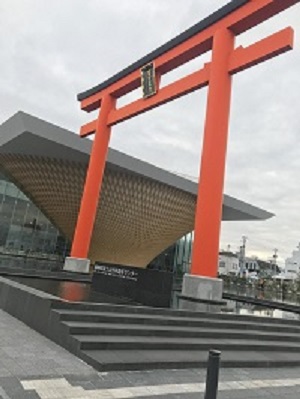
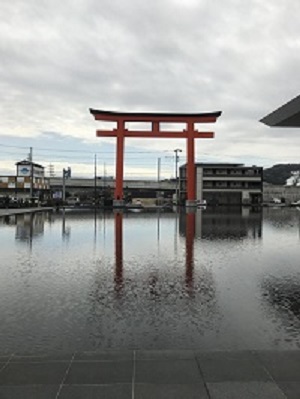
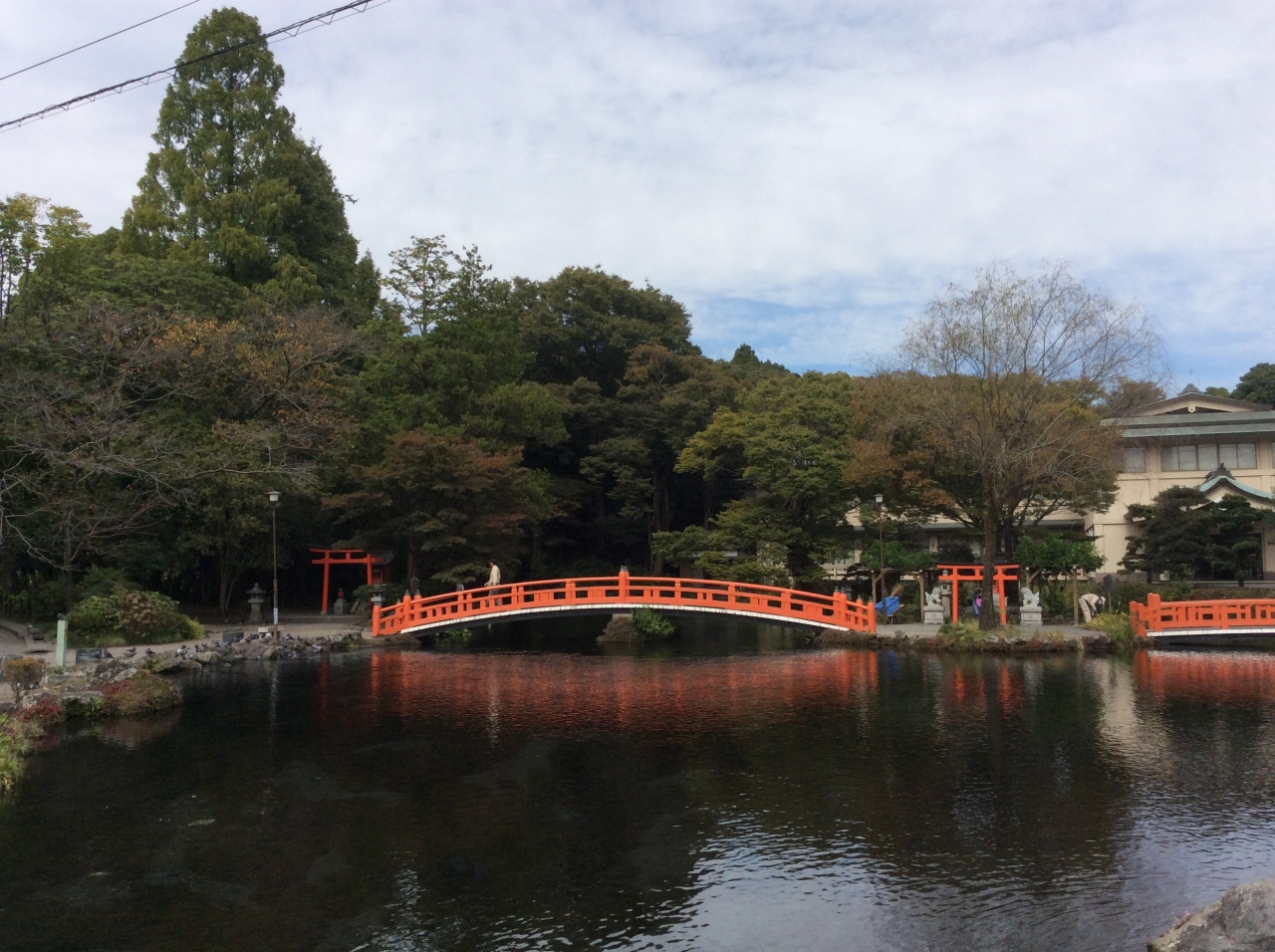
The facilities consist of a large&#160; beautiful vermilion colored &#8220;torii&#8221;, a unique shaped central building, and a large water pool connected to the main building.&#160;

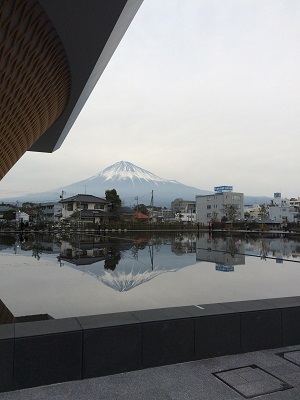
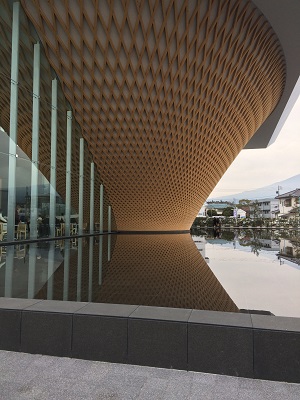
At the entrance, visitors can see a unique scene.&#160; The facility is skillfully designed, so that if weather permits, visitors can enjoy four beautiful images of Mt. Fuji: the real view of Mt. Fuji in the distance, the actual inverted Mt. Fuji reflecting on the water basin, the man-made building in the shape of an inverted Mt. Fuji, and the reflection of the&#160; building in the shape of Mt. Fuji in the water basin.&#160; If you have a chance to see them successively, it will be one of the best parts of your visit.&#160;&#160;

The main building was designed by the famous architect Shigeru Ban, who is also famous for his &#8220;paper partition&#8221; work which was employed in temporary shelters to protect the privacy of individuals after the Northeast Great Earthquake occurred in 2011.&#160; Many designers competed to design this building, however, no one had a more unique design than Ban&#8217;s inverted shape of Mt. Fuji.


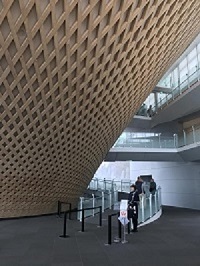
Inside the building, visitors can see the very uniquely shaped central exhibit.&#160; The materials used for it include Japanese cypress called &#8220;Fuji Hinoki&#8221;, which have long been grown in this area.&#160; The building used about 8,000 pieces of cypress wood.&#160; Wood pieces were put together without nails and completed in a shape of large wooden lattice, we called, &#8220;kigoushi&#8221; or &#8220;mokugoushi&#8221;.&#160; The work is very elaborate and impressive.&#160; Japanese cypress is said to be flexible in this climate, because it absorbs humidity and expands in summer, and shrinks in dry cold weather.&#160; &#160; 		


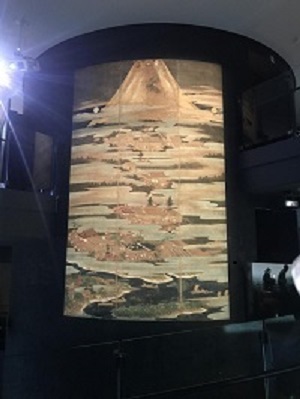
The central exhibition building has four main floors connected by a helical slope with a total distance of 193 meters. It gives the image of climbing the real Mt. Fuji, because top of the building is designed as an observation platform where an unobstructed view of the actual Mt. Fuji can be seen on fine day.&#160; Visitors can enjoy walking up and down along the slope, while seeing many pictures and images.&#160;&#160;
Each floor has a different theme so people can learn about Mt. Fuji: 1. Ascending Fuji, 2. The Fierce Mountain, 3. The Sacred&#160;Mountain, 4. The Beautiful Mountain, 5. The Nurturing Mountain, 6. The Inherited Mountain.&#160;


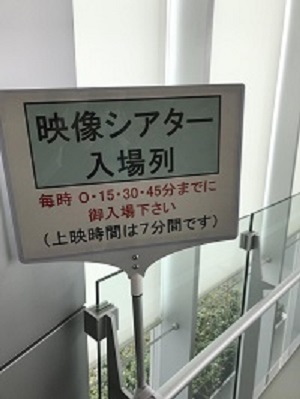
According to the guide, the most popular attraction is the video theater on the second floor.&#160; On the hour and half hour the seven minute video &#8220;Ten No Maki&#8221; (Sky Version) runs. At 15 minutes after and 15 minutes before the hour, the eight minute film &#8220;Chi No Maki&#8221; (Ground version) runs.&#160; These films&#160; present the beautiful, spectacular nature and culture of Mt. Fuji. It took two years to complete these videos, and they are well worth viewing.
Other facilities such as a library, a cafe, a souvenir shop, and a training room are on the first floor.&#160; The library holds many books related to Mt. Fuji.&#160; Most are written mainly in Japanese, but&#160; there are some books in English.&#160; The book shelves&#160; in the library are made of Japanese white birch. People are not permitted to borrow the books and take them outside the library, however, everyone can stay to enjoy them in the library.&#160; The cafe and&#160; souvenir shop have a good atmosphere and various goods unique to Mt. Fuji.&#160; Wi-Fi service is available and if you have a mobile phone with an earphone, you can use the guidance system in Japanese, English, Korean, Chinese, Simplified Chinese.&#160; &#160;
For more information: https://mtfuji-whc.jp&#160; &#160;


</description>
<dc:creator></dc:creator>
<dc:subject></dc:subject>
<dc:date>2018-04-04T22:00:00+09:00</dc:date>
<content:encoded><![CDATA[
<div id="cms-editor-minieditor-sin152284731961214200" class="cms-content-parts-sin152284731961216100">
<p>Mt. Fuji World Heritage Center, located in Fujinomiya City, is a new facility with much information on Mt. Fuji.&#160; It takes about 8 minutes on foot from Fujinomiya Station (JR Minobu Line).&#160; Nearby paid car parking is available for those who drive to the facility.&#160; &#160;</p>
<p>This brand new building was completed in 2017 and attracts many people from home and abroad. It is a must-see place for visitors to the area.</p>
<p>The facility is the symbol of&#160; Mt. Fuji, which was designated as a UNESCO World Cultural Heritage Sites in 2013.&#160; &#160;The building has many inspirational exhibits showing the religious and artistic aspects of the mountain and shows other images such as climbing Mt.Fuji and the surrounding nature.</p>
<p>The facilities consist of a large&#160; beautiful vermilion colored &#8220;torii&#8221;, a unique shaped central building, and a large water pool connected to the main building.&#160;</p>
<p><img src="https://fusion-guide.org/images/Eng/spot/topics/3161/pic1.jpg" width="300" height="399" alt="" /><img src="https://fusion-guide.org/images/Eng/spot/topics/3161/pic2.jpg" width="300" height="399" alt="" /></p>
<p>At the entrance, visitors can see a unique scene.&#160; The facility is skillfully designed, so that if weather permits, visitors can enjoy four beautiful images of Mt. Fuji: the real view of Mt. Fuji in the distance, the actual inverted Mt. Fuji reflecting on the water basin, the man-made building in the shape of an inverted Mt. Fuji, and the reflection of the&#160; building in the shape of Mt. Fuji in the water basin.&#160; If you have a chance to see them successively, it will be one of the best parts of your visit.&#160;&#160;</p>
<p><img src="https://fusion-guide.org/images/Eng/spot/topics/3161/pic2-1.JPG" width="300" height="400" alt="" /><img src="https://fusion-guide.org/images/Eng/spot/topics/3161/pic 2-2.JPG" width="300" height="400" alt="" /></p>
<p>The main building was designed by the famous architect Shigeru Ban, who is also famous for his &#8220;paper partition&#8221; work which was employed in temporary shelters to protect the privacy of individuals after the Northeast Great Earthquake occurred in 2011.&#160; Many designers competed to design this building, however, no one had a more unique design than Ban&#8217;s inverted shape of Mt. Fuji.</p>
</div>
<div class="cms-content-parts-sin152289856354146600">
<div class="box clearfix">
<div id="cms-editor-minieditor-sin152289856354150000" class="parts_img_type04_box left cms-easy-edit">
<p>Inside the building, visitors can see the very uniquely shaped central exhibit.&#160; The materials used for it include Japanese cypress called &#8220;Fuji Hinoki&#8221;, which have long been grown in this area.&#160; The building used about 8,000 pieces of cypress wood.&#160; Wood pieces were put together without nails and completed in a shape of large wooden lattice, we called, &#8220;kigoushi&#8221; or &#8220;mokugoushi&#8221;.&#160; The work is very elaborate and impressive.&#160; Japanese cypress is said to be flexible in this climate, because it absorbs humidity and expands in summer, and shrinks in dry cold weather.&#160; &#160; <span style="white-space: pre;">		</span></p>
</div>
<div class="parts_img_type04_box right"><img width="330" id="cms-editor-image-sin152289856354151300" class="cms-easy-edit" alt="" src="https://fusion-guide.org/images/Eng/spot/topics/3161/pic3.jpg" /></div>
</div>
</div>
<div class="cms-content-parts-sin152289817273442500">
<div class="box clearfix"><img width="215" src="https://fusion-guide.org/images/Eng/spot/topics/3161/pic4.jpg" alt="" class="parts_img_type01_img cms-easy-edit" id="cms-editor-image-sin152289817273446600" />
<div class="cms-easy-edit" id="cms-editor-minieditor-sin152289817273448700">
<p>The central exhibition building has four main floors connected by a helical slope with a total distance of 193 meters. It gives the image of climbing the real Mt. Fuji, because top of the building is designed as an observation platform where an unobstructed view of the actual Mt. Fuji can be seen on fine day.&#160; Visitors can enjoy walking up and down along the slope, while seeing many pictures and images.&#160;&#160;</p>
<p>Each floor has a different theme so people can learn about Mt. Fuji: 1. Ascending Fuji, 2. The Fierce Mountain, 3. The Sacred&#160;Mountain, 4. The Beautiful Mountain, 5. The Nurturing Mountain, 6. The Inherited Mountain.&#160;</p>
</div>
</div>
</div>
<div class="cms-content-parts-sin152289920286388900">
<div class="box clearfix"><img width="215" src="https://fusion-guide.org/images/Eng/spot/topics/3161/pic5.jpg" alt="" class="parts_img_type01_img cms-easy-edit" id="cms-editor-image-sin152289920286392100" />
<div class="cms-easy-edit" id="cms-editor-minieditor-sin152289920286394400">
<p>According to the guide, the most popular attraction is the video theater on the second floor.&#160; On the hour and half hour the seven minute video &#8220;Ten No Maki&#8221; (Sky Version) runs. At 15 minutes after and 15 minutes before the hour, the eight minute film &#8220;Chi No Maki&#8221; (Ground version) runs.&#160; These films&#160; present the beautiful, spectacular nature and culture of Mt. Fuji. It took two years to complete these videos, and they are well worth viewing.</p>
<p>Other facilities such as a library, a cafe, a souvenir shop, and a training room are on the first floor.&#160; The library holds many books related to Mt. Fuji.&#160; Most are written mainly in Japanese, but&#160; there are some books in English.&#160; The book shelves&#160; in the library are made of Japanese white birch. People are not permitted to borrow the books and take them outside the library, however, everyone can stay to enjoy them in the library.&#160; The cafe and&#160; souvenir shop have a good atmosphere and various goods unique to Mt. Fuji.&#160; Wi-Fi service is available and if you have a mobile phone with an earphone, you can use the guidance system in Japanese, English, Korean, Chinese, Simplified Chinese.&#160; &#160;</p>
<p>For more information: https://mtfuji-whc.jp&#160; &#160;</p>
</div>
</div>
</div>
]]></content:encoded>
</item>

<item rdf:about="https://fusion-guide.org/Eng/spots/topics/2017/3155/">
<title>Seikenji Temple</title>
<link>https://fusion-guide.org/Eng/spots/topics/2017/3155/</link>
<description>
Seiken Ji is a Zen Temple located in a brisk 15-minute walk from Okitsu Station on Tokaido Line.&#160;

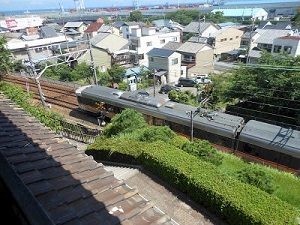
There is a signboard which carries some English explanation about the temple at the bottom of the stairs leading to the temple outer gate. Amusingly, after entering this gate, visitors have to cross the bridge over Tokaido Railway to reach the temple inner gate and buildings.

The origin of Seikenji was said to be a small Buddhism hall built in the 7th century for guarding Kiyomiga Seki, a strategic checkpoint to protect the ancient capital of Kyoto from the barbarians in the north.&#160;
Later in 1262, Kansei Shonin, a renowned monk from Tofukuji Temple in Kyoto came to the hall and established Seikenji Temple sponsored by a local wealthy person.&#160;
In Muromachi period in 14th to 16th century, both Takauji Ashikaga, the first Shogun of Muromachi Shogunate, and the local feudal lord family, Imagawa Clan adored this temple.&#160;
However, the temple was involved in many wars fought between the local feudal lords such as Imagawa, Takeda, Tokugawa, and Hojo Clans as it was located at a strategically important point. The temple was destroyed and rebuilt many times. Especially during the civil war period in the late 16th century, the temple was devastated. Ieyasu Tokugawa, the first Shogun of Tokugawa Shogunate, who brought peace to Japan in early 17th century finishing the civil war, studied in this temple in his childhood. He was shocked to see the wreckage of his beloved temple on his way to Kyoto and restored it. He came to the temple many times after the restoration. Though the main building remaining today was reproduction in early 19th century, Ieyasu&#8217;s study room has been replicated and shown to the visitors.&#160;

Of course, the temple was taken good care of by the following Tokugawa Shoguns. So, visitors can find Tokugawa&#8217;s family crest-three hollyhock leaves inside a circle-in many places in the temple.&#160;
Meiji Emperor visited this temple and Taisho Emperor often stayed here when he was a child. The room where Meiji Emperor stayed is shown to the visitors.&#160;

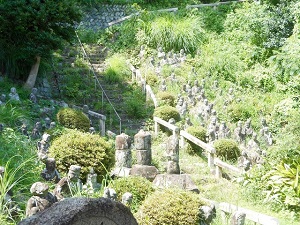
The temple is also famous for its Gohyaku-rakan or 500 stone Buddhism statues in its yard. It is said that there is the one that looks like very person.&#160;

</description>
<dc:creator></dc:creator>
<dc:subject></dc:subject>
<dc:date>2017-09-30T14:10:00+09:00</dc:date>
<content:encoded><![CDATA[
<div id="cms-editor-minieditor-sin151573402928924400" class="cms-content-parts-sin151573402928926500">
<p>Seiken Ji is a Zen Temple located in a brisk 15-minute walk from Okitsu Station on Tokaido Line.&#160;</p>
<p><img src="https://fusion-guide.org/images/Eng/spot/topics/3155/Seikenji 2.jpg" alt="Seikenji Temple English Explanation" width="300" height="150" /></p>
<p>There is a signboard which carries some English explanation about the temple at the bottom of the stairs leading to the temple outer gate. Amusingly, after entering this gate, visitors have to cross the bridge over Tokaido Railway to reach the temple inner gate and buildings.</p>
<p><img src="https://fusion-guide.org/images/Eng/spot/topics/3155/Seikenji 3.jpg" alt="Bridge over Tokaido Railway" width="300" height="225" /></p>
<p>The origin of Seikenji was said to be a small Buddhism hall built in the 7th century for guarding Kiyomiga Seki, a strategic checkpoint to protect the ancient capital of Kyoto from the barbarians in the north.&#160;</p>
<p>Later in 1262, Kansei Shonin, a renowned monk from Tofukuji Temple in Kyoto came to the hall and established Seikenji Temple sponsored by a local wealthy person.&#160;</p>
<p>In Muromachi period in 14th to 16th century, both Takauji Ashikaga, the first Shogun of Muromachi Shogunate, and the local feudal lord family, Imagawa Clan adored this temple.&#160;</p>
<p>However, the temple was involved in many wars fought between the local feudal lords such as Imagawa, Takeda, Tokugawa, and Hojo Clans as it was located at a strategically important point. The temple was destroyed and rebuilt many times. Especially during the civil war period in the late 16th century, the temple was devastated. Ieyasu Tokugawa, the first Shogun of Tokugawa Shogunate, who brought peace to Japan in early 17th century finishing the civil war, studied in this temple in his childhood. He was shocked to see the wreckage of his beloved temple on his way to Kyoto and restored it. He came to the temple many times after the restoration. Though the main building remaining today was reproduction in early 19th century, Ieyasu&#8217;s study room has been replicated and shown to the visitors.&#160;</p>
<p><img src="https://fusion-guide.org/images/Eng/spot/topics/3155/Seikenji 4.jpg" alt="Ieyasu Study Room" width="300" height="225" /></p>
<p>Of course, the temple was taken good care of by the following Tokugawa Shoguns. So, visitors can find Tokugawa&#8217;s family crest-three hollyhock leaves inside a circle-in many places in the temple.&#160;</p>
<p>Meiji Emperor visited this temple and Taisho Emperor often stayed here when he was a child. The room where Meiji Emperor stayed is shown to the visitors.&#160;</p>
<p><img src="https://fusion-guide.org/images/Eng/spot/topics/3155/Seikenji 5.jpg" alt="Emperor Room" width="300" height="225" /></p>
<p>The temple is also famous for its Gohyaku-rakan or 500 stone Buddhism statues in its yard. It is said that there is the one that looks like very person.&#160;</p>
<p><img src="https://fusion-guide.org/images/Eng/spot/topics/3155/Seikenji 6.jpg" alt="Gohyaku Rakan 500 Budda Images" width="300" height="225" /></p>
</div>
]]></content:encoded>
</item>

<item rdf:about="https://fusion-guide.org/Eng/spots/topics/2017/3157/">
<title>Minaguchiya</title>
<link>https://fusion-guide.org/Eng/spots/topics/2017/3157/</link>
<description>

Minaguchi-Ya is just a 10-minute walk from Okitsu Station, which is the next station after Shimizu Station on Tokaido Line. It is now opened to the public as a museum, but was a historical Japanese Inn until 1985.
Oliver Statler, who came to Japan with the U.S. army immediately after World War 2, enjoyed the hospitality and landscape of the place so much that he wrote the best-selling book, The Japanese Inn. Many foreign travelers who read his book visited Okitsu and stayed in Minaguchi-Ya.&#160; In 1985, the inn closed due to slow business caused by the newly built highway which blocked the view of the beach.&#160;

Minaguchi-Ya is located along Tokaido Road, the old main road that connected Edo (the former name for Tokyo) and Kyoto. Ieyasu Tokugawa, who united the country after the civil war period at the beginning of the 17th century, frequently stayed in this inn when he visited Seikenji Temple nearby. In the&#160; Edo period from the 17th to 19th centuries, this inn served as a place for Waki-Honjin, the second best accommodation in the area, where the retainers of feudal lords stayed. Honjin, the best accommodation in the area, was where the feudal lords themselves stayed.&#160;
Minaguchi-Ya had a good business during the Edo period as many feudal lords from the western part of Japan unceasingly traveled along the Tokaido Road. The Tokugawa Shoguns who ruled the country required all of the feudal lords to build their second homes in Edo, the capital, where their wives and children resided. The feudal lords themselves had to travel between their homes and Edo once every two years.&#160;
After the Meiji Restoration, when the last Tokugawa Shogun returned the ruling power to the Emperor, Minaguchi-Ya lost their samurai customers who no longer needed to travel. The inn then reinvented itself as something like a high-end beach hotel. Many famous politicians, writers, poets, artists, and Imperial Family members stayed in this inn. The Meiji Emperor took a rest in this place when he traveled from Tokyo to Kyoto and the Showa Emperor and Empress also stayed overnight. Accordingly, Mizuguchi-Ya has good exhibit of calligraphy, crafts, and some tableware used by the Emperor and members of Imperial Family.&#160; It is definitely worth a visit!


</description>
<dc:creator></dc:creator>
<dc:subject></dc:subject>
<dc:date>2017-09-30T13:40:00+09:00</dc:date>
<content:encoded><![CDATA[
<div id="cms-editor-minieditor-sin151841089071427300" class="cms-content-parts-sin151841089071429800">
<p><img src="https://fusion-guide.org/images/Eng/spot/topics/3157/minaguchiya 1.jpg" width="320" height="240" alt="" /></p>
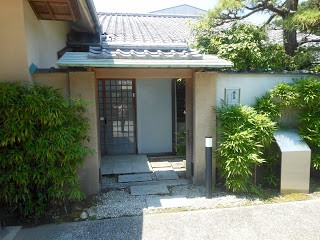
<p>Minaguchi-Ya is just a 10-minute walk from Okitsu Station, which is the next station after Shimizu Station on Tokaido Line. It is now opened to the public as a museum, but was a historical Japanese Inn until 1985.</p>
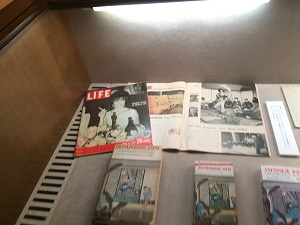
<p>Oliver Statler, who came to Japan with the U.S. army immediately after World War 2, enjoyed the hospitality and landscape of the place so much that he wrote the best-selling book, The Japanese Inn. Many foreign travelers who read his book visited Okitsu and stayed in Minaguchi-Ya.&#160; In 1985, the inn closed due to slow business caused by the newly built highway which blocked the view of the beach.&#160;</p>
<p><img src="https://fusion-guide.org/images/Eng/spot/topics/3157/minaguchiya 2.jpg" width="300" height="225" alt="" /></p>
<p>Minaguchi-Ya is located along Tokaido Road, the old main road that connected Edo (the former name for Tokyo) and Kyoto. Ieyasu Tokugawa, who united the country after the civil war period at the beginning of the 17th century, frequently stayed in this inn when he visited Seikenji Temple nearby. In the&#160; Edo period from the 17th to 19th centuries, this inn served as a place for Waki-Honjin, the second best accommodation in the area, where the retainers of feudal lords stayed. Honjin, the best accommodation in the area, was where the feudal lords themselves stayed.&#160;</p>
<p>Minaguchi-Ya had a good business during the Edo period as many feudal lords from the western part of Japan unceasingly traveled along the Tokaido Road. The Tokugawa Shoguns who ruled the country required all of the feudal lords to build their second homes in Edo, the capital, where their wives and children resided. The feudal lords themselves had to travel between their homes and Edo once every two years.&#160;</p>
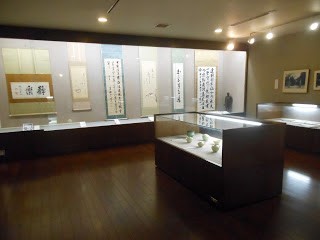
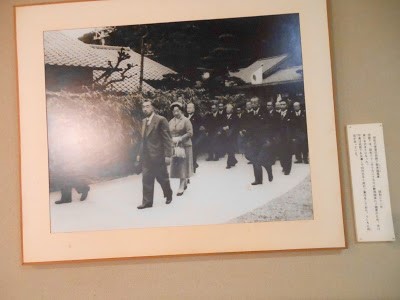
<p>After the Meiji Restoration, when the last Tokugawa Shogun returned the ruling power to the Emperor, Minaguchi-Ya lost their samurai customers who no longer needed to travel. The inn then reinvented itself as something like a high-end beach hotel. Many famous politicians, writers, poets, artists, and Imperial Family members stayed in this inn. The Meiji Emperor took a rest in this place when he traveled from Tokyo to Kyoto and the Showa Emperor and Empress also stayed overnight. Accordingly, Mizuguchi-Ya has good exhibit of calligraphy, crafts, and some tableware used by the Emperor and members of Imperial Family.&#160; It is definitely worth a visit!</p>
</div>
<div class="cms-content-parts-sin151841145026259300">
<div class="box clearfix">
<div class="parts_img_type05_box left"><img width="330" src="https://fusion-guide.org/images/Eng/spot/topics/3157/Minaguchiya 3.jpg" alt="" class="cms-easy-edit" id="cms-editor-image-sin151841145026264300" /></div>
<div class="parts_img_type05_box right"><img width="330" src="https://fusion-guide.org/images/Eng/spot/topics/3157/minaguchiya 4.jpg" alt="" class="cms-easy-edit" id="cms-editor-image-sin151841145026265800" /></div>
</div>
</div>
]]></content:encoded>
</item>

<item rdf:about="https://fusion-guide.org/Eng/spots/topics/2017/3156/">
<title>Zagyoso</title>
<link>https://fusion-guide.org/Eng/spots/topics/2017/3156/</link>
<description>

Zagyoso is located right across from Seikenji Temple. It is the reconstructed villa of Saionji-Kinmochi, which was reconstructed in 2004 based on the original floor plan. The original building has been moved to Meiji-Mura, a theme park in Aichi Prefecture featuring historically important Japanese buildings.
When Saionji-Kinmochi built this villa at the age of 70 in 1920, he was a Genro, or a retired statesman advising to the Emperor. After leading a busy life serving in important roles such as the Minister of Education, Foreign Affairs, and the Prime Minister in the Japanese government, Saionji hoped to lead a quiet&#160; relaxed life enjoying the beautiful view of the beach in front of the villa. The name of the villa ZAGYOSO means a house &#8220;to sit in relaxed and fish&#8221;.

As Saionji liked bamboo and cedar, these materials are used abundantly in the house.&#160;&#160;

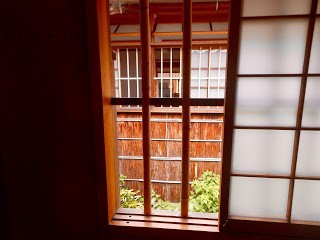
On the second floor of the villa, there are a guest room and Saionji&#8217;s private room. When visitors look out of the window of the second floor, they now see a playground, a building, and a highway. However, those did not exist when Saionji built the villa. He and his visitors enjoyed the view of beautiful beach lagoon in front and MIHO-NO-MATSUBARA or the Miho Pine Tree Groves far away on the horizon.&#160; &#160;&#160;

On the first floor are his private room, an anteroom, a kitchen, a bathroom, his three maids&#8217; rooms, and a western-style wing. The western-style wing was added to the original building in 1930 when Saionji became 80 and was not physically able&#160; to meet his guests on the second floor TATAMI room.&#160;

In his bathroom window, there is bamboo latticework, with&#160; a steel pipe in each piece of&#160; bamboo. This is to make the lattice stylish but strong enough to prevent anyone from getting into the house while Saionji was taking a bath. Saionji, who studied at the Universit&#233; de Paris in France in his twenties, had good friends there including a French Prime Minister, Georges Benjamin Clemenceau. When World War I ended, Saionji went to Paris to conclude a peace treaty. He was a liberal person who knew the world very well and was strongly against the war. Thus, he was constantly targeted by militants.

He survived potential assassins and lived until the age of 91. Saionji passed away in this Zagyoso on November 24, 1940.&#160;

</description>
<dc:creator></dc:creator>
<dc:subject></dc:subject>
<dc:date>2017-09-30T12:00:00+09:00</dc:date>
<content:encoded><![CDATA[
<div id="cms-editor-minieditor-sin151840461468992100" class="cms-content-parts-sin151840461468997600">
<p><img src="https://fusion-guide.org/images/Eng/spot/topics/3156/Zagyoso 1.jpg" width="300" height="400" alt="" /></p>
<p class="MsoNormal"><span lang="EN-US">Zagyoso is located right across from Seikenji Temple. It is the reconstructed villa of Saionji-Kinmochi, which was reconstructed in 2004 based on the original floor plan. The original building has been moved to Meiji-Mura, a theme park in Aichi Prefecture featuring historically important Japanese buildings.</span></p>
<p class="MsoNormal">When Saionji-Kinmochi built this villa at the age of 70 in 1920, he was a Genro, or a retired statesman advising to the Emperor. After leading a busy life serving in important roles such as the Minister of Education, Foreign Affairs, and the Prime Minister in the Japanese government, Saionji hoped to lead a quiet&#160; relaxed life enjoying the beautiful view of the beach in front of the villa. The name of the villa ZAGYOSO means a house &#8220;to sit in relaxed and fish&#8221;.</p>
<p class="MsoNormal"><span lang="EN-US"><o:p></o:p></span></p>
<p class="MsoNormal">As Saionji liked bamboo and cedar, these materials are used abundantly in the house.&#160;&#160;</p>
<p class="MsoNormal"><img src="https://fusion-guide.org/images/Eng/spot/topics/3156/Zagyoso 2.jpg" width="300" height="225" alt="" /></p>
<p class="MsoNormal">On the second floor of the villa, there are a guest room and Saionji&#8217;s private room. When visitors look out of the window of the second floor, they now see a playground, a building, and a highway. However, those did not exist when Saionji built the villa. He and his visitors enjoyed the view of beautiful beach lagoon in front and MIHO-NO-MATSUBARA or the Miho Pine Tree Groves far away on the horizon.&#160; &#160;&#160;</p>
<p class="MsoNormal"><img src="https://fusion-guide.org/images/Eng/spot/topics/3156/Zagyoso 4.jpg" width="320" height="240" alt="" /></p>
<p class="MsoNormal">On the first floor are his private room, an anteroom, a kitchen, a bathroom, his three maids&#8217; rooms, and a western-style wing. The western-style wing was added to the original building in 1930 when Saionji became 80 and was not physically able&#160; to meet his guests on the second floor TATAMI room.&#160;</p>
<p class="MsoNormal"><img src="https://fusion-guide.org/images/Eng/spot/topics/3156/Zagyoso 5.jpg" width="400" height="300" alt="" /></p>
<p class="MsoNormal">In his bathroom window, there is bamboo latticework, with&#160; a steel pipe in each piece of&#160; bamboo. This is to make the lattice stylish but strong enough to prevent anyone from getting into the house while Saionji was taking a bath. Saionji, who studied at the Universit&#233; de Paris in France in his twenties, had good friends there including a French Prime Minister, Georges Benjamin Clemenceau. When World War I ended, Saionji went to Paris to conclude a peace treaty. He was a liberal person who knew the world very well and was strongly against the war. Thus, he was constantly targeted by militants.</p>
<p class="MsoNormal"><img src="https://fusion-guide.org/images/Eng/spot/topics/3156/Zagyoso 6.jpg" width="320" height="240" alt="" /></p>
<p class="MsoNormal">He survived potential assassins and lived until the age of 91. Saionji passed away in this Zagyoso on November 24, 1940.&#160;</p>
<p class="MsoNormal"><span lang="EN-US"><o:p></o:p></span></p>
</div>
]]></content:encoded>
</item>

<item rdf:about="https://fusion-guide.org/Eng/spots/topics/2016/3082/">
<title>Introduction of Mt. Fuji</title>
<link>https://fusion-guide.org/Eng/spots/topics/2016/3082/</link>
<description>
At 3,776 meters or 12,388 feet, Mt. Fuji is the highest mountain in Japan. This volcanic mountain covers roughly 70,000 hectares of land. It is located nearly in the center of the Japanese Archipelago, stretching over Shizuoka and Yamanashi Prefectures. It rises solitarily over the northern side of Suruga Bay which is 2,500 meters deep and the deepest bay in Japan.&#160;
Mt. Fuji is a large strato volcano composed of basalt rock. It began forming at the base of a volcano named Komitake approximately 100,000 years ago. The Mt. Fuji which we can see now was formed by an eruption 11,000 years ago. It can be said to be a relatively young volcano. This mountain warmly welcomes all who visit regardless of nationality. Approximately 300,000 people climb it every year and around 30% are from overseas.
Not only is Mt. Fuji the highest mountain in Japan, but it is also a religious object of worship. It has long been revered as a sacred mountain of our original religion, Shinto. In the 9th century, a Sengen Shrine was built at the northern base in order to quell or pacify any eruptions. It is there that Konohana-sakuya-hime, which means the goddess of blooming blossoms, is enshrined. She is kind and tender-hearted and revered as a model for Japanese women.
Also, Mt. Fuji has been the motif for a number of works of art since the old days. It has inspired the artists of ukiyoe paintings and woodblock prints, poets and novelists. It is well known that the influence of such Ukiyoe prints has reached artists all over Japan and even throughout the world..

Related&#160;Photographs


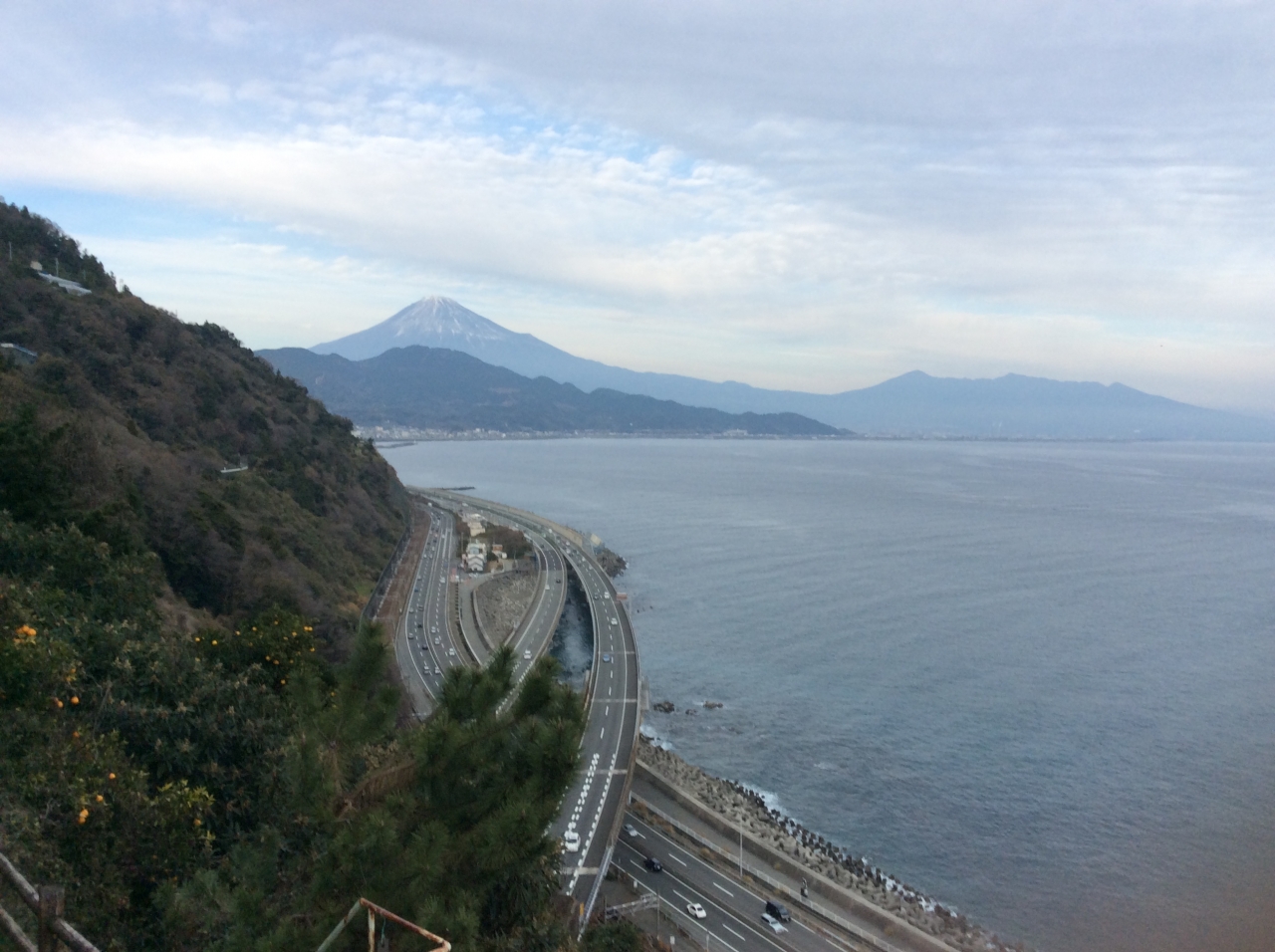
Mt. Fuji and Satta Pass


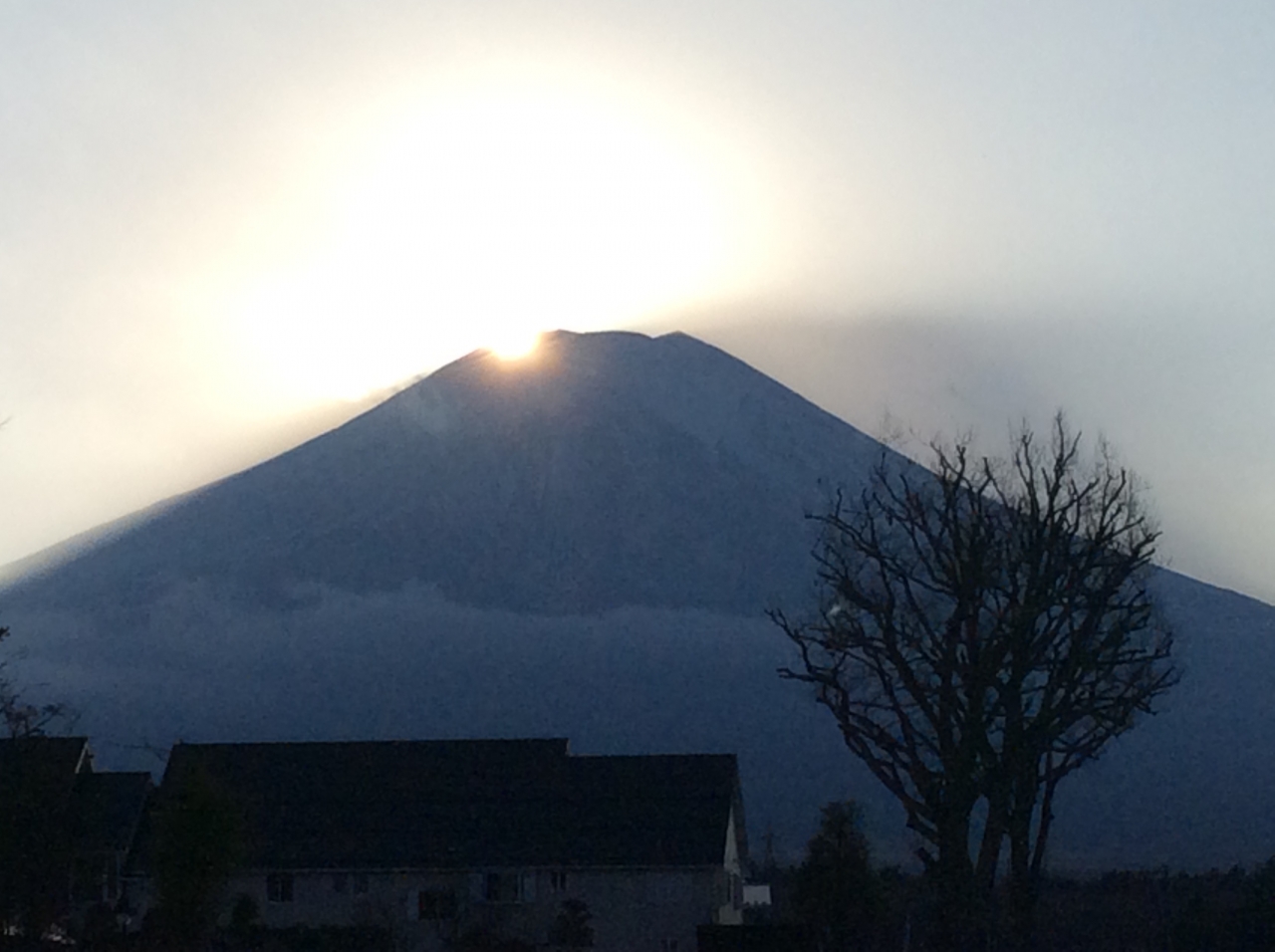
Diamond Fuji


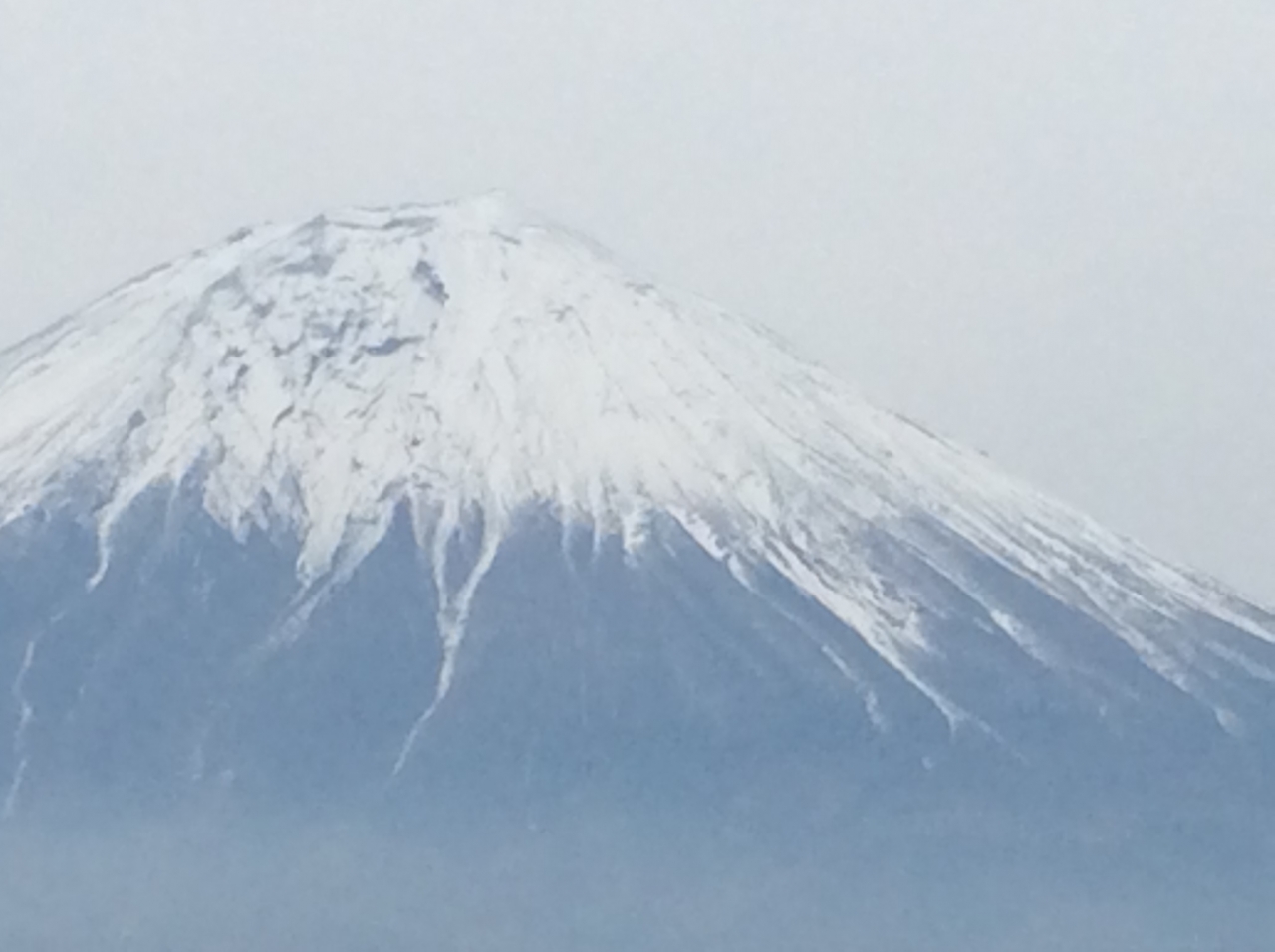
Mt. Fuji in winter&#160;


&#160; &#160;&#160;


(By Prudence)&#160;
＊Not only Prudence but also other FUSION members can guide you through the Mt. Fuji-area!
Contact us if you are interested in a trip around Mt. Fuji.
</description>
<dc:creator></dc:creator>
<dc:subject></dc:subject>
<dc:date>2016-02-24T19:00:00+09:00</dc:date>
<content:encoded><![CDATA[
<div id="cms-editor-minieditor-sin145627930817801200" class="cms-content-parts-sin145627930817804000">
<p>At 3,776 meters or 12,388 feet, Mt. Fuji is the highest mountain in Japan. This volcanic mountain covers roughly 70,000 hectares of land. It is located nearly in the center of the Japanese Archipelago, stretching over Shizuoka and Yamanashi Prefectures. It rises solitarily over the northern side of Suruga Bay which is 2,500 meters deep and the deepest bay in Japan.&#160;</p>
<p>Mt. Fuji is a large strato volcano composed of basalt rock. It began forming at the base of a volcano named Komitake approximately 100,000 years ago. The Mt. Fuji which we can see now was formed by an eruption 11,000 years ago. It can be said to be a relatively young volcano. This mountain warmly welcomes all who visit regardless of nationality. Approximately 300,000 people climb it every year and around 30% are from overseas.</p>
<p>Not only is Mt. Fuji the highest mountain in Japan, but it is also a religious object of worship. It has long been revered as a sacred mountain of our original religion, Shinto. In the 9th century, a Sengen Shrine was built at the northern base in order to quell or pacify any eruptions. It is there that Konohana-sakuya-hime, which means the goddess of blooming blossoms, is enshrined. She is kind and tender-hearted and revered as a model for Japanese women.</p>
<p>Also, Mt. Fuji has been the motif for a number of works of art since the old days. It has inspired the artists of ukiyoe paintings and woodblock prints, poets and novelists. It is well known that the influence of such Ukiyoe prints has reached artists all over Japan and even throughout the world..</p>
</div>
<h3 class="cms-content-parts-sin145750644499788100" id="cms-editor-textbox-sin145750644499791600">Related&#160;Photographs</h3>
<div class="cms-content-parts-sin145750646235224900">
<div class="box clearfix">
<div class="parts_img_type12_box_01 left">
<div class="parts_img_type12_img"><img width="210" src="https://fusion-guide.org/images/topics/Mt.Fuji/IMG_1634.JPG" class="cms-easy-edit" id="cms-editor-image-sin145750646235229100" alt="" /></div>
<div class="cms-easy-edit" id="cms-editor-minieditor-sin145750646235231400"><p>Mt. Fuji and Satta Pass</p></div>
</div>
<div class="parts_img_type12_box_02 left">
<div class="parts_img_type12_img"><img width="210" src="https://fusion-guide.org/images/Eng/spot/topics/3082/IMG_1522.JPG" class="cms-easy-edit" id="cms-editor-image-sin145750646235233000" alt="" /></div>
<div class="cms-easy-edit" id="cms-editor-minieditor-sin145750646235234700"><p>Diamond Fuji</p></div>
</div>
<div class="parts_img_type12_box_03 left">
<div class="parts_img_type12_img"><img width="210" src="https://fusion-guide.org/images/Eng/spot/topics/3082/IMG_1686.JPG" class="cms-easy-edit" id="cms-editor-image-sin145750646235237500" alt="" /></div>
<div class="cms-easy-edit" id="cms-editor-minieditor-sin145750646235240000"><p>Mt. Fuji in winter&#160;</p></div>
</div>
</div>
</div>
<div id="cms-editor-minieditor-sin145750646807059100" class="cms-content-parts-sin145750646807065600">
<p>&#160; &#160;&#160;</p>
</div>
<div id="cms-editor-minieditor-sin145628058169756800" class="cms-content-parts-sin145628058169761400">
<p>(By Prudence)&#160;</p>
<p>＊Not only Prudence but also other FUSION members can guide you through the Mt. Fuji-area!<br />
<span style="color: rgb(128, 0, 0);">Contact us if you are interested in a trip around Mt. Fuji.</span></p>
</div>
]]></content:encoded>
</item>

<item rdf:about="https://fusion-guide.org/Eng/spots/topics/2016/3114/">
<title>Mt.Fuji and Japanese Religion</title>
<link>https://fusion-guide.org/Eng/spots/topics/2016/3114/</link>
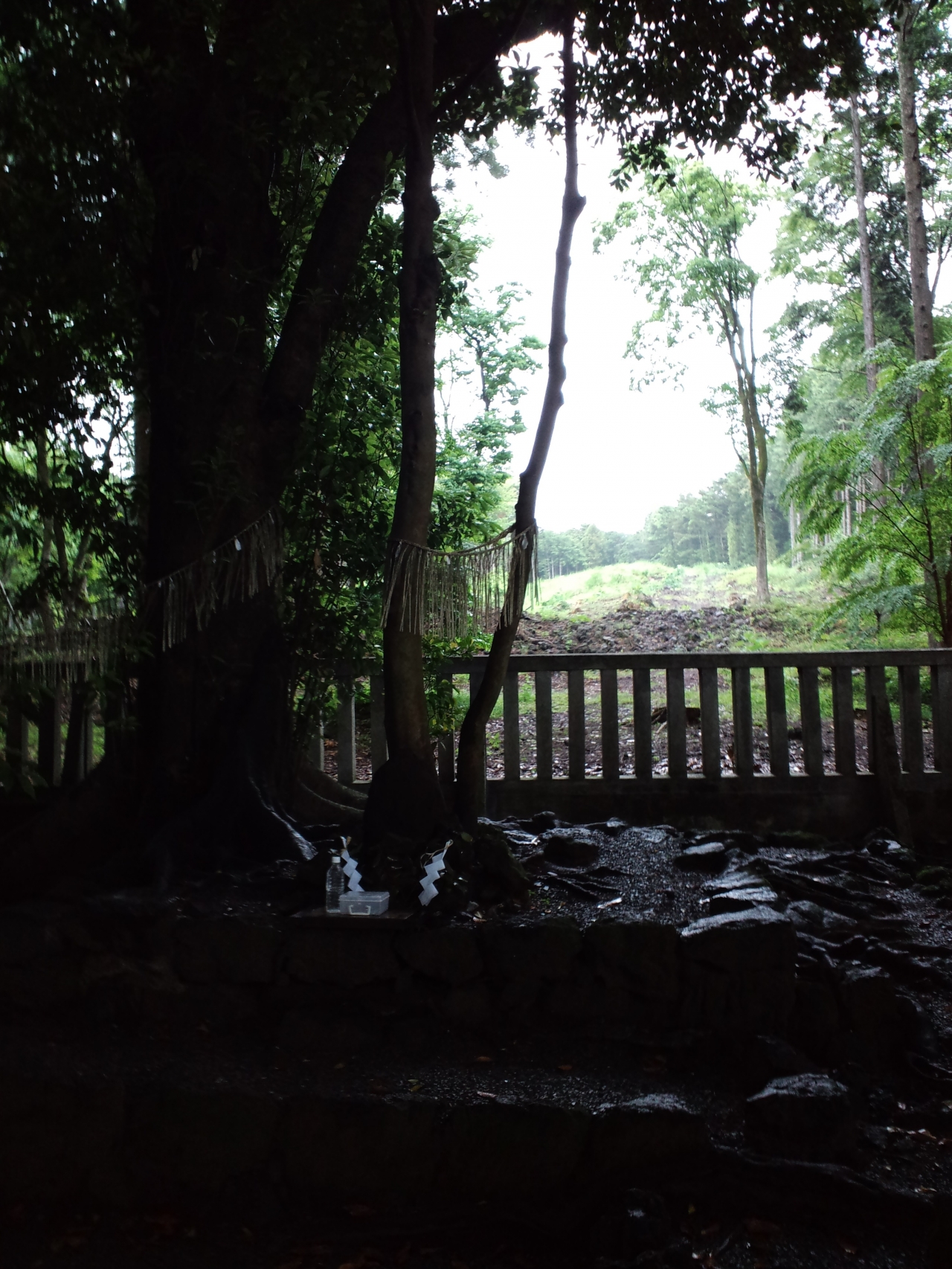
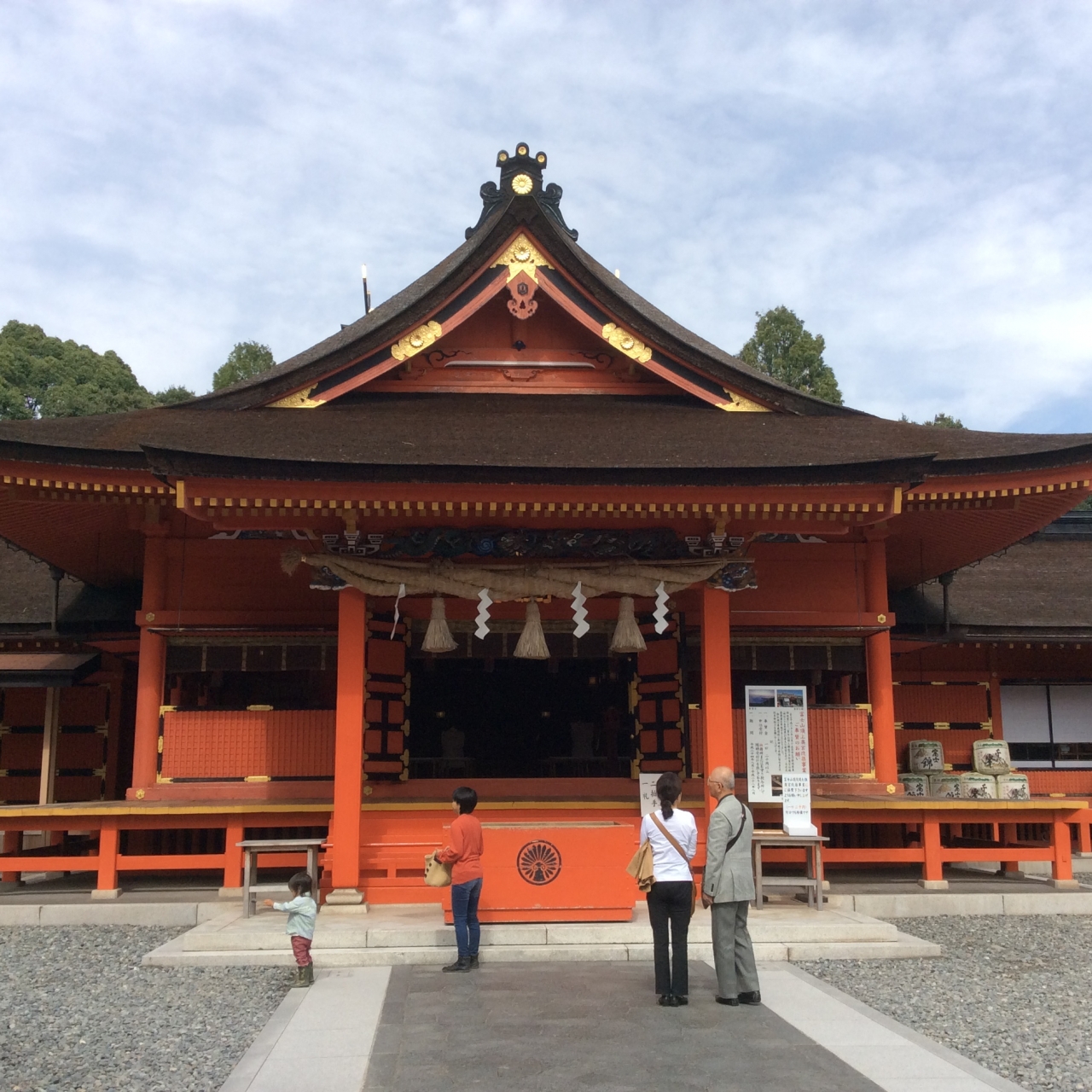
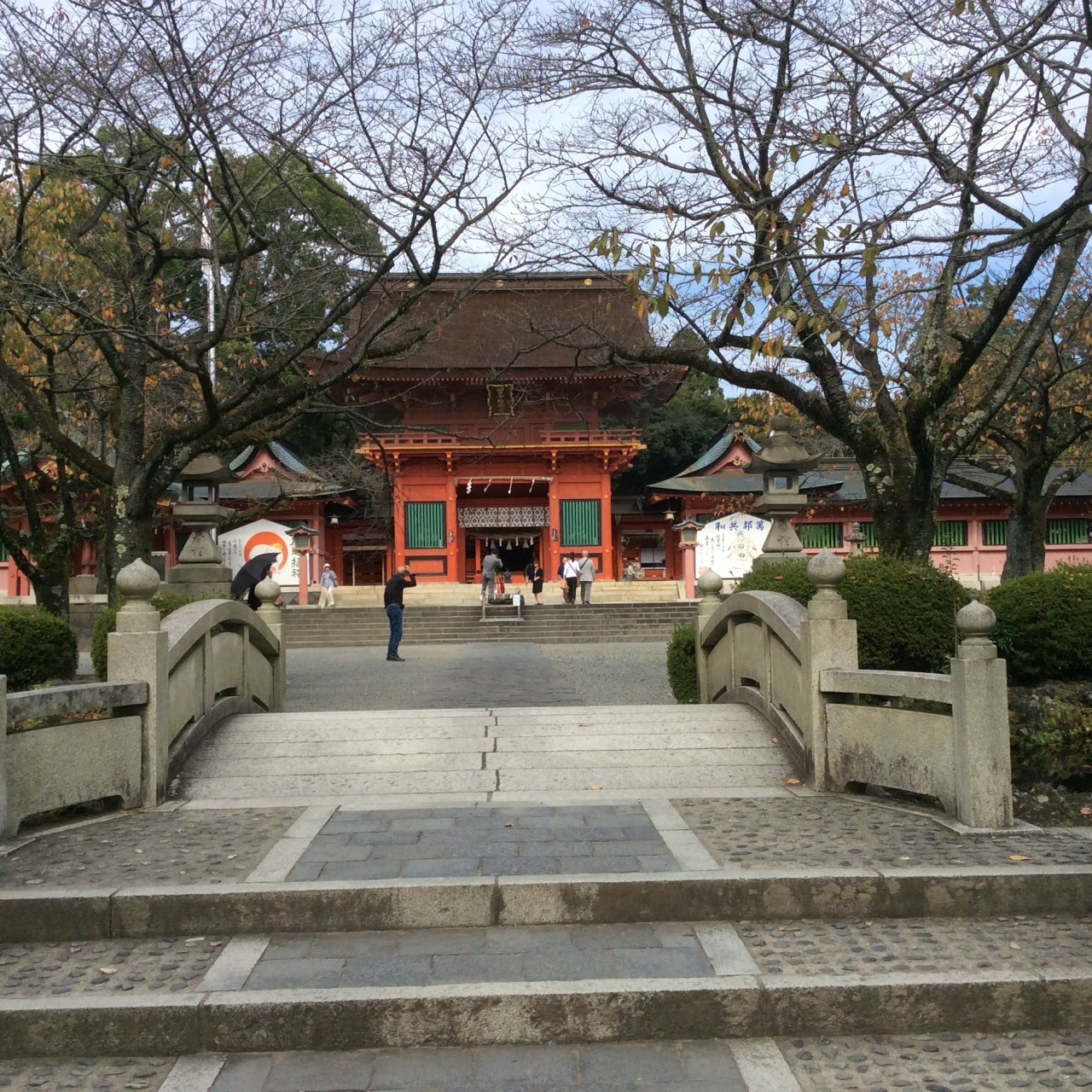
<description>&#160; &#160; &#160;Mt. Fuji, a symbol of Japan, attracts many people because of its beauty. &#160;In recent years many people from abroad have come to Japan to see or climb the beautiful mountain. Mt. Fuji is a must-see tourist spot in Japan. &#160;Apart from being a popular tourist destination, the mountain has a religious aspect and is an object of worship.&#160;There is a Shinto religious group that worships Mt. Fuji. &#160;Shinto is a religion from Japan that emphasizes spiritual powers or gods in nature, such as mountains, rivers, and trees. &#160;The religious group believes that a god resides in Mt. Fuji because of its magnificent appearance and repeated eruptions.&#160;Mt. Fuji had erupted many times since ancient times. Each time people suffered in the disasters caused by the eruptions. &#160;To stop the volcanic activities, people started to worship a goddess called Konohanasakuya-Hime or the Cherry Princess, who was believed to have the power to calm down the volcanic activities of Mt. Fuji.&#160;The faith prevailed in many parts of Japan, and many shrines were built. These are often called Sengen Jinja or Sengen Shrine in Japanese.&#160; There are currently more than 1300 Sengen Shrines around Japan.&#160;Yamamiya Sengen Taisha Shrine in Fujinomiya (*Photo-1: left ) was first formed without a shrine building in 27 AD. &#160;Fujisan Hongu Sengen Taisha shrine (* Photo-2: left ) located in Fujinomiya, Shizuoka, is the head shrine for all Sengen shrines around Japan. 


(By Izumi)&#160;＊Not only Izumi but also other FUSION members can guide you through the Mt. Fuji-area!Contact us if you are interested in a trip around Mt. Fuji.Related Photographs


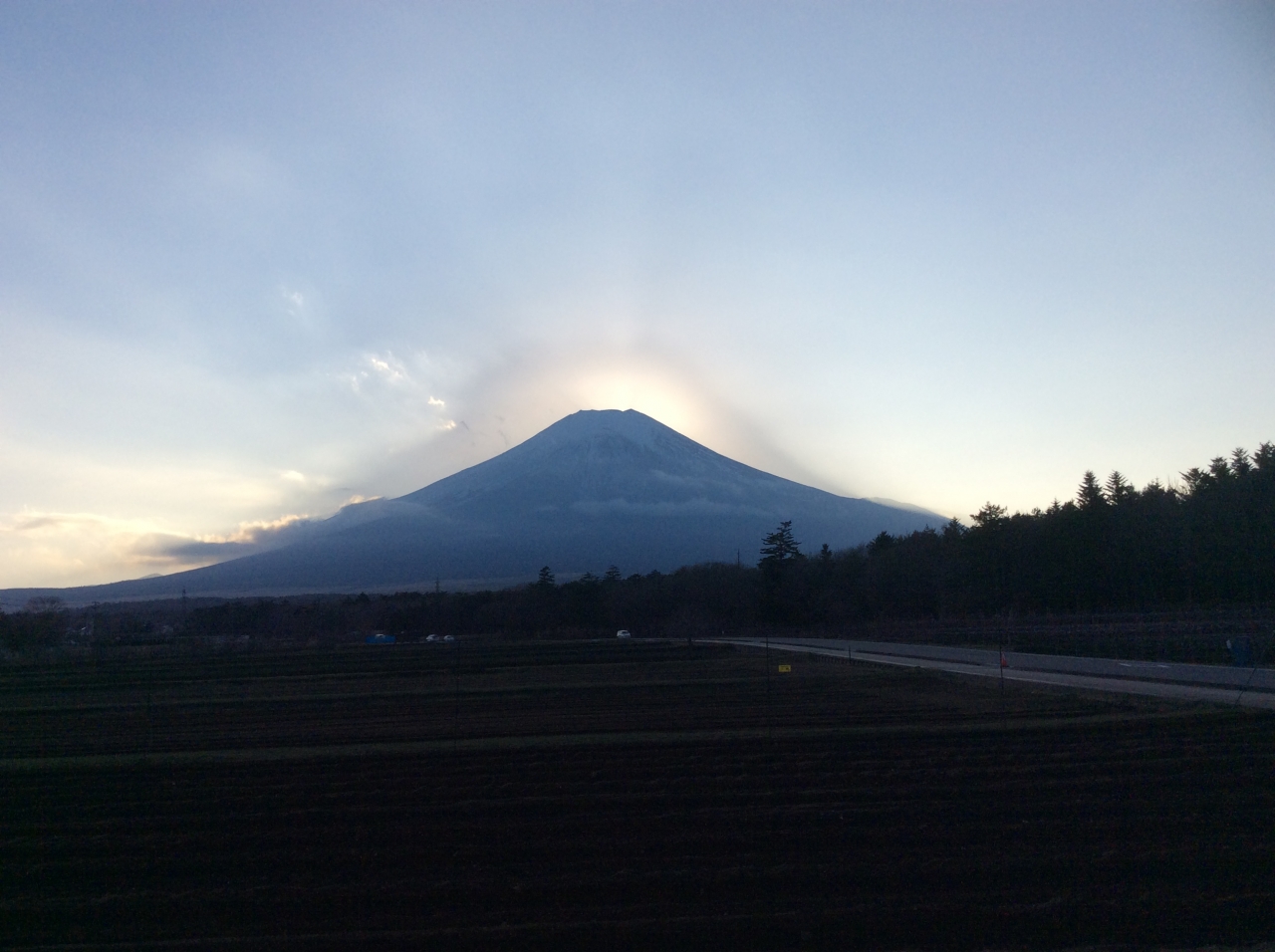
Sunset behind Mt. Fuji


Fujisan Hongu Sengen Taisha


Spring water from Mt. Fuji(Wakutama Pond)


</description>
<dc:creator></dc:creator>
<dc:subject></dc:subject>
<dc:date>2016-02-24T18:30:00+09:00</dc:date>
<content:encoded><![CDATA[
<div id="cms-editor-minieditor-sin145750664559918700" class="cms-content-parts-sin145750664559922900"><p>&#160; &#160; &#160;</p></div><div id="cms-editor-minieditor-sin146642182867680200" class="cms-content-parts-sin146642182867685400"><p><span style="font-size: medium;">Mt. Fuji, a symbol of Japan, attracts many people because of its beauty. &#160;In recent years many people from abroad have come to Japan to see or climb the beautiful mountain. Mt. Fuji is a must-see tourist spot in Japan. &#160;Apart from being a popular tourist destination, the mountain has a religious aspect and is an object of worship.&#160;</span></p><p><span style="font-size: medium;">There is a Shinto religious group that worships Mt. Fuji. &#160;Shinto is a religion from Japan that emphasizes spiritual powers or gods in nature, such as mountains, rivers, and trees. &#160;The religious group believes that a god resides in Mt. Fuji because of its magnificent appearance and repeated eruptions.&#160;</span></p><p><span style="font-size: medium;">Mt. Fuji had erupted many times since ancient times. Each time people suffered in the disasters caused by the eruptions. &#160;To stop the volcanic activities, people started to worship a goddess called Konohanasakuya-Hime or the Cherry Princess, who was believed to have the power to calm down the volcanic activities of Mt. Fuji.&#160;</span></p><p class="MsoNormal" style="line-height:150%"><span style="font-size: medium;"><span lang="EN-US" style="line-height: 150%;">The faith prevailed in many parts of Japan, and many shrines were built. These are often called Sengen Jinja or Sengen Shrine in Japanese.&#160; There are currently more than 1300 Sengen Shrines around Japan.</span></span><span lang="EN-US" style="font-size:&#10;12.0pt;line-height:150%"><o:p></o:p></span></p><p class="MsoNormal" style="line-height:150%"><span lang="EN-US" style="font-size:&#10;12.0pt;line-height:150%">&#160;</span><span lang="EN-US" style="font-size:&#10;12.0pt;line-height:150%">Yamamiya Sengen Taisha Shrine in Fujinomiya (*Photo-1: left ) was first formed without a shrine building in 27 AD. <o:p></o:p></span></p><p class="MsoNormal" style="line-height:150%"><span lang="EN-US" style="font-size:&#10;12.0pt;line-height:150%">&#160;</span><span lang="EN-US" style="font-size:&#10;12.0pt;line-height:150%">Fujisan Hongu Sengen Taisha shrine (* Photo-2: left ) located in Fujinomiya, Shizuoka, is the head shrine for all Sengen shrines around Japan.</span><span lang="EN-US" style="font-size:14.0pt;line-height:150%"> <o:p></o:p></span></p></div><div class="cms-content-parts-sin146642202145281100">
<div class="box clearfix">
<div class="parts_img_type05_box left"><img width="180" src="https://fusion-guide.org/images/Eng/spot/topics/3114/images20160620203049.jpg" alt="山宮" class="cms-easy-edit" id="cms-editor-image-sin146642202145284900"  title="" name=""  /></div>
<div class="parts_img_type05_box right"><img width="245" src="https://fusion-guide.org/images/Eng/spot/topics/3116/IMG_1268.JPG" alt="" class="cms-easy-edit" id="cms-editor-image-sin146642202145286400"  title="" name=""    /></div>
</div>
</div><div id="cms-editor-minieditor-sin145743220310901900" class="cms-content-parts-sin145743220310906000"><p>(By Izumi)&#160;</p><p><span style="font-size: small;">＊Not only Izumi but also other FUSION members can guide you through the Mt. Fuji-area!</span><br /><span style="color: rgb(153, 51, 0);">Contact us if you are interested in a trip around Mt. Fuji.</span></p></div><h3 class="cms-content-parts-sin145743225499267000" id="cms-editor-textbox-sin145743225499271300">Related Photographs</h3><div class="cms-content-parts-sin145743273748753600">
<div class="box clearfix">
<div class="parts_img_type12_box_01 left">
<div class="parts_img_type12_img"><img width="215" src="https://fusion-guide.org/images/Eng/spot/topics/3114/IMG_1525.JPG" alt="" class="cms-easy-edit" id="cms-editor-image-sin145743273748759400"  title="" name="" height="165" /></div>
<div class="cms-easy-edit" id="cms-editor-minieditor-sin145743273748762200"><p>Sunset behind Mt. Fuji</p></div>
</div>
<div class="parts_img_type12_box_02 left">
<div class="parts_img_type12_img"><img width="215" src="https://fusion-guide.org/images/Eng/spot/topics/3114/IMG_1267.JPG" alt="" class="cms-easy-edit" id="cms-editor-image-sin145743273748764700"  title="" name="" height="165"   /></div>
<div class="cms-easy-edit" id="cms-editor-minieditor-sin145743273748767000"><p>Fujisan Hongu Sengen Taisha</p></div>
</div>
<div class="parts_img_type12_box_03 left">
<div class="parts_img_type12_img"><img width="215" src="https://fusion-guide.org/images/Eng/spot/topics/3114/IMG_1289.JPG" alt="" class="cms-easy-edit" id="cms-editor-image-sin145743273748769500"  title="" name="" height="165" /></div>
<div class="cms-easy-edit" id="cms-editor-minieditor-sin145743273748771900"><p>Spring water from Mt. Fuji(Wakutama Pond)</p></div>
</div>
</div>
</div>
]]></content:encoded>
</item>

<item rdf:about="https://fusion-guide.org/Eng/spots/topics/2016/3115/">
<title>Inspiration Source Of Arts</title>
<link>https://fusion-guide.org/Eng/spots/topics/2016/3115/</link>
<description>
For a long time, Mt.Fuji has been an object of worship. It has also been featured in many works of art and literature. One of the reasons for its designation as a World Cultural Heritage is that it has been considered as a source of artistic inspiration.
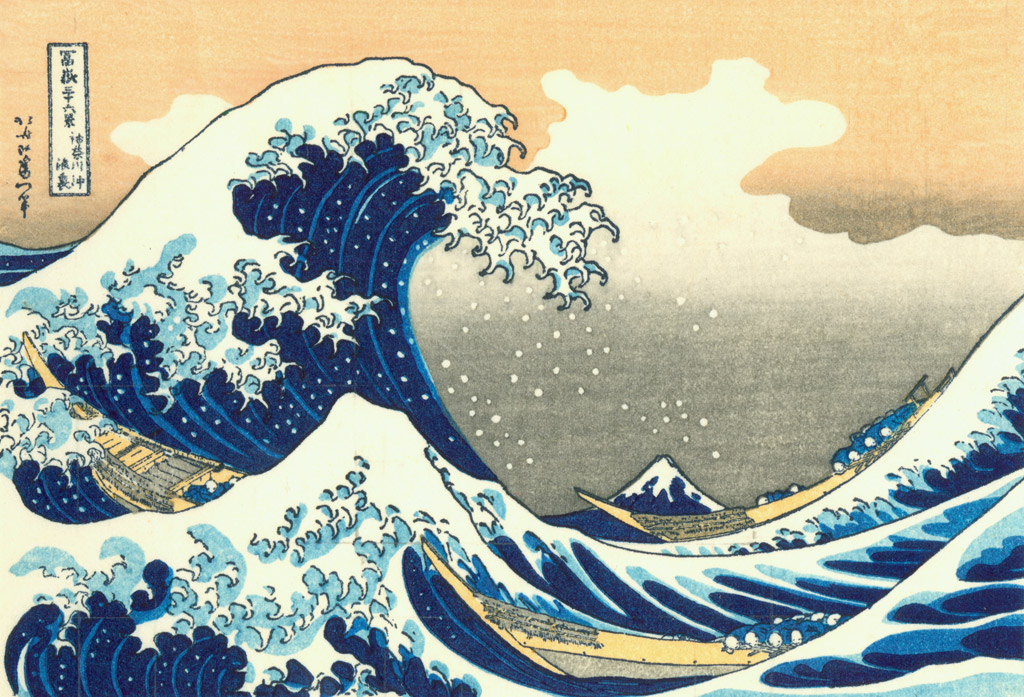
One significant example is the world famous Ukiyoe woodblock print created by Katsushika Hokusai, Japan&#8217;s great artist in 18C. His works strongly affected European impressionist such as Van Gogh and Claude Monet under the influence of the &#8216;Japonism&#8217; movement in the late 19th century. There are enthusiastic collectors of his Ukiyoe masterpieces across the world.
The appearance of Mt. Fuji keeps changing according to the seasons, or even the passage of time during the course of a day.
Many works of art have been created by capturing these precious moments in the appearance of Mt. Fuji. You might want to feel the moment for yourself here in Shizuoka!


(By Hiro)&#160;
＊Not only Hiro but also other FUSION members can guide you through the Mt. Fuji-area!
Contact us if you are interested in a trip around Mt. Fuji.

Related&#160;Photographs


&#160;Hokusai&#039;s great work of Ukiyoe, &#34;Kanagawa oki nami ura (Behind the Great Wave at Kanagawa)&#34;&#160;

</description>
<dc:creator></dc:creator>
<dc:subject></dc:subject>
<dc:date>2016-02-24T18:00:00+09:00</dc:date>
<content:encoded><![CDATA[
<div id="cms-editor-minieditor-sin145748255556889900" class="cms-content-parts-sin145748255556891900">
<p>For a long time, Mt.Fuji has been an object of worship. It has also been featured in many works of art and literature. One of the reasons for its designation as a World Cultural Heritage is that it has been considered as a source of artistic inspiration.</p>
<p>One significant example is the world famous Ukiyoe woodblock print created by Katsushika Hokusai, Japan&#8217;s great artist in 18C. His works strongly affected European impressionist such as Van Gogh and Claude Monet under the influence of the &#8216;Japonism&#8217; movement in the late 19th century. There are enthusiastic collectors of his Ukiyoe masterpieces across the world.</p>
<p>The appearance of Mt. Fuji keeps changing according to the seasons, or even the passage of time during the course of a day.</p>
<p>Many works of art have been created by capturing these precious moments in the appearance of Mt. Fuji. You might want to feel the moment for yourself here in Shizuoka!</p>
</div>
<div id="cms-editor-minieditor-sin145748263683329400" class="cms-content-parts-sin145748263683334000">
<p>(By Hiro)&#160;</p>
<p>＊Not only Hiro but also other FUSION members can guide you through the Mt. Fuji-area!<br />
<span style="color: rgb(153, 51, 0);">Contact us if you are interested in a trip around Mt. Fuji.</span></p>
</div>
<h3 class="cms-content-parts-sin145748266846710600" id="cms-editor-textbox-sin145748266846715100">Related&#160;Photographs</h3><div class="cms-content-parts-sin145748294366950900">
<div class="box clearfix">
<div id="cms-editor-minieditor-sin145748294366957800" class="parts_text_type03_box left"><p><img src="https://fusion-guide.org/images/topics/Mt.Fuji/images20160615164600.jpg" width="235" height="160" alt="" /></p></div>
<div id="cms-editor-minieditor-sin145748294366961000" class="parts_text_type03_box right"><p>&#160;Hokusai's great work of<em> Ukiyoe</em>, &#34;Kanagawa oki nami ura (Behind the Great Wave at Kanagawa)&#34;&#160;</p></div>
</div>
</div>
]]></content:encoded>
</item>

<item rdf:about="https://fusion-guide.org/Eng/spots/topics/2016/3116/">
<title>Miho Pine Grove</title>
<link>https://fusion-guide.org/Eng/spots/topics/2016/3116/</link>
<description>
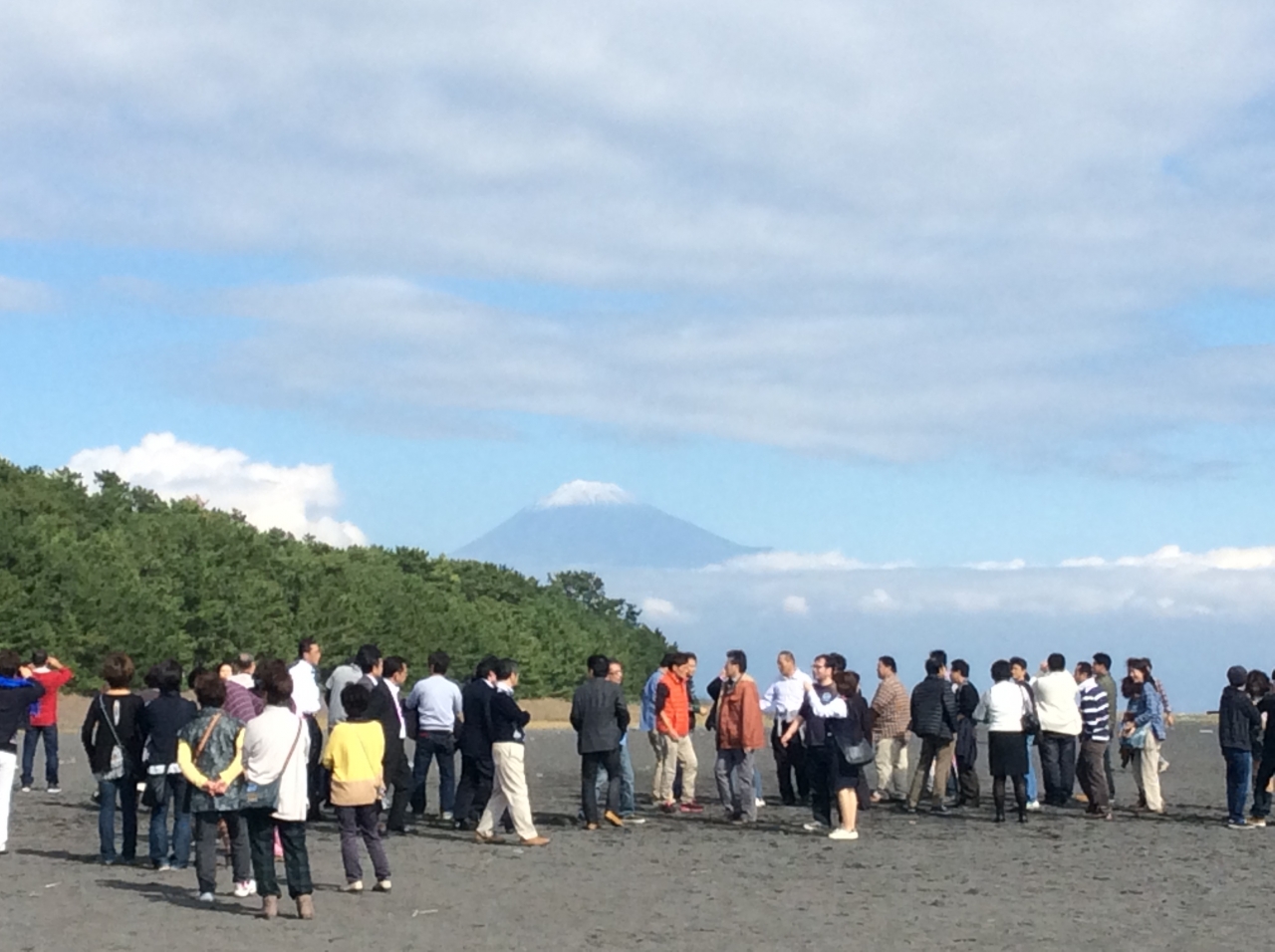
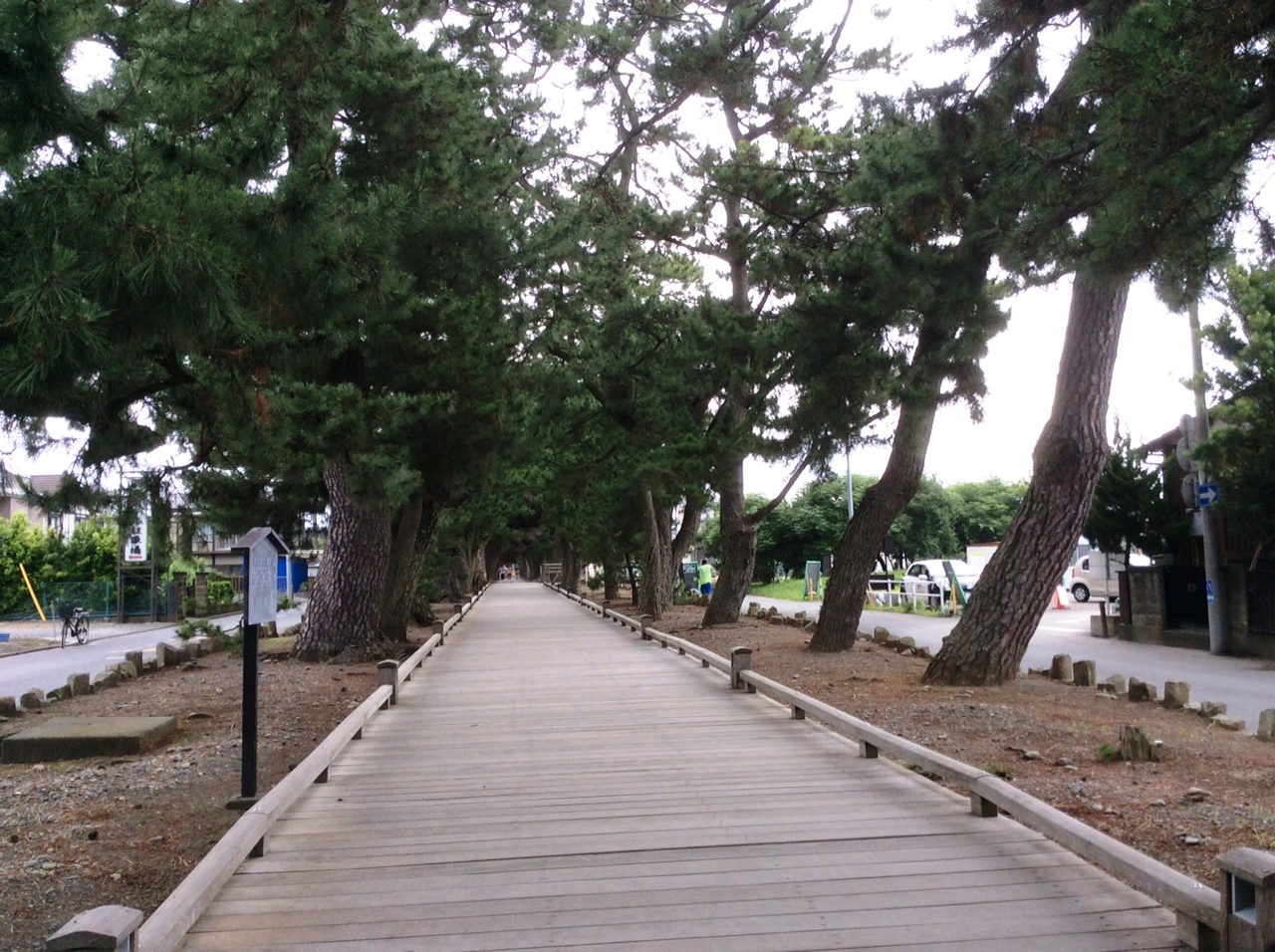
More than 30,000 thickly wooded pine trees extend about 7km over the Miho peninsula, forming the famous Pine Grove of Miho. You can enjoy the natural beauty of the shore, the pine grove and Mt. Fuji here. This beautiful landscape was frequently featured by Ukiyo-e (Japanese woodblock prints in 17-19C). The place is very famous for the gracious legend called &#34;Hagoromo&#34;, the feather
robe of a celestial maiden. Now let me tell you the story of Hagoromo briefly.
&#34; Once upon a time, there lived a fisherman named Hakuryo.One day, when he walked around the pine grove of Miho, he found a beautiful feather robe on the branch of a pine tree. Hakuryo was very pleased to find such a splended robe and tried to take it home. Then an enchanting woman, whose beauty he had never seen before, appeared. She sadly said, &#34;I am a celestial maiden from the heaven. I came here to bathe at the seashore because the scenery here is so beautiful. This is my feather robe. I can&#039;t go back to heaven without it. Please, oh, please give it back to me. &#34; Now that Hakuryo knew the worth of it, he wanted to have it more than ever. But at the same time, he felt pity for the beautiful sorrowful maiden. He finally said &#039; if you show me the dance of heaven, I will give it back to you. The celestial maiden was very delighted and began dancing pulling the feather robe around her. Then she floated up to the sky, waving her sleeves elegantly and disappeared far beyond Mt. Fuji. &#34;

Noh Play of Hagoromo

This beautiful Hagoromo story was featured in a Noh play. Do you know what a Noh play is ? It is a Japanese traditional play with elegant movements. Masks are used during performances. The Noh drama titled &#039;Hagoromo&#039; is performed at the Hagoromo Festival held in October. The stage is set up in front of
Hagoromo&#039;s Pine Tree under the light of fire touches. It is on this stage that
Noh players show us a world of artistic beauty.

Ballet Dancer

You will find a stone monument near the Hagoromo pine tree. The monument of Hagoromo was built to honor a French ballet dancer, Helene Giuglaris. She had a keen interest in Noh play, and was especially fascinated by the Noh
singing Hagoromo. She went on a performance tour with her husband, Marcal Giuglaris around Europe, pursuing her ideal dance performance. But, a tragedy happened when she collapsed on stage while performing. She passed away at the age of 35 in July 1951, without ever visiting the site of Hagoromo. It was her last will that her husband, Marcel visited Miho for her, with a strand of Helene&#039;s hair and the costume that she wore on stage, which he did so 4 months after
her death. After that, the monument of Hagoromo was completed on Nov. 1 in 1952 in memory of the couple and the cultural exchange between France and Japan. Later, the outdoor Noh play &#34;Hagoromo&#34; started to be performed in 1984.

Poem of Marcel Giuglaris (English translation)

The wind describes / The breaking waves of Mih0 / Far beyond Paris /&#160;
My dearest dead wife longing for Hagoromo / The breaking waves take her life away to heaven / The wind blows and time goes through / I feel peaceful and quiet


&#160; &#160; &#160;


( By Hiro )
＊Not only Hiro but also other FUSION members can guide you through the Pine Grove in Miho !
Contact us if you are interested in this site.

Place of Departure
[[CMSmodule.parts::googlemap#param=6]]Related&#160;Photographs


Mt. Fuji and Pine Grove in Miho&#160;


&#8221;Promnade for the Ocean God&#8221; from Miho Pine Grove to Miho Shrine&#160;


&#160; &#160; &#160;


World Cultural Heritage Site


With the designation of Mt. Fuji as a World Heritage Site, Miho Pine Grove also became a World Heritage Site due to its historical and cultural connection with Mt. Fuji.&#160; The picturesque view of Mt. Fuji from the sea shore and pine grove at Miho has been an inspiration for artwork for a long time.&#160;


Because of its religious significance and its depictions in works of art, Mt. Fuji has helped nurture Japan&#8217;s unique culture. For these reasons Mt. Fuji was designated as a World Cultural Heritage Site on the 22nd of June, 2013. The site includes the Sengen shrines at the base of Mt. Fuji, five major lakes, &#8220;Oshi&#8221; lodging houses, Oshino Hakkai springs, the lava tree molds, the Siraito Falls and Miho-no-Matsubara.


List of Component Parts and Constituent Elements

S: Shizuoka Pre. &#160;Y: Yamanashi Pre.


1 &#160; &#160; &#160;Fujisan mountain area　
&#160; &#160; &#160; &#160; (1-1 to 1-9 are constituent elements of 1 Fujisan mountain area.）
1-1	Mountaintop worship sites &#160; &#160;S&#38;Y
1-2	Omiya-Murayama Ascending Routes (present Fujinomiya AR) &#160;S
1-3	Suyama Ascending Routes &#160;(present Gotenba AR) &#160;S
1-4	Subashiri Ascending Routes &#160;S
1-5	Yoshida Ascending Routes &#160;(present Yoshida AR) &#160;Y
1-6	Kitaguchi Hongu Fuji Sengen-Jinja Shrine &#160; Y
1-7	Lake Saiko　 Y
1-8	Lake Shojiko &#160; Y
1-9	Lake Motosuko &#160;Y
2 &#160; &#160; &#160;&#160;Fujisan Hongu Sengen Taisha Shrine &#160;S
3 &#160; &#160; &#160;&#160;Yamamiya Sengen-Jinja Shrine &#160; S
4 &#160; &#160; &#160;&#160;Murayama Sengen-Jinja Shrine &#160;S
5	Suyama Sengen-Jinja Shrine &#160; S
6	Fuji Sengen-Jinja Shrine (Subashiri Sengen-Jinja Shrine) &#160; S
7	Kawaguchi Asama-Jinja Shrine &#160; Y
8	Fuji Omuro Sengen-Jinja Shrine &#160;Y
9 &#160; &#160; &#160;&#8220;Oshi&#8221; Lodging Houses &#160; (former House of the Togawa family) &#160;Y
10	&#8220;Oshi&#8221; Lodging Houses &#160; (House of the Osano family) &#160;Y
11 &#160; &#160;&#160;Lake Yamanakako &#160; Y
12	Lake Kawaguchi &#160; Y
13	Oshino Hakkai springs (Deguchiike Pond) &#160; &#160;Y
14	Oshino Hakkai springs (Okamaike Pond) &#160; &#160; Y
15	Oshino Hakkai springs (Sokonashiike Pond) &#160;Y
16	Oshino Hakkai springs (Choshiike Pond) &#160; Y
17	Oshino Hakkai springs (Wakuike Pond) &#160; Y
18	Oshino Hakkai springs (NigoriikePond) &#160; &#160;Y
19	Oshino Hakkai springs (Kagamiike Pond) &#160; &#160;Y
20	Oshino Hakkai springs (Shobuike Pond) &#160; Y
21	Funatsu lava tree molds &#160; Y
22	Yoshida lava tree molds &#160; Y
23	Hitoana Fuji-ko Iseki &#160; &#160;S
24	Shiraito no Taki waterfalls &#160;S
25	Mihonomatsubara pine tree grove &#160;S

Related&#160;Photographs


Fujisan Hongu Sengen Taisha in Fujinomiya city


Shiraito Falls


Miho-no-Matsubara


(By Prudence)&#160;
＊Not only Prudence but also other FUSION members can guide you through the Mt. Fuji-area!
Contact us if you are interested in a trip around Mt. Fuji.
</description>
<dc:creator></dc:creator>
<dc:subject></dc:subject>
<dc:date>2016-02-24T17:30:00+09:00</dc:date>
<content:encoded><![CDATA[
<div id="cms-editor-minieditor-sin145748309950288100" class="cms-content-parts-sin145748309950291000">
<p>More than 30,000 thickly wooded pine trees extend about 7km over the Miho peninsula, forming the famous Pine Grove of Miho. You can enjoy the natural beauty of the shore, the pine grove and Mt. Fuji here. This beautiful landscape was frequently featured by Ukiyo-e (Japanese woodblock prints in 17-19C). The place is very famous for the gracious legend called &#34;Hagoromo&#34;, the feather<br />
robe of a celestial maiden. Now let me tell you the story of Hagoromo briefly.</p>
<p>&#34; Once upon a time, there lived a fisherman named Hakuryo.One day, when he walked around the pine grove of Miho, he found a beautiful feather robe on the branch of a pine tree. Hakuryo was very pleased to find such a splended robe and tried to take it home. Then an enchanting woman, whose beauty he had never seen before, appeared. She sadly said, &#34;I am a celestial maiden from the heaven. I came here to bathe at the seashore because the scenery here is so beautiful. This is my feather robe. I can't go back to heaven without it. Please, oh, please give it back to me. &#34; Now that Hakuryo knew the worth of it, he wanted to have it more than ever. But at the same time, he felt pity for the beautiful sorrowful maiden. He finally said ' if you show me the dance of heaven, I will give it back to you. The celestial maiden was very delighted and began dancing pulling the feather robe around her. Then she floated up to the sky, waving her sleeves elegantly and disappeared far beyond Mt. Fuji. &#34;</p>
</div>
<h3 class="cms-content-parts-sin145748338888472700" id="cms-editor-textbox-sin145748338888476200">Noh Play of Hagoromo</h3>
<div id="cms-editor-minieditor-sin145748340247729000" class="cms-content-parts-sin145748340247735000">
<p>This beautiful Hagoromo story was featured in a Noh play. Do you know what a Noh play is ? It is a Japanese traditional play with elegant movements. Masks are used during performances. The Noh drama titled 'Hagoromo' is performed at the Hagoromo Festival held in October. The stage is set up in front of<br />
Hagoromo's Pine Tree under the light of fire touches. It is on this stage that<br />
Noh players show us a world of artistic beauty.</p>
</div>
<h3 class="cms-content-parts-sin145748342813869400" id="cms-editor-textbox-sin145748342813873700">Ballet Dancer</h3>
<div id="cms-editor-minieditor-sin145748343631638100" class="cms-content-parts-sin145748343631642400">
<p>You will find a stone monument near the Hagoromo pine tree. The monument of Hagoromo was built to honor a French ballet dancer, Helene Giuglaris. She had a keen interest in Noh play, and was especially fascinated by the Noh<br />
singing Hagoromo. She went on a performance tour with her husband, Marcal Giuglaris around Europe, pursuing her ideal dance performance. But, a tragedy happened when she collapsed on stage while performing. She passed away at the age of 35 in July 1951, without ever visiting the site of Hagoromo. It was her last will that her husband, Marcel visited Miho for her, with a strand of Helene's hair and the costume that she wore on stage, which he did so 4 months after<br />
her death. After that, the monument of Hagoromo was completed on Nov. 1 in 1952 in memory of the couple and the cultural exchange between France and Japan. Later, the outdoor Noh play &#34;Hagoromo&#34; started to be performed in 1984.</p>
</div>
<h3 class="cms-content-parts-sin145748347116108500" id="cms-editor-textbox-sin145748347116115100">Poem of Marcel Giuglaris (English translation)</h3>
<div id="cms-editor-minieditor-sin145748347985824100" class="cms-content-parts-sin145748347985828500">
<p>The wind describes / The breaking waves of Mih0 / Far beyond Paris /&#160;<br />
My dearest dead wife longing for Hagoromo / The breaking waves take her life away to heaven / The wind blows and time goes through / I feel peaceful and quiet</p>
</div>
<div id="cms-editor-minieditor-sin145748350687593900" class="cms-content-parts-sin145748350687596700">
<p>&#160; &#160; &#160;</p>
</div>
<div id="cms-editor-minieditor-sin145748352222939100" class="cms-content-parts-sin145748352222942400">
<p>( By Hiro )</p>
<p><span style="font-size: small;">＊Not only Hiro but also other FUSION members can guide you through the Pine Grove in Miho !</span><br />
<span style="color: rgb(153, 51, 0);">Contact us if you are interested in this site.</span></p>
</div>
<h3 class="cms-content-parts-sin145748443716166900" id="cms-editor-textbox-sin145748443716171200">Place of Departure</h3>
<div class="cms-content-parts-sin145748444998688000">[[CMSmodule.parts::googlemap#param=6]]</div><h3 class="cms-content-parts-sin145748559608156600" id="cms-editor-textbox-sin145748559608161100">Related&#160;Photographs</h3><div class="cms-content-parts-sin145748587002075700">
<div class="box clearfix">
<div class="parts_img_type12_box_01 left">
<div class="parts_img_type12_img"><img width="210" src="https://fusion-guide.org/images/Eng/spot/topics/3116/IMG_0123.JPG" alt="" class="cms-easy-edit" id="cms-editor-image-sin145748587002082700"  title="" name="" /></div>
<div class="cms-easy-edit" id="cms-editor-minieditor-sin145748587002088200"><p>Mt. Fuji and Pine Grove in Miho&#160;</p></div>
</div>
<div class="parts_img_type12_box_02 left">
<div class="parts_img_type12_img"><img width="210" src="https://fusion-guide.org/images/Eng/spot/topics/3116/IMG_1048.JPG" alt="" class="cms-easy-edit" id="cms-editor-image-sin145748587002092600"  title="" name="" /></div>
<div class="cms-easy-edit" id="cms-editor-minieditor-sin145748587002095400"><p>&#8221;Promnade for the Ocean God&#8221; from Miho Pine Grove to Miho Shrine&#160;<br /></p></div>
</div>
<div class="parts_img_type12_box_03 left">
<div class="parts_img_type12_img"><img width="215" src="https://fusion-guide.org/images/common/noImage.png" alt="" class="cms-easy-edit" id="cms-editor-image-sin145748587002097900" /></div>
<div class="cms-easy-edit" id="cms-editor-minieditor-sin145748587002100800"><p>&#160; &#160; &#160;</p></div>
</div>
</div>
</div>
<h2 class="cms-content-parts-sin145748542548971100" id="cms-editor-textbox-sin145748542548976600"><a name="miho"></a>World Cultural Heritage Site</h2>
<div class="cms-content-parts-sin145748483673582300">
<div class="box clearfix"><img width="215" src="https://fusion-guide.org/images/Eng/spot/topics/3116/IMG_0527.JPG" alt="" class="parts_img_type01_img cms-easy-edit" id="cms-editor-image-sin145748483673586200" />
<div class="cms-easy-edit" id="cms-editor-minieditor-sin145748483673588100"><p>With the designation of Mt. Fuji as a World Heritage Site, Miho Pine Grove also became a World Heritage Site due to its historical and cultural connection with Mt. Fuji.&#160;<br /> The picturesque view of Mt. Fuji from the sea shore and pine grove at Miho has been an inspiration for artwork for a long time.&#160;</p></div>
</div>
</div>
<div class="cms-content-parts-sin145748492395355900">
<div id="cms-editor-minieditor-sin145748492395358800" class="box parts_text_type02">
<p>Because of its religious significance and its depictions in works of art, Mt. Fuji has helped nurture Japan&#8217;s unique culture. For these reasons Mt. Fuji was designated as a World Cultural Heritage Site on the 22nd of June, 2013. The site includes the Sengen shrines at the base of Mt. Fuji, five major lakes, &#8220;Oshi&#8221; lodging houses, Oshino Hakkai springs, the lava tree molds, the Siraito Falls and Miho-no-Matsubara.</p>
</div>
</div>
<h3 class="cms-content-parts-sin145748544883759500" id="cms-editor-textbox-sin145748544883763800">List of Component Parts and Constituent Elements</h3>
<div id="cms-editor-minieditor-sin145748497130214100" class="cms-content-parts-sin145748497130218500">
<p>S: Shizuoka Pre. &#160;Y: Yamanashi Pre.</p>
</div>
<div class="cms-content-parts-sin145748496071463500">
<div id="cms-editor-minieditor-sin145748496071467100" class="box parts_text_type02">
<p>1 &#160; &#160; &#160;Fujisan mountain area　<br />
&#160; &#160; &#160; &#160; (1-1 to 1-9 are constituent elements of 1 Fujisan mountain area.）<br />
1-1<span class="Apple-tab-span" style="white-space:pre">	</span>Mountaintop worship sites &#160; &#160;S&#38;Y<br />
1-2<span class="Apple-tab-span" style="white-space:pre">	</span>Omiya-Murayama Ascending Routes (present Fujinomiya AR) &#160;S<br />
1-3<span class="Apple-tab-span" style="white-space:pre">	</span>Suyama Ascending Routes &#160;(present Gotenba AR) &#160;S<br />
1-4<span class="Apple-tab-span" style="white-space:pre">	</span>Subashiri Ascending Routes &#160;S<br />
1-5<span class="Apple-tab-span" style="white-space:pre">	</span>Yoshida Ascending Routes &#160;(present Yoshida AR) &#160;Y<br />
1-6<span class="Apple-tab-span" style="white-space:pre">	</span>Kitaguchi Hongu Fuji Sengen-Jinja Shrine &#160; Y<br />
1-7<span class="Apple-tab-span" style="white-space:pre">	</span>Lake Saiko　 Y<br />
1-8<span class="Apple-tab-span" style="white-space:pre">	</span>Lake Shojiko &#160; Y<br />
1-9<span class="Apple-tab-span" style="white-space:pre">	</span>Lake Motosuko &#160;Y</p>
<p>2 &#160; &#160; &#160;&#160;Fujisan Hongu Sengen Taisha Shrine &#160;S<br />
3 &#160; &#160; &#160;&#160;Yamamiya Sengen-Jinja Shrine &#160; S<br />
4 &#160; &#160; &#160;&#160;Murayama Sengen-Jinja Shrine &#160;S<br />
5<span class="Apple-tab-span" style="white-space:pre">	</span>Suyama Sengen-Jinja Shrine &#160; S<br />
6<span class="Apple-tab-span" style="white-space:pre">	</span>Fuji Sengen-Jinja Shrine (Subashiri Sengen-Jinja Shrine) &#160; S<br />
7<span class="Apple-tab-span" style="white-space:pre">	</span>Kawaguchi Asama-Jinja Shrine &#160; Y<br />
8<span class="Apple-tab-span" style="white-space:pre">	</span>Fuji Omuro Sengen-Jinja Shrine &#160;Y<br />
9 &#160; &#160; &#160;&#8220;Oshi&#8221; Lodging Houses &#160; (former House of the Togawa family) &#160;Y<br />
10<span class="Apple-tab-span" style="white-space:pre">	</span>&#8220;Oshi&#8221; Lodging Houses &#160; (House of the Osano family) &#160;Y<br />
11 &#160; &#160;&#160;Lake Yamanakako &#160; Y<br />
12<span class="Apple-tab-span" style="white-space:pre">	</span>Lake Kawaguchi &#160; Y<br />
13<span class="Apple-tab-span" style="white-space:pre">	</span>Oshino Hakkai springs (Deguchiike Pond) &#160; &#160;Y<br />
14<span class="Apple-tab-span" style="white-space:pre">	</span>Oshino Hakkai springs (Okamaike Pond) &#160; &#160; Y<br />
15<span class="Apple-tab-span" style="white-space:pre">	</span>Oshino Hakkai springs (Sokonashiike Pond) &#160;Y<br />
16<span class="Apple-tab-span" style="white-space:pre">	</span>Oshino Hakkai springs (Choshiike Pond) &#160; Y<br />
17<span class="Apple-tab-span" style="white-space:pre">	</span>Oshino Hakkai springs (Wakuike Pond) &#160; Y<br />
18<span class="Apple-tab-span" style="white-space:pre">	</span>Oshino Hakkai springs (NigoriikePond) &#160; &#160;Y<br />
19<span class="Apple-tab-span" style="white-space:pre">	</span>Oshino Hakkai springs (Kagamiike Pond) &#160; &#160;Y<br />
20<span class="Apple-tab-span" style="white-space:pre">	</span>Oshino Hakkai springs (Shobuike Pond) &#160; Y<br />
21<span class="Apple-tab-span" style="white-space:pre">	</span>Funatsu lava tree molds &#160; Y<br />
22<span class="Apple-tab-span" style="white-space:pre">	</span>Yoshida lava tree molds &#160; Y<br />
23<span class="Apple-tab-span" style="white-space:pre">	</span>Hitoana Fuji-ko Iseki &#160; &#160;S<br />
24<span class="Apple-tab-span" style="white-space:pre">	</span>Shiraito no Taki waterfalls &#160;S<br />
25<span class="Apple-tab-span" style="white-space:pre">	</span>Mihonomatsubara pine tree grove &#160;S</p>
</div>
</div><h3 class="cms-content-parts-sin145748632254836300" id="cms-editor-textbox-sin145748632254840800">Related&#160;Photographs</h3><div class="cms-content-parts-sin145748634438723400">
<div class="box clearfix">
<div class="parts_img_type12_box_01 left">
<div class="parts_img_type12_img"><img width="157" src="https://fusion-guide.org/images/Eng/spot/topics/3116/IMG_1268.JPG" alt="" class="cms-easy-edit" id="cms-editor-image-sin145748634438731200"  title="" name=""    /></div>
<div class="cms-easy-edit" id="cms-editor-minieditor-sin145748634438735800"><p>Fujisan Hongu Sengen Taisha in Fujinomiya city</p></div>
</div>
<div class="parts_img_type12_box_02 left">
<div class="parts_img_type12_img"><img width="210" src="https://fusion-guide.org/images/Eng/spot/topics/3116/182.JPG" alt="" class="cms-easy-edit" id="cms-editor-image-sin145748634438740000"  title="" name="" /></div>
<div class="cms-easy-edit" id="cms-editor-minieditor-sin145748634438742700"><p>Shiraito Falls</p></div>
</div>
<div class="parts_img_type12_box_03 left">
<div class="parts_img_type12_img"><img width="210" src="https://fusion-guide.org/images/Eng/spot/topics/3116/IMG_0971.JPG" alt="" class="cms-easy-edit" id="cms-editor-image-sin145748634438745200"  title="" name="" /></div>
<div class="cms-easy-edit" id="cms-editor-minieditor-sin145748634438747600"><p>Miho-no-Matsubara</p></div>
</div>
</div>
</div>
<div id="cms-editor-minieditor-sin145748536233426800" class="cms-content-parts-sin145748536233430600">
<p>(By Prudence)&#160;</p>
<p><span style="font-size: small;">＊Not only Prudence but also other FUSION members can guide you through the Mt. Fuji-area!</span><br />
<span style="color: rgb(153, 51, 0);">Contact us if you are interested in a trip around Mt. Fuji.</span></p>
</div>
]]></content:encoded>
</item>

<item rdf:about="https://fusion-guide.org/Eng/spots/topics/2016/3117/">
<title>Fujisan Hongu Sengen Taisha</title>
<link>https://fusion-guide.org/Eng/spots/topics/2016/3117/</link>
<description>
This is a Shinto shrine located in Fujinomiya City, Shizuoka Prefecture. It is the head shrine of the 1,300 sengen shrines all over Japan. The goddess, Konohana-no-sakuyahime which means a goddess of blooming blossoms is enshrined here. You can hear her interesting story in a myth. This deity has been worshiped as a goddess for fire prevention, safe delivery of a baby, ocean voyages, fishing and farming.&#160;
According to the shrine&#039;s tradition, in the reign of the 7th Emperor Kohrei, Mt. Fuji erupted and this area was devastated. So, the 11th Emperor Suijin(BC27) enshrined the guardian deity of the mountain at the base. During the reign of the 12th Emperor Keikoh (AD 110) set up a original shrine, Yamamiya Sengen-jinjya Shrine was set up in order to pacify the rage of Mt. Fuji&#039;s deity. In 806, a new grand shrine was built in the present site. It is 6 km south of the original one. Since ancient times, it has been highly honored by the Imperial Court and sponsored by powerful shoguns such as Miyamoto-no-Yoritomo and Tokugawa Ieyasu. During the Edo period, the shrine was the center for Mt. Fuji worship. Many pilgrims visited here from all over the country in order to pray for a safe climb.&#160;
In 2013 it was added to one of the component parts of World Heritage Fujisan.
In the precincts, there are notable structures. Honden and haiden, the inner shrine and outer shrine are in the characteristic sengen-zukuri style. The features of this architecture are wide eaves and roofs thatched with bark of white cedar. Additionally, two shrine buildings are linked with the connected shrine. These buildings and a two-story gate tower are national important cultural assets. When you go out of the small east gate, you will see Wakutama-ike. It is spring-fed pond. The rain and melting snow of Mt. Fuji are flowing into this pond. The temperature of the water is 13℃ all through the year. Pilgrims purified themselves in the pond before climbing Mt. Fuji. Now it is protected as a National Natural Monument.&#160;
One more place we recommend you to visit is Okumiya, the innermost house of the shrine on the summit of Mt. Fuji. It is the final goal of the pilgrimage. The area of Okumiya covers everything above the 8th Station of Mt.Fuji. If you start your climb at Fujisan Hongu Sengen Taisha Shrine on the base and reach Okumiya and come back to the shrine safely, you will surely receive the blessing of the goddess!&#160;

For Tour Details

The Shrine Festivals

This shrine has many festivals every year.
The main ones include:
Setsubun Festival (Feb. 3rd or 4th)
Beans are thrown away toward the crowd to ward off evil spirits and pray for good fortunes.&#160;
Yabusame Festival (March 4th, 5th and 6th))
Ancient Horseback Archery is dedicated to the deity and local people parade along the main street on horses
Rice Planting Festival (July 7th)
The event is held at the paddy near the shrine. Participants form a procession playing court music and dancing
The Annual Autumn Festival (Nov. 3rd, 4th and 5th)
This festival called Taisai is held to express gratitude for the year&#8217;s harvest. Local people parade playing Japanese traditional musical instruments on floats
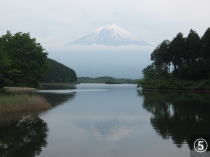
We recommend you to visit Takasago Sake Brewery near here which produces high quality sake by using groundwater of Mt. Fuji. In this area there is a lake whose name is Lake Tanuki. You can enjoy Mt. Fuji&#039;s reflection on its surface.&#160;

Access to the Shrine


 5 minute walk from JR Fujinomiya Station
 Bus service from JR Shinkansen Shinfuji Station ( 50 mins )


Contact us if you are interested in a trip to this shrine.
Place of Departure
[[CMSmodule.parts::googlemap#param=7]]
Related&#160;Photographs


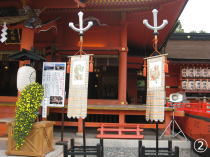
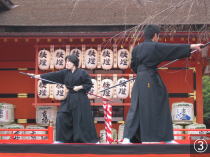
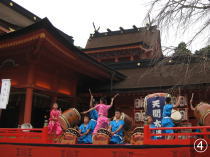
Photo 1, 2, 3 and 4:&#160;Taken at Fujijisan Hongu Sengen Taisha during the Taisai Festival in November.Photo 5: Lake Tanuki and Mt. Fuji(All photographs by Prudence)
</description>
<dc:creator></dc:creator>
<dc:subject></dc:subject>
<dc:date>2016-02-24T17:00:00+09:00</dc:date>
<content:encoded><![CDATA[
<div id="cms-editor-minieditor-sin145748653899908100" class="cms-content-parts-sin145748653899913000">
<p>This is a Shinto shrine located in Fujinomiya City, Shizuoka Prefecture. It is the head shrine of the 1,300 sengen shrines all over Japan. The goddess, Konohana-no-sakuyahime which means a goddess of blooming blossoms is enshrined here. You can hear her interesting story in a myth. This deity has been worshiped as a goddess for fire prevention, safe delivery of a baby, ocean voyages, fishing and farming.&#160;</p>
<p>According to the shrine's tradition, in the reign of the 7th Emperor Kohrei, Mt. Fuji erupted and this area was devastated. So, the 11th Emperor Suijin(BC27) enshrined the guardian deity of the mountain at the base. During the reign of the 12th Emperor Keikoh (AD 110) set up a original shrine, Yamamiya Sengen-jinjya Shrine was set up in order to pacify the rage of Mt. Fuji's deity. In 806, a new grand shrine was built in the present site. It is 6 km south of the original one. Since ancient times, it has been highly honored by the Imperial Court and sponsored by powerful shoguns such as Miyamoto-no-Yoritomo and Tokugawa Ieyasu. During the Edo period, the shrine was the center for Mt. Fuji worship. Many pilgrims visited here from all over the country in order to pray for a safe climb.&#160;<br />
In 2013 it was added to one of the component parts of World Heritage Fujisan.</p>
<p>In the precincts, there are notable structures. Honden and haiden, the inner shrine and outer shrine are in the characteristic sengen-zukuri style. The features of this architecture are wide eaves and roofs thatched with bark of white cedar. Additionally, two shrine buildings are linked with the connected shrine. These buildings and a two-story gate tower are national important cultural assets. When you go out of the small east gate, you will see Wakutama-ike. It is spring-fed pond. The rain and melting snow of Mt. Fuji are flowing into this pond. The temperature of the water is 13℃ all through the year. Pilgrims purified themselves in the pond before climbing Mt. Fuji. Now it is protected as a National Natural Monument.&#160;</p>
<p>One more place we recommend you to visit is Okumiya, the innermost house of the shrine on the summit of Mt. Fuji. It is the final goal of the pilgrimage. The area of Okumiya covers everything above the 8th Station of Mt.Fuji. If you start your climb at Fujisan Hongu Sengen Taisha Shrine on the base and reach Okumiya and come back to the shrine safely, you will surely receive the blessing of the goddess!&#160;</p>
</div><div class="cms-content-parts-sin151573735775670400">
<div id="cms-editor-minieditor-sin151573735775673900" class="box parts_text_type02"><p style="text-align: center;"><strong><span style="font-size: x-large;"><a href="/Eng/tours/topics/2015/3102/">For Tour Details</a></span></strong></p></div>
</div>
<h3 class="cms-content-parts-sin145748670156844300" id="cms-editor-textbox-sin145748670156850600">The Shrine Festivals</h3>
<div id="cms-editor-minieditor-sin145748671222976500" class="cms-content-parts-sin145748671222981100">
<p>This shrine has many festivals every year.<br />
The main ones include:</p>
<p><span style="font-size: medium;"><strong>Setsubun Festival</strong> (Feb. 3rd or 4th)</span><br />
Beans are thrown away toward the crowd to ward off evil spirits and pray for good fortunes.&#160;</p>
<p><span style="font-size: medium;"><strong>Yabusame Festival </strong>(March 4th, 5th and 6th))</span><br />
Ancient Horseback Archery is dedicated to the deity and local people parade along the main street on horses</p>
<p><strong><span style="font-size: medium;">Rice Planting Festival </span></strong><span style="font-size: medium;">(July 7th)</span><br />
The event is held at the paddy near the shrine. Participants form a procession playing court music and dancing</p>
<p><strong><span style="font-size: medium;">The Annual Autumn Festival </span></strong><span style="font-size: medium;">(Nov. 3rd, 4th and 5th)</span><br />
This festival called Taisai is held to express gratitude for the year&#8217;s harvest. Local people parade playing Japanese traditional musical instruments on floats</p>
<p>We recommend you to visit Takasago Sake Brewery near here which produces high quality sake by using groundwater of Mt. Fuji. In this area there is a lake whose name is Lake Tanuki. You can enjoy Mt. Fuji's reflection on its surface.&#160;</p>
</div>
<h3 class="cms-content-parts-sin145748680858935000" id="cms-editor-textbox-sin145748680858939200">Access to the Shrine</h3>
<div id="cms-editor-minieditor-sin145748681908636300" class="cms-content-parts-sin145748681908642200">
<ul>
    <li>5 minute walk from JR Fujinomiya Station</li>
    <li>Bus service from JR Shinkansen Shinfuji Station ( 50 mins )</li>
</ul>
</div>

<div id="cms-editor-minieditor-sin145748684833547600" class="cms-content-parts-sin145748684833551900"><p><span style="color: rgb(153, 51, 0);">Contact us if you are interested in a trip to this shrine.</span></p></div>
<h3 class="cms-content-parts-sin145748691275340200" id="cms-editor-textbox-sin145748691275343600">Place of Departure</h3>
<div class="cms-content-parts-sin145748692391718000">[[CMSmodule.parts::googlemap#param=7]]</div>
<h3 class="cms-content-parts-sin145748702283604400" id="cms-editor-textbox-sin145748702283609300">Related&#160;Photographs</h3>
<div class="cms-content-parts-sin145748715051331700">
<div class="box clearfix">
<div class="parts_img_type06_box_01 left"><img width="210" id="cms-editor-image-sin145748715051336900" class="cms-easy-edit" src="https://fusion-guide.org/images/Eng/spot/topics/3117/image1160.jpg" alt="" /></div>
<div class="parts_img_type06_box_02 left"><img width="210" id="cms-editor-image-sin145748715051340700" class="cms-easy-edit" src="https://fusion-guide.org/images/Eng/spot/topics/3117/image1184.jpg" alt="" /></div>
<div class="parts_img_type06_box_03 left"><img width="210" id="cms-editor-image-sin145748715051342800" class="cms-easy-edit" src="https://fusion-guide.org/images/Eng/spot/topics/3117/image3111.jpg" alt="" /></div>
</div>
</div>
<div class="cms-content-parts-sin145748718968603500">
<div class="box clearfix">
<div class="parts_img_type06_box_01 left"><img width="210" id="cms-editor-image-sin145748718968614500" class="cms-easy-edit" src="https://fusion-guide.org/images/Eng/spot/topics/3117/image489.jpg" alt="" /></div>
<div class="parts_img_type06_box_02 left"><img width="210" id="cms-editor-image-sin145748718968618400" class="cms-easy-edit" src="https://fusion-guide.org/images/Eng/spot/topics/3117/image556.jpg" alt="" /></div>
<div class="parts_img_type06_box_03 left"><img width="215" id="cms-editor-image-sin145748718968620800" class="cms-easy-edit" alt="" src="https://fusion-guide.org/images/common/noImage.png" /></div>
</div>
</div><div class="cms-content-parts-sin145748725921256700">
<div id="cms-editor-minieditor-sin145748725921261100" class="box parts_text_type02"><p><strong>Photo 1, 2, 3 and 4:&#160;</strong><br />Taken at Fujijisan Hongu Sengen Taisha during the Taisai Festival in November.</p><p><strong>Photo 5: </strong>Lake Tanuki and Mt. Fuji</p><p>(All photographs by Prudence)</p></div>
</div>
]]></content:encoded>
</item>

<item rdf:about="https://fusion-guide.org/Eng/spots/topics/2016/3118/">
<title>Shiraito no Taki Waterfall</title>
<link>https://fusion-guide.org/Eng/spots/topics/2016/3118/</link>
<description>
Shiraito no Taki Waterfall is located at the base of Mt. Fuji in Fujinomiya City, Shizuoka Prefecture.
It is 200m wide and 20m high. It gushes out 1.5 tons of spring water from Mt.Fuji per second. The water is a mixture of rain and melting snow which have been filtered through the inside of Mt.Fuji for many years. It springs out from the cracks between 2 lava layers which were created by large eruptions in ancient times. Because the running water looks like white threads, so it is called &#8220;Shiraito no Taki&#8221;, meaning waterfalls of white threads.
It is not only a beautiful waterfall but also is related to the Fuji-ko, worship of Mt.Fuji. In 16th and 17th centuries Hasegawa Kakugyo, the founder of this mountain religion conducted religious practices under the waterfall. Later many believers started making pilgrimages to Mt. Fuji.
Shiraito no Taki Waterfall is listed as one of &#8220;Japan&#8217;s Top 100 Waterfalls&#8221;. In 2013 it was added as one of the component parts of World Heritage Fujisan.
There is another famous waterfall near here whose name is Otodome no Taki. It means sound stopping fall. This unique name came from a historical story in which the Soga brothers took revenge on their father&#8217;s enemy. It takes 5 minutes on foot from Shiraito no Taki Waterfalls.&#160;
Please visit this area to feel the clean and devout atmosphere.

Access to the Waterfalls


 Bus service from JR Fujinomiya Station ( 30 mins )
 Bus service from JR Shinkansen Shinfuji Station ( 60 mins )
 Taxis are also available from both stations.


&#160; &#160; &#160;


(By Prudence)&#160;
＊Not only Prudence but also other FUSION members can guide you through Shiraito no Taki!
Contact us if you are interested in this waterfall.

Place of Departure
[[CMSmodule.parts::googlemap#param=8]]
Related&#160;Photographs


Shiraito no Taki


Otodome no Taki


The statue of 12th century Shogun, Minamoto no Yoritomo


( Photographs by Prudence )</description>
<dc:creator></dc:creator>
<dc:subject></dc:subject>
<dc:date>2016-02-24T16:00:00+09:00</dc:date>
<content:encoded><![CDATA[
<div id="cms-editor-minieditor-sin145748735546932500" class="cms-content-parts-sin145748735546934000">
<p>Shiraito no Taki Waterfall is located at the base of Mt. Fuji in Fujinomiya City, Shizuoka Prefecture.</p>
<p>It is 200m wide and 20m high. It gushes out 1.5 tons of spring water from Mt.Fuji per second. The water is a mixture of rain and melting snow which have been filtered through the inside of Mt.Fuji for many years. It springs out from the cracks between 2 lava layers which were created by large eruptions in ancient times. Because the running water looks like white threads, so it is called &#8220;Shiraito no Taki&#8221;, meaning waterfalls of white threads.</p>
<p>It is not only a beautiful waterfall but also is related to the Fuji-ko, worship of Mt.Fuji. In 16th and 17th centuries Hasegawa Kakugyo, the founder of this mountain religion conducted religious practices under the waterfall. Later many believers started making pilgrimages to Mt. Fuji.</p>
<p>Shiraito no Taki Waterfall is listed as one of &#8220;Japan&#8217;s Top 100 Waterfalls&#8221;. In 2013 it was added as one of the component parts of World Heritage Fujisan.</p>
<p>There is another famous waterfall near here whose name is Otodome no Taki. It means sound stopping fall. This unique name came from a historical story in which the Soga brothers took revenge on their father&#8217;s enemy. It takes 5 minutes on foot from Shiraito no Taki Waterfalls.&#160;</p>
<p>Please visit this area to feel the clean and devout atmosphere.</p>
</div>
<h3 class="cms-content-parts-sin145748752020124300" id="cms-editor-textbox-sin145748752020127200">Access to the Waterfalls</h3>
<div class="cms-content-parts-sin145748752756191300">
<div id="cms-editor-minieditor-sin145748752756194700" class="box parts_text_type02">
<ul>
    <li>Bus service from JR Fujinomiya Station ( 30 mins )</li>
    <li>Bus service from JR Shinkansen Shinfuji Station ( 60 mins )</li>
    <li>Taxis are also available from both stations.</li>
</ul>
</div>
</div>
<div id="cms-editor-minieditor-sin145748758118159900" class="cms-content-parts-sin145748758118163300">
<p>&#160; &#160; &#160;</p>
</div>
<div id="cms-editor-minieditor-sin145748755478044800" class="cms-content-parts-sin145748755478048500">
<p>(By Prudence)&#160;</p>
<p><span style="font-size: small;">＊Not only Prudence but also other FUSION members can guide you through Shiraito no Taki!</span><br />
<span style="color: rgb(153, 51, 0);">Contact us if you are interested in this waterfall.</span></p>
</div>
<h3 class="cms-content-parts-sin145748761149854200" id="cms-editor-textbox-sin145748761149857300">Place of Departure</h3>
<div class="cms-content-parts-sin145748762306415800">[[CMSmodule.parts::googlemap#param=8]]</div>
<h3 class="cms-content-parts-sin145748771775247200" id="cms-editor-textbox-sin145748771775251600">Related&#160;Photographs</h3>
<div class="cms-content-parts-sin145748774075323300">
<div class="box clearfix">
<div class="parts_img_type12_box_01 left">
<div class="parts_img_type12_img"><img width="210" src="https://fusion-guide.org/images/Eng/spot/topics/3118/image1183.jpg" class="cms-easy-edit" id="cms-editor-image-sin145748774075329000" alt="" /></div>
<div class="cms-easy-edit" id="cms-editor-minieditor-sin145748774075333000"><p>Shiraito no Taki</p></div>
</div>
<div class="parts_img_type12_box_02 left">
<div class="parts_img_type12_img"><img width="210" src="https://fusion-guide.org/images/Eng/spot/topics/3118/image3116.jpg" class="cms-easy-edit" id="cms-editor-image-sin145748774075337700" alt="" /></div>
<div class="cms-easy-edit" id="cms-editor-minieditor-sin145748774075340700"><p>Otodome no Taki</p></div>
</div>
<div class="parts_img_type12_box_03 left">
<div class="parts_img_type12_img"><img width="210" src="https://fusion-guide.org/images/Eng/spot/topics/3118/image1187.jpg" class="cms-easy-edit" id="cms-editor-image-sin145748774075343100" alt="" /></div>
<div class="cms-easy-edit" id="cms-editor-minieditor-sin145748774075345500"><p>The statue of 12th century Shogun, Minamoto no Yoritomo</p></div>
</div>
</div>
</div><div id="cms-editor-minieditor-sin145748783562640600" class="cms-content-parts-sin145748783562645200"><p>( Photographs by Prudence )</p></div>
]]></content:encoded>
</item>

<item rdf:about="https://fusion-guide.org/Eng/spots/topics/2016/3083/">
<title>Tea Production in Shizuoka</title>
<link>https://fusion-guide.org/Eng/spots/topics/2016/3083/</link>
<description>Shizuoka is blessed with a mild climate and ample rainfall that meets the conditions for tea growing. The suitable averae temperature is 14-16℃ and the average annual rainfalls is preferably 1300mm or more. Almost all the production areas across Shizuoak are favorable to grow high quality tea.&#160;
Green Tea Production in Shizuoka


Shizuoka Tea Market&#160;
New shoots in spring


Although all kinds of Shizuoka tea have been highly evaluated, there are some differences in tea characteristics such as taste, color and aroma among production areas. Each tea has its own unique advantage. For instance, some are enjoyed for their green notes and refreshing taste, while some are enjoyed for their aroma. The production of fine tea requires a good balance among the weather, the soil, and the wisdom and experience of earlier people &#8212;in other words, the perfect harmony among Heaven, Earth, and Man.
If you are a tea lover, I think it is a worth visiting Shizuoka to enjoy a wide variety of tea!&#160;


◆本山茶(Honyama-cha)
◆川根茶(Kawane-cha)
◆牧の原茶園(Makinohara-chaen)
◆富士山麓(Mt. Fuji)


(By Hiro )
＊Not only Hiro but also other FUSION members can guide you through these places !
Contact us if you are interested in Shizuoka tea.
</description>
<dc:creator></dc:creator>
<dc:subject></dc:subject>
<dc:date>2016-02-24T12:00:00+09:00</dc:date>
<content:encoded><![CDATA[
<div id="cms-editor-minieditor-sin145628090742183900" class="cms-content-parts-sin145628090742186700"><p>Shizuoka is blessed with a mild climate and ample rainfall that meets the conditions for tea growing. The suitable averae temperature is 14-16℃ and the average annual rainfalls is preferably 1300mm or more. Almost all the production areas across Shizuoak are favorable to grow high quality tea.&#160;</p></div>
<h3 class="cms-content-parts-sin145628102075554500" id="cms-editor-textbox-sin145628102075559800">Green Tea Production in Shizuoka</h3>

<div class="cms-content-parts-sin145628110881495100">
<div class="box clearfix">
<div id="cms-editor-minieditor-sin145628110881502700" class="parts_text_type03_box left"><p><img src="https://fusion-guide.org/images/Eng/spot/topics/3083/image1071.jpg" width="483" height="127" alt="" /></p><p>Shizuoka Tea Market&#160;</p></div>
<div id="cms-editor-minieditor-sin145628110881506800" class="parts_text_type03_box right"><p><img src="https://fusion-guide.org/images/topics/Tea/IMG_0910.JPG" width="170" height="127" alt="" /></p><p>New shoots in spring</p></div>
</div>
</div>
<div id="cms-editor-minieditor-sin145628117909615800" class="cms-content-parts-sin145628117909620700">
<p>Although all kinds of Shizuoka tea have been highly evaluated, there are some differences in tea characteristics such as taste, color and aroma among production areas. Each tea has its own unique advantage. For instance, some are enjoyed for their green notes and refreshing taste, while some are enjoyed for their aroma. The production of fine tea requires a good balance among the weather, the soil, and the wisdom and experience of earlier people &#8212;in other words, the perfect harmony among Heaven, Earth, and Man.</p>
<p>If you are a tea lover, I think it is a worth visiting Shizuoka to enjoy a wide variety of tea!&#160;</p>
</div>
<div class="cms-content-parts-sin145628120929312800">
<div id="cms-editor-minieditor-sin145628120929319200" class="box parts_text_type02">
<p>◆本山茶(Honyama-cha)</p>
<p>◆川根茶(Kawane-cha)</p>
<p>◆牧の原茶園(Makinohara-chaen)</p>
<p>◆富士山麓(Mt. Fuji)</p>
</div>
</div>
<div id="cms-editor-minieditor-sin145628123314563000" class="cms-content-parts-sin145628123314569300">
<p>(By Hiro )</p>
<p>＊Not only Hiro but also other FUSION members can guide you through these places !<br />
<span style="color: rgb(128, 0, 0);">Contact us if you are interested in Shizuoka tea.</span></p>
</div>
]]></content:encoded>
</item>

<item rdf:about="https://fusion-guide.org/Eng/spots/topics/2016/3119/">
<title>Types of Green Tea</title>
<link>https://fusion-guide.org/Eng/spots/topics/2016/3119/</link>
<description>
There are many types of Japanese Green Tea.(We have listed some of them here.) Each has its own characteristics. It is often recommended to choose tea depending on your preference.

【Sencha】


Sencha is the most commonly used type of green tea in Japan. It accounts for 80% of the tea consumption. It has a good balance of mildness and astringency in taste with a refreshing aroma and green notes. Leaves of high quality Sencha are usually dark-green and tightly rolled like needle.
 How to make a cup of Sencha &#62;&#62;


【Fukamushi-Sencha】


Fukamushi-Sencha is another type of Sencha, which is steamed a little longer than regular Sencha in the production process. this results in a coarse leaf shape. It is easily brewed and brings about darker green color of the tea.
 How to make a cup of Fukamushi-Sencha &#62;&#62;


【Gyokuro】


This is considered to be the top grade of Japanese green tea. It is carefully cultivated and shaded for three weeks before the harvest to avoid sunlight. This makes the leaves rich in amino acids(sweet component) by suppressing the amount of tannins(bitter component), So its sweet taste and distinguished aroma can be enjoyed.
 How to make a cup of Gyokuro &#62;&#62;


【Bancha】


This is considered as a lower grade of Sencha. Rather coarse leaves are used to produce it. However, it is also appreciated by tea lovers. Its mild taste with low caffeine content and catechins is good for the drinking after sports, on an empty stomach, and before going to bed. It is also good for babies and the elderly.
 How to make a cup of Bancha &#62;&#62;


【Hojicha】


Hojicha is produced by roasting Bancha. The tea is brownish, and it has a roasted aroma and a refreshing taste with the lowest caffeine content.
 How to make a cup of Hojicha &#62;&#62;


【Genmaicha】


Genmaicha is a mixture of Bancha and roasted brown rice, called Genmai. Its savory taste and roasted aroma attracts many tea lovers.
 How to make a cup of Genmaicha &#62;&#62;


【Kukicha】


This is unique in shape because it is produced with stems and stalks taken from the production of Sencha, a kind of a by-product. However it has a refreshing taste and a mild sweetness. &#160;It is also popular among tea lovers.


【Matcha】


Mathca is used in the tea ceremony. It is also carefully cultivated and shaded before the harvest just like Gyokuro. After the harvest, the processing method is different from other type of tea. The leaves are just dried without being rolled. The processed leaves are called Tencha and are ground into the fine tea powder called Matcha. It is used not only in the tea ceremony, but also as a flavoring in food such as ice cream.
 How to make a cup of Matcha &#62;&#62;


&#160; &#160; &#160;


(By Hiro )
＊Not only Hiro but also other FUSION members can guide you through the tea-related places in Shizuoka !
Contact us if you are interested in Shizuoka tea.


ページの先頭へ

How to make Sencha

Sencha is the most common type of green tea in Japan. However, brewing greatly determines the taste, color and aroma. Let&#8217;s enjoy the wide variations of flavor!&#160;
1. First, pour hot water into cups and cool it down to the desired temperature. The standard water temperature for Sencha is 70&#176; to 90℃, but it depends on your taste. &#160;By doing this, the right amount of hot water can be measured and the tea cups can be warmed as well.&#160;
2. Put about one spoonful of tea leaves per person (about 3 to 4g) into the teapot. So, for three cups, three spoonfuls of tea leaves (about 10g) are used.
3. Pour the hot water lowered to the appropriate temperature, from the cups into the teapot and place the lid back. Wait for 60 to 120 seconds to bring out the best taste. The combination of temperature and steeping time determines the taste. It&#8217;s all up to your preference.
4. Serve the tea equally into each tea cup, pouring the tea a little at a time into each cup in turn until the final drop is poured.&#160;
Sencha also can be enjoyed at the second and third brewing. In the same manner as Gyokuro, from the second brewing, the water temperature should be higher and the brewing time shorter.&#160;
&#160;


Sencha


Drinking a cup of Sencha


Tea field in Shizuoka


One example of utensils for Sencha&#160;


(By Hiro )
＊Not only Hiro but also other FUSION members can guide you through the tea-related places in Shizuoka !
Contact us: shizuoka-tour@fusion-guide.org


ページの先頭へ

How to make Fukamushi-Sencha

It is easily brewed because it&#8217;s steamed a little longer than regular Sencha in the production process. To brew this tea well, the steeping time should be shorter than regular Sencha.&#160;
1. First, pour hot water into cups and cool it down to the desired temperature. The standard water temperature for Fukamushi-Sencha 70 to 80℃, , but it depends on your taste. &#160;By doing this, the right amount of hot water can be measured and the tea cups can be warmed as well.&#160;
2. Put about 2g of tea leaves per person into the teapot. So, for three cups, one large- spoonful of tea leaves about 6g are used.
3. Pour the hot water lowered to the appropriate temperature, from the cups into the teapot, and place the lid. Wait for 30 to 60 seconds to bring out the best taste. The Combination of temperature and steeping time determines the taste. It&#8217;s all up to your preference.
4. Serve the tea equally into each tea cup, pouring the tea a little at a time into each cup in turn until the final drop is poured.&#160;
Fukamushi-Sencha also can be enjoyed at the second brewing. As before, from the second brewing, the water temperature should be higher and the brewing time shorter.&#160;


Fukamushi-Sencha


Drinking green tea


One example of utensils&#160;


(By Hiro )
＊Not only Hiro but also other FUSION members can guide you through the tea-related places in Shizuoka !
Contact us: shizuoka-tour@fusion-guide.org


ページの先頭へ

How to make Gyokuro

Gyokuro is rich in flavor and should be enjoyed on the tongue just like good wine. The point in serving Gyokuro is brewing it at a lower temperature for a bit longer time.
1. Utensils for serving Gokuro are rather small.&#160;
Pour boiled water into a Yuzamashi cup for cooling hot water. The Water needs to be heated to a boil to get rid of the smell of chlorine when tap water is used. &#160;Pour the water into a tea pot, and then pour the water into the desired number of tea cups to let the water cool down to the desired temperature. The standard water temperature for Gyokuro is around 50℃, but it depends on your taste.&#160;
2. Put about one spoonful of tea leaves per person (about 3 to 4g) into the teapot. So, for three cups, three spoonfuls of tea leaves (about 10g) are used.
3. Pour the hot water lowered to the appropriate temperature, from the cups into the teapot and place the lid and wait for 120 to 150 seconds to bring out the best taste.&#160;
4. Serve the tea equally into each tea cup, pouring the tea a little at a time into each cup in turn until the final drop is poured.&#160;
Gyokuro can be enjoyed at the second and third brewing, but from the second brewing, the water temperature should be higher and the brewing time shorter.&#160;


&#160; &#160; &#160;


&#160; &#160; &#160;


&#160; &#160; &#160;


One example of utensils for Gyokuro&#160;


(By Hiro )
＊Not only Hiro but also other FUSION members can guide you through the tea-related places in Shizuoka !
Contact us: shizuoka-tour@fusion-guide.org


ページの先頭へ

How to make Bancha/ Houjicha/ Genmaicha

Bancha and Genmaicha have savory aroma to enjoy. Hojicha&#8217;s refreshing taste can also be enjoyed. To bring out the aroma, hot water with high temperature is suitable. It doesn&#8217;t need to cool hot water like Gyokuro and Sencha, So it&#8217;s easy and quick to brew.
1. Large-sized tea utensils including an earthenware teapot are used.&#160;
2. Put about 3g of tea leaves per person into the teapot. Bancha/Hojicha/Genmaicha leaves are coarse compared to the fine leaves of Gyokuro and Sencha, so one large spoon of leaves will be 3g. For five cups, 5 large-spoonfuls of tea leaves, about 15g, are used.
3. Put hot, boiled water into the earthenware teapot. Place the lid and wait for about 30 seconds to bring out the best flavor.
4. Serve equally into each tea cup, pouring the tea a little at a time into each cup in turn until the final drop is poured.


Bancha


Houjicha


Genmaicha


One examples of utensils


(By Hiro )
＊Not only Hiro but also other FUSION members can guide you through the tea-related places in Shizuoka !
Contact us: shizuoka-tour@fusion-guide.org


ページの先頭へ

How to make Matcha (to make Usucha)

Matcha is used in the tea ceremony, but if you have Japanese matcha utensils(a bamboo whisk, tea bowl etc.) and fine Matcha powder, you can enjoy it by yourself at home, as well.
1. Warm the bowl by filling it about 1/3 full with hot water. &#160;Place the whisk facing down into the hot water to wet the tips, then discard the water and dry the bowl with a cloth.
2. Set the whisk aside, and then measure 70ml of hot water into a measuring cup and leave it to cool to 70 to 80℃.
3. Using a bamboo tea scoop, place 1 1/2 to 2 scoops of matcha into the tea bowl; Adjust the amount of Matcha to your taste. Sifting the Matcha powder beforehand is highly recommended to remove any clumps of powder.
4. Pour the measured and cooled water into the tea bowl.&#160;
5. Briskly whisk the Matcha powder and hot water using a bamboo tea whisk. First, move the whisk slowly to dissolve the matcha, then move it very briskly back and forth as fast as you can in the middle of the tea bowl. The whisk should be vertical and barely touching the bottom of the bowl. When a thick froth with many tiny bubbles comes to the surface, lift the whisk slowly from the center of the bowl.
Please enjoy your tea time!


Matcha


&#160; &#160; &#160;


&#160; &#160; &#160;


Utensils for Matcha


(By Hiro )
＊Not only Hiro but also other FUSION members can guide you through the tea-related places in Shizuoka !
Contact us: shizuoka-tour@fusion-guide.org


ページの先頭へ
</description>
<dc:creator></dc:creator>
<dc:subject></dc:subject>
<dc:date>2016-02-24T11:30:00+09:00</dc:date>
<content:encoded><![CDATA[
<div id="cms-editor-minieditor-sin145748795841589200" class="cms-content-parts-sin145748795841591100">
<p>There are many types of Japanese Green Tea.(We have listed some of them here.) Each has its own characteristics. It is often recommended to choose tea depending on your preference.</p>
</div>
<h3 class="cms-content-parts-sin145748810653282200" id="cms-editor-textbox-sin145748810653286400">【Sencha】</h3>
<div class="cms-content-parts-sin145748814202652500">
<div class="box clearfix"><img width="195" src="https://fusion-guide.org/images/Eng/spot/topics/3119/image1091.jpg" alt="" class="parts_img_type01_img cms-easy-edit" id="cms-editor-image-sin145748814202657400" title="" name="" />
<div class="cms-easy-edit" id="cms-editor-minieditor-sin145748814202659300">
<p>Sencha is the most commonly used type of green tea in Japan. It accounts for 80% of the tea consumption. It has a good balance of mildness and astringency in taste with a refreshing aroma and green notes. Leaves of high quality Sencha are usually dark-green and tightly rolled like needle.<br />
<a href="#Sencha"> How to make a cup of Sencha &#62;&#62;</a></p>
</div>
</div>
</div>
<h3 class="cms-content-parts-sin145748819200659400" id="cms-editor-textbox-sin145748819200662000">【Fukamushi-Sencha】</h3>
<div class="cms-content-parts-sin145748820643529800">
<div class="box clearfix"><img width="149" src="https://fusion-guide.org/images/Eng/spot/topics/3119/image2011.jpg" alt="" class="parts_img_type01_img cms-easy-edit" id="cms-editor-image-sin145748820643535400" title="" name="" />
<div class="cms-easy-edit" id="cms-editor-minieditor-sin145748820643539200">
<p>Fukamushi-Sencha is another type of Sencha, which is steamed a little longer than regular Sencha in the production process. this results in a coarse leaf shape. It is easily brewed and brings about darker green color of the tea.<br />
<a href="#Fukamushi-Sencha"> How to make a cup of Fukamushi-Sencha &#62;&#62;</a></p>
</div>
</div>
</div>
<h3 class="cms-content-parts-sin145748826800684000" id="cms-editor-textbox-sin145748826800687800">【Gyokuro】</h3>
<div class="cms-content-parts-sin145748827934247800">
<div class="box clearfix"><img width="153" src="https://fusion-guide.org/images/Eng/spot/topics/3119/image2021.jpg" alt="" class="parts_img_type01_img cms-easy-edit" id="cms-editor-image-sin145748827934252900" title="" name="" />
<div class="cms-easy-edit" id="cms-editor-minieditor-sin145748827934254800">
<p>This is considered to be the top grade of Japanese green tea. It is carefully cultivated and shaded for three weeks before the harvest to avoid sunlight. This makes the leaves rich in amino acids(sweet component) by suppressing the amount of tannins(bitter component), So its sweet taste and distinguished aroma can be enjoyed.<br />
<a href="#Gyokuro"> How to make a cup of Gyokuro &#62;&#62;</a></p>
</div>
</div>
</div>
<h3 class="cms-content-parts-sin145748833994474300" id="cms-editor-textbox-sin145748833994478600">【Bancha】</h3>
<div class="cms-content-parts-sin145748834877592200">
<div class="box clearfix"><img width="154" src="https://fusion-guide.org/images/Eng/spot/topics/3119/image2031.jpg" alt="" class="parts_img_type01_img cms-easy-edit" id="cms-editor-image-sin145748834877598900" title="" name="" />
<div class="cms-easy-edit" id="cms-editor-minieditor-sin145748834877601300">
<p>This is considered as a lower grade of Sencha. Rather coarse leaves are used to produce it. However, it is also appreciated by tea lovers. Its mild taste with low caffeine content and catechins is good for the drinking after sports, on an empty stomach, and before going to bed. It is also good for babies and the elderly.<br />
<a href="#Bancha"> How to make a cup of Bancha &#62;&#62;</a></p>
</div>
</div>
</div>
<h3 class="cms-content-parts-sin145748848626322500" id="cms-editor-textbox-sin145748848626325100">【Hojicha】</h3>
<div class="cms-content-parts-sin145748849594659100">
<div class="box clearfix"><img width="150" src="https://fusion-guide.org/images/Eng/spot/topics/3119/image1123.jpg" alt="" class="parts_img_type01_img cms-easy-edit" id="cms-editor-image-sin145748849594664900" title="" name="" />
<div class="cms-easy-edit" id="cms-editor-minieditor-sin145748849594667400">
<p>Hojicha is produced by roasting Bancha. The tea is brownish, and it has a roasted aroma and a refreshing taste with the lowest caffeine content.<br />
<a href="#Bancha"> How to make a cup of Hojicha &#62;&#62;</a></p>
</div>
</div>
</div>
<h3 class="cms-content-parts-sin145748854645960500" id="cms-editor-textbox-sin145748854645966300">【Genmaicha】</h3>
<div class="cms-content-parts-sin145748855490308200">
<div class="box clearfix"><img width="150" src="https://fusion-guide.org/images/Eng/spot/topics/3119/image2051.jpg" alt="" class="parts_img_type01_img cms-easy-edit" id="cms-editor-image-sin145748855490317300" title="" name="" />
<div class="cms-easy-edit" id="cms-editor-minieditor-sin145748855490320000">
<p>Genmaicha is a mixture of Bancha and roasted brown rice, called Genmai. Its savory taste and roasted aroma attracts many tea lovers.<br />
<a href="#Bancha"> How to make a cup of Genmaicha &#62;&#62;</a></p>
</div>
</div>
</div>
<h3 class="cms-content-parts-sin145748860692277500" id="cms-editor-textbox-sin145748860692281000">【Kukicha】</h3>
<div class="cms-content-parts-sin145748861511174000">
<div class="box clearfix"><img width="145" src="https://fusion-guide.org/images/Eng/spot/topics/3119/image2061.jpg" alt="" class="parts_img_type01_img cms-easy-edit" id="cms-editor-image-sin145748861511179600" title="" name="" />
<div class="cms-easy-edit" id="cms-editor-minieditor-sin145748861511183100">
<p>This is unique in shape because it is produced with stems and stalks taken from the production of Sencha, a kind of a by-product. However it has a refreshing taste and a mild sweetness. &#160;It is also popular among tea lovers.</p>
</div>
</div>
</div>
<h3 class="cms-content-parts-sin145748869046830200" id="cms-editor-textbox-sin145748869046833100">【Matcha】</h3>
<div class="cms-content-parts-sin145748869875005600">
<div class="box clearfix"><img width="157" src="https://fusion-guide.org/images/Eng/spot/topics/3119/image2071.jpg" alt="" class="parts_img_type01_img cms-easy-edit" id="cms-editor-image-sin145748869875011100" title="" name="" />
<div class="cms-easy-edit" id="cms-editor-minieditor-sin145748869875012700">
<p>Mathca is used in the tea ceremony. It is also carefully cultivated and shaded before the harvest just like Gyokuro. After the harvest, the processing method is different from other type of tea. The leaves are just dried without being rolled. The processed leaves are called Tencha and are ground into the fine tea powder called Matcha. It is used not only in the tea ceremony, but also as a flavoring in food such as ice cream.<br />
<a href="#Matcha"> How to make a cup of Matcha &#62;&#62;</a></p>
</div>
</div>
</div>
<div id="cms-editor-minieditor-sin145748874200902100" class="cms-content-parts-sin145748874200908400">
<p>&#160; &#160; &#160;</p>
</div>
<div id="cms-editor-minieditor-sin145748875947060200" class="cms-content-parts-sin145748875947063500">
<p>(By Hiro )</p>
<p><span style="font-size: small;">＊Not only Hiro but also other FUSION members can guide you through the tea-related places in Shizuoka !</span><br />
<span style="color: rgb(153, 51, 0);">Contact us if you are interested in Shizuoka tea.</span></p>
</div>
<div class="cms-content-parts-sin145748943198239700">
<div class="parts_other_bupageTopBox"><a id="cms-editor-link-sin145748943198245000" class="cms-easy-edit" href="#">ページの先頭へ</a></div>
</div>
<h2 class="cms-content-parts-sin145748893311291900" id="cms-editor-textbox-sin145748893311296700"><a name="Sencha"></a>How to make Sencha</h2>
<div id="cms-editor-minieditor-sin145748895535575400" class="cms-content-parts-sin145748895535579900">
<p>Sencha is the most common type of green tea in Japan. However, brewing greatly determines the taste, color and aroma. Let&#8217;s enjoy the wide variations of flavor!&#160;</p>
<p>1. First, pour hot water into cups and cool it down to the desired temperature. The standard water temperature for Sencha is 70&#176; to 90℃, but it depends on your taste. &#160;By doing this, the right amount of hot water can be measured and the tea cups can be warmed as well.&#160;</p>
<p>2. Put about one spoonful of tea leaves per person (about 3 to 4g) into the teapot. So, for three cups, three spoonfuls of tea leaves (about 10g) are used.</p>
<p>3. Pour the hot water lowered to the appropriate temperature, from the cups into the teapot and place the lid back. Wait for 60 to 120 seconds to bring out the best taste. The combination of temperature and steeping time determines the taste. It&#8217;s all up to your preference.</p>
<p>4. Serve the tea equally into each tea cup, pouring the tea a little at a time into each cup in turn until the final drop is poured.&#160;</p>
<p>Sencha also can be enjoyed at the second and third brewing. In the same manner as Gyokuro, from the second brewing, the water temperature should be higher and the brewing time shorter.&#160;</p>
<p>&#160;</p>
</div>
<div class="cms-content-parts-sin145748900091064300">
<div class="box clearfix">
<div class="parts_img_type13_box_01 left">
<div class="parts_img_type13_img"><img width="157" id="cms-editor-image-sin145748900091068800" class="cms-easy-edit" alt="煎茶" src="https://fusion-guide.org/images/Eng/spot/topics/3119/images20160615222010.jpg" /></div>
<div id="cms-editor-minieditor-sin145748900091071800" class="cms-easy-edit">
<p>Sencha</p>
</div>
</div>
<div class="parts_img_type13_box_02 left">
<div class="parts_img_type13_img"><img width="157" id="cms-editor-image-sin145748900091074500" class="cms-easy-edit" alt="" src="https://fusion-guide.org/images/Eng/spot/topics/3119/RIMG14742.JPG" /></div>
<div id="cms-editor-minieditor-sin145748900091077100" class="cms-easy-edit">
<p>Drinking a cup of Sencha</p>
</div>
</div>
<div class="parts_img_type13_box_03 left">
<div class="parts_img_type13_img"><img width="157" id="cms-editor-image-sin145748900091079800" class="cms-easy-edit" alt="" src="https://fusion-guide.org/images/Eng/spot/topics/3119/image18.jpg" /></div>
<div id="cms-editor-minieditor-sin145748900091082400" class="cms-easy-edit">
<p>Tea field in Shizuoka</p>
</div>
</div>
<div class="parts_img_type13_box_04 left">
<div class="parts_img_type13_img"><a href="/images/Eng/spot/topics/3119/image443.jpg" rel="lightbox2[]" title=""><img width="157" id="cms-editor-image-sin145748900091085000" class="cms-easy-edit" alt="" src="https://fusion-guide.org/images/Eng/spot/topics/3119/image443.jpg" title="" name="" /></a></div>
<div id="cms-editor-minieditor-sin145748900091087700" class="cms-easy-edit"><p>One example of utensils for Sencha&#160;</p></div>
</div>
</div>
</div>
<div id="cms-editor-minieditor-sin145748924757125700" class="cms-content-parts-sin145748924757130600">
<p>(By Hiro )</p>
<p><span style="font-size: small;">＊Not only Hiro but also other FUSION members can guide you through the tea-related places in Shizuoka !</span></p>
<p>Contact us: <a href="mailto:shizuoka-tour@fusion-guide.org">shizuoka-tour@fusion-guide.org</a></p>
</div>
<div class="cms-content-parts-sin145748943862070600">
<div class="parts_other_bupageTopBox"><a id="cms-editor-link-sin145748943862075400" class="cms-easy-edit" href="#">ページの先頭へ</a></div>
</div>
<h2 class="cms-content-parts-sin145748941648842600" id="cms-editor-textbox-sin145748941648847100"><a name="Fukamushi-Sencha"></a>How to make Fukamushi-Sencha</h2>
<div id="cms-editor-minieditor-sin145748945640470600" class="cms-content-parts-sin145748945640474800">
<p>It is easily brewed because it&#8217;s steamed a little longer than regular Sencha in the production process. To brew this tea well, the steeping time should be shorter than regular Sencha.&#160;</p>
<p>1. First, pour hot water into cups and cool it down to the desired temperature. The standard water temperature for Fukamushi-Sencha 70 to 80℃, , but it depends on your taste. &#160;By doing this, the right amount of hot water can be measured and the tea cups can be warmed as well.&#160;</p>
<p>2. Put about 2g of tea leaves per person into the teapot. So, for three cups, one large- spoonful of tea leaves about 6g are used.</p>
<p>3. Pour the hot water lowered to the appropriate temperature, from the cups into the teapot, and place the lid. Wait for 30 to 60 seconds to bring out the best taste. The Combination of temperature and steeping time determines the taste. It&#8217;s all up to your preference.</p>
<p>4. Serve the tea equally into each tea cup, pouring the tea a little at a time into each cup in turn until the final drop is poured.&#160;</p>
<p>Fukamushi-Sencha also can be enjoyed at the second brewing. As before, from the second brewing, the water temperature should be higher and the brewing time shorter.&#160;</p>
</div>
<div class="cms-content-parts-sin145748954355404700">
<div class="box clearfix">
<div class="parts_img_type12_box_01 left">
<div class="parts_img_type12_img"><img width="190" src="https://fusion-guide.org/images/Eng/spot/topics/3119/Fukamushi-Sencha/images20160615221510.JPG" class="cms-easy-edit" id="cms-editor-image-sin145748954355411000" alt="深蒸し茶" /></div>
<div class="cms-easy-edit" id="cms-editor-minieditor-sin145748954355416200">
<p>Fukamushi-Sencha</p>
</div>
</div>
<div class="parts_img_type12_box_02 left">
<div class="parts_img_type12_img"><img width="190" src="https://fusion-guide.org/images/Eng/spot/topics/3119/RIMG14740.JPG" class="cms-easy-edit" id="cms-editor-image-sin145748954355421800" alt="" /></div>
<div class="cms-easy-edit" id="cms-editor-minieditor-sin145748954355424900">
<p>Drinking green tea</p>
</div>
</div>
<div class="parts_img_type12_box_03 left">
<div class="parts_img_type12_img"><a href="/images/Eng/spot/topics/3119/Fukamushi-Sencha/image522.jpg" rel="lightbox2[]" title=""><img width="190" src="https://fusion-guide.org/images/Eng/spot/topics/3119/Fukamushi-Sencha/image522.jpg" class="cms-easy-edit" id="cms-editor-image-sin145748954355429900" alt="" title="" name="" /></a></div>
<div class="cms-easy-edit" id="cms-editor-minieditor-sin145748954355432700"><p>One example of utensils&#160;</p></div>
</div>
</div>
</div>
<div id="cms-editor-minieditor-sin145748947898279000" class="cms-content-parts-sin145748947898282500">
<p>(By Hiro )</p>
<p><span style="font-size: small;">＊Not only Hiro but also other FUSION members can guide you through the tea-related places in Shizuoka !</span><br />
Contact us: <a href="mailto:shizuoka-tour@fusion-guide.org">shizuoka-tour@fusion-guide.org</a></p>
</div>
<div class="cms-content-parts-sin145748977653414700">
<div class="parts_other_bupageTopBox"><a id="cms-editor-link-sin145748977653421900" class="cms-easy-edit" href="#">ページの先頭へ</a></div>
</div>
<h2 class="cms-content-parts-sin145748986748809300" id="cms-editor-textbox-sin145748986748816400"><a name="Gyokuro"></a>How to make Gyokuro</h2>
<div id="cms-editor-minieditor-sin145748988095565600" class="cms-content-parts-sin145748988095570200">
<p>Gyokuro is rich in flavor and should be enjoyed on the tongue just like good wine. The point in serving Gyokuro is brewing it at a lower temperature for a bit longer time.</p>
<p>1. Utensils for serving Gokuro are rather small.&#160;<br />
Pour boiled water into a Yuzamashi cup for cooling hot water. The Water needs to be heated to a boil to get rid of the smell of chlorine when tap water is used. &#160;Pour the water into a tea pot, and then pour the water into the desired number of tea cups to let the water cool down to the desired temperature. The standard water temperature for Gyokuro is around 50℃, but it depends on your taste.&#160;</p>
<p>2. Put about one spoonful of tea leaves per person (about 3 to 4g) into the teapot. So, for three cups, three spoonfuls of tea leaves (about 10g) are used.</p>
<p>3. Pour the hot water lowered to the appropriate temperature, from the cups into the teapot and place the lid and wait for 120 to 150 seconds to bring out the best taste.&#160;</p>
<p>4. Serve the tea equally into each tea cup, pouring the tea a little at a time into each cup in turn until the final drop is poured.&#160;</p>
<p>Gyokuro can be enjoyed at the second and third brewing, but from the second brewing, the water temperature should be higher and the brewing time shorter.&#160;</p>
</div>
<div class="cms-content-parts-sin145749008586681400">
<div class="box clearfix">
<div class="parts_img_type13_box_01 left">
<div class="parts_img_type13_img"><img width="157" id="cms-editor-image-sin145749008586687700" class="cms-easy-edit" alt="" src="https://fusion-guide.org/images/Eng/spot/topics/3119/Gyokuro/RIMG13528.JPG" /></div>
<div id="cms-editor-minieditor-sin145749008586692000" class="cms-easy-edit">
<p>&#160; &#160; &#160;</p>
</div>
</div>
<div class="parts_img_type13_box_02 left">
<div class="parts_img_type13_img"><img width="157" id="cms-editor-image-sin145749008586697300" class="cms-easy-edit" alt="" src="https://fusion-guide.org/images/Eng/spot/topics/3119/Gyokuro/image3.jpg" /></div>
<div id="cms-editor-minieditor-sin145749008586700700" class="cms-easy-edit">
<p>&#160; &#160; &#160;</p>
</div>
</div>
<div class="parts_img_type13_box_03 left">
<div class="parts_img_type13_img"><img width="157" id="cms-editor-image-sin145749008586703400" class="cms-easy-edit" alt="" src="https://fusion-guide.org/images/Eng/spot/topics/3119/Gyokuro/image2.jpg" /></div>
<div id="cms-editor-minieditor-sin145749008586706100" class="cms-easy-edit">
<p>&#160; &#160; &#160;</p>
</div>
</div>
<div class="parts_img_type13_box_04 left">
<div class="parts_img_type13_img"><a href="/images/Eng/spot/topics/3119/Gyokuro/image329.jpg" rel="lightbox2[]" title=""><img width="157" id="cms-editor-image-sin145749008586708700" class="cms-easy-edit" alt="" src="https://fusion-guide.org/images/Eng/spot/topics/3119/Gyokuro/image329.jpg" title="" name="" /></a></div>
<div id="cms-editor-minieditor-sin145749008586717500" class="cms-easy-edit"><p>One example of utensils for Gyokuro&#160;</p></div>
</div>
</div>
</div>
<div id="cms-editor-minieditor-sin145749016548522400" class="cms-content-parts-sin145749016548525600">
<p>(By Hiro )</p>
<p><span style="font-size: small;">＊Not only Hiro but also other FUSION members can guide you through the tea-related places in Shizuoka !</span><br />
Contact us: <a href="mailto:shizuoka-tour@fusion-guide.org">shizuoka-tour@fusion-guide.org</a></p>
</div>
<div class="cms-content-parts-sin145749018447136200">
<div class="parts_other_bupageTopBox"><a id="cms-editor-link-sin145749018447141000" class="cms-easy-edit" href="#">ページの先頭へ</a></div>
</div>
<h2 class="cms-content-parts-sin145749034945753800" id="cms-editor-textbox-sin145749034945757400"><a name="Bancha"></a>How to make Bancha/ Houjicha/ Genmaicha</h2>
<div id="cms-editor-minieditor-sin145749040618043600" class="cms-content-parts-sin145749040618049600">
<p>Bancha and Genmaicha have savory aroma to enjoy. Hojicha&#8217;s refreshing taste can also be enjoyed. To bring out the aroma, hot water with high temperature is suitable. It doesn&#8217;t need to cool hot water like Gyokuro and Sencha, So it&#8217;s easy and quick to brew.</p>
<p>1. Large-sized tea utensils including an earthenware teapot are used.&#160;</p>
<p>2. Put about 3g of tea leaves per person into the teapot. Bancha/Hojicha/Genmaicha leaves are coarse compared to the fine leaves of Gyokuro and Sencha, so one large spoon of leaves will be 3g. For five cups, 5 large-spoonfuls of tea leaves, about 15g, are used.</p>
<p>3. Put hot, boiled water into the earthenware teapot. Place the lid and wait for about 30 seconds to bring out the best flavor.</p>
<p>4. Serve equally into each tea cup, pouring the tea a little at a time into each cup in turn until the final drop is poured.</p>
</div>
<div class="cms-content-parts-sin145749046742745100">
<div class="box clearfix">
<div class="parts_img_type13_box_01 left">
<div class="parts_img_type13_img"><img width="130" id="cms-editor-image-sin145749046742753600" class="cms-easy-edit" alt="番茶2" src="https://fusion-guide.org/images/Eng/spot/topics/3119/Bancha/images20160615223314.jpg"  title="" name="" height="125"   /></div>
<div id="cms-editor-minieditor-sin145749046742757200" class="cms-easy-edit">
<p>Bancha</p>
</div>
</div>
<div class="parts_img_type13_box_02 left">
<div class="parts_img_type13_img"><img width="157" id="cms-editor-image-sin145749046742761100" class="cms-easy-edit" alt="" src="https://fusion-guide.org/images/Eng/spot/topics/3119/Bancha/image328.jpg" /></div>
<div id="cms-editor-minieditor-sin145749046742765800" class="cms-easy-edit">
<p>Houjicha</p>
</div>
</div>
<div class="parts_img_type13_box_03 left">
<div class="parts_img_type13_img"><img width="157" id="cms-editor-image-sin145749046742769000" class="cms-easy-edit" alt="" src="https://fusion-guide.org/images/Eng/spot/topics/3119/Bancha/image521.jpg" /></div>
<div id="cms-editor-minieditor-sin145749046742771700" class="cms-easy-edit">
<p>Genmaicha</p>
</div>
</div>
<div class="parts_img_type13_box_04 left">
<div class="parts_img_type13_img"><a href="/images/Eng/spot/topics/3119/Bancha/image156.jpg" rel="lightbox2[]" title=""><img width="157" id="cms-editor-image-sin145749046742774400" class="cms-easy-edit" alt="" src="https://fusion-guide.org/images/Eng/spot/topics/3119/Bancha/image156.jpg" title="" name="" /></a></div>
<div id="cms-editor-minieditor-sin145749046742778300" class="cms-easy-edit"><p>One examples of utensils</p></div>
</div>
</div>
</div>
<div id="cms-editor-minieditor-sin145749059336745900" class="cms-content-parts-sin145749059336750900">
<p>(By Hiro )</p>
<p><span style="font-size: small;">＊Not only Hiro but also other FUSION members can guide you through the tea-related places in Shizuoka !</span><br />
Contact us: <a href="mailto:shizuoka-tour@fusion-guide.org">shizuoka-tour@fusion-guide.org</a></p>
</div>
<div class="cms-content-parts-sin145749058475705700">
<div class="parts_other_bupageTopBox"><a id="cms-editor-link-sin145749058475712300" class="cms-easy-edit" href="#">ページの先頭へ</a></div>
</div>
<h2 class="cms-content-parts-sin145749082892746000" id="cms-editor-textbox-sin145749082892750300"><a name="Matcha"></a>How to make Matcha (to make Usucha)</h2>
<div id="cms-editor-minieditor-sin145749092492927800" class="cms-content-parts-sin145749092492935300">
<p>Matcha is used in the tea ceremony, but if you have Japanese matcha utensils(a bamboo whisk, tea bowl etc.) and fine Matcha powder, you can enjoy it by yourself at home, as well.</p>
<p>1. Warm the bowl by filling it about 1/3 full with hot water. &#160;Place the whisk facing down into the hot water to wet the tips, then discard the water and dry the bowl with a cloth.</p>
<p>2. Set the whisk aside, and then measure 70ml of hot water into a measuring cup and leave it to cool to 70 to 80℃.</p>
<p>3. Using a bamboo tea scoop, place 1 1/2 to 2 scoops of matcha into the tea bowl; Adjust the amount of Matcha to your taste. Sifting the Matcha powder beforehand is highly recommended to remove any clumps of powder.</p>
<p>4. Pour the measured and cooled water into the tea bowl.&#160;</p>
<p>5. Briskly whisk the Matcha powder and hot water using a bamboo tea whisk. First, move the whisk slowly to dissolve the matcha, then move it very briskly back and forth as fast as you can in the middle of the tea bowl. The whisk should be vertical and barely touching the bottom of the bowl. When a thick froth with many tiny bubbles comes to the surface, lift the whisk slowly from the center of the bowl.</p>
<p>Please enjoy your tea time!</p>
</div>
<div class="cms-content-parts-sin145749094657992500">
<div class="box clearfix">
<div class="parts_img_type13_box_01 left">
<div class="parts_img_type13_img"><img width="157" id="cms-editor-image-sin145749094657997300" class="cms-easy-edit" alt="" src="https://fusion-guide.org/images/Eng/spot/topics/3119/Matcha/197.JPG" /></div>
<div id="cms-editor-minieditor-sin145749094658000900" class="cms-easy-edit">
<p>Matcha</p>
</div>
</div>
<div class="parts_img_type13_box_02 left">
<div class="parts_img_type13_img"><img width="157" id="cms-editor-image-sin145749094658004300" class="cms-easy-edit" alt="" src="https://fusion-guide.org/images/Eng/spot/topics/3119/Matcha/image2551.jpg" /></div>
<div id="cms-editor-minieditor-sin145749094658007100" class="cms-easy-edit">
<p>&#160; &#160; &#160;</p>
</div>
</div>
<div class="parts_img_type13_box_03 left">
<div class="parts_img_type13_img"><img width="157" id="cms-editor-image-sin145749094658012200" class="cms-easy-edit" alt="" src="https://fusion-guide.org/images/Eng/spot/topics/3119/Matcha/IMG_1622.JPG" /></div>
<div id="cms-editor-minieditor-sin145749094658017100" class="cms-easy-edit">
<p>&#160; &#160; &#160;</p>
</div>
</div>
<div class="parts_img_type13_box_04 left">
<div class="parts_img_type13_img"><a href="/images/Eng/spot/topics/3119/Matcha/image226.jpg" rel="lightbox2[]" title=""><img width="157" id="cms-editor-image-sin145749094658021900" class="cms-easy-edit" alt="" src="https://fusion-guide.org/images/Eng/spot/topics/3119/Matcha/image226.jpg" title="" name="" /></a></div>
<div id="cms-editor-minieditor-sin145749094658027600" class="cms-easy-edit"><p>Utensils for Matcha</p></div>
</div>
</div>
</div>
<div id="cms-editor-minieditor-sin145749104741546700" class="cms-content-parts-sin145749104741553300">
<p>(By Hiro )</p>
<p><span style="font-size: small;">＊Not only Hiro but also other FUSION members can guide you through the tea-related places in Shizuoka !</span><br />
Contact us: <a href="mailto:shizuoka-tour@fusion-guide.org">shizuoka-tour@fusion-guide.org</a></p>
</div>
<div class="cms-content-parts-sin145749110580492100">
<div class="parts_other_bupageTopBox"><a id="cms-editor-link-sin145749110580496400" class="cms-easy-edit" href="#">ページの先頭へ</a></div>
</div>
]]></content:encoded>
</item>

<item rdf:about="https://fusion-guide.org/Eng/spots/topics/2016/3120/">
<title>How to make a good cup of tea</title>
<link>https://fusion-guide.org/Eng/spots/topics/2016/3120/</link>
<description>There are various types of Japanese green tea. It would be better to know each tea&#8217;s characteristics to better bring out the taste.Even you use the same tea leaves, the results of separately brewed tea will be different depending on how you brew it. The taste is determined by (1) the amount of leaves, (2) the water temperature, (3) the amount of water, (4) and the duration of brewing time. For instance, if you prefer astringent tea, the temperature should be higher. If you like sweet tea, the temperature should be lower. This is because catechins, the bitter component are well extracted in water with higher temperature(more than 80 ℃), whereas amino-acids, the sweet component can be extracted in water with any temperature more than 40 to 50℃. &#160;


Gyokuro should be enjoyed on the tongue like wine. The point in serving is brewing it at a lower temperature.Read more


Sencha is the most common type of green tea. However, brewing greatly determines the taste, color and aroma.Read more


To brew this tea well, the steeping time should be shorter than regular Sencha.Read more


Bancha and Genmaicha have savory aroma to enjoy. Houjicha&#039;s refreshing taste can also be enjoyed.Read more


Matcha is used in the tea ceremony, but you can enjoy it by yourself at home, as well.Read more


&#160; &#160; &#160;


(By Hiro )＊Not only Hiro but also other FUSION members can guide you through the tea-related places in Shizuoka !Contact us if you are interested in Shizuoka tea.</description>
<dc:creator></dc:creator>
<dc:subject></dc:subject>
<dc:date>2016-02-24T11:00:00+09:00</dc:date>
<content:encoded><![CDATA[
<div id="cms-editor-minieditor-sin145749128305120600" class="cms-content-parts-sin145749128305122400"><p>There are various types of Japanese green tea. It would be better to know each tea&#8217;s characteristics to better bring out the taste.Even you use the same tea leaves, the results of separately brewed tea will be different depending on how you brew it. The taste is determined by (1) the amount of leaves, (2) the water temperature, (3) the amount of water, (4) and the duration of brewing time. For instance, if you prefer astringent tea, the temperature should be higher. If you like sweet tea, the temperature should be lower. This is because catechins, the bitter component are well extracted in water with higher temperature(more than 80 ℃), whereas amino-acids, the sweet component can be extracted in water with any temperature more than 40 to 50℃. &#160;</p></div><div class="cms-content-parts-sin145749145449192800">
<div class="box clearfix">
<div class="parts_img_type12_box_01 left">
<div class="parts_img_type12_img"><img width="215" src="https://fusion-guide.org/images/Eng/spot/topics/3119/Gyokuro/image3.jpg" alt="" class="cms-easy-edit" id="cms-editor-image-sin145749145449202800" /></div>
<div class="cms-easy-edit" id="cms-editor-minieditor-sin145749145449207100"><p>Gyokuro should be enjoyed on the tongue like wine. The point in serving is brewing it at a lower temperature.</p><p><a href="/Eng/spots/topics/2016/3119/#Gyokuro">Read more</a></p></div>
</div>
<div class="parts_img_type12_box_02 left">
<div class="parts_img_type12_img"><img width="180" src="https://fusion-guide.org/images/Eng/spot/topics/3119/images20160615222010.jpg" alt="煎茶" class="cms-easy-edit" id="cms-editor-image-sin145749145449213600"  title="" name=""  /></div>
<div class="cms-easy-edit" id="cms-editor-minieditor-sin145749145449216800"><p>Sencha is the most common type of green tea. However, brewing greatly determines the taste, color and aroma.</p><p><a href="/Eng/spots/topics/2016/3119/#Sencha">Read more</a></p></div>
</div>
<div class="parts_img_type12_box_03 left">
<div class="parts_img_type12_img"><img width="165" src="https://fusion-guide.org/images/Eng/spot/topics/3119/Fukamushi-Sencha/images20160615221510.JPG" alt="深蒸し茶" class="cms-easy-edit" id="cms-editor-image-sin145749145449219300"  title="" name=""  /></div>
<div class="cms-easy-edit" id="cms-editor-minieditor-sin145749145449221700"><p>To brew this tea well, the steeping time should be shorter than regular Sencha.</p><p><a href="/Eng/spots/topics/2016/3119/#Fukamushi-Sencha">Read more</a></p></div>
</div>
</div>
</div><div class="cms-content-parts-sin145749150848039000">
<div class="box clearfix">
<div class="parts_img_type12_box_01 left">
<div class="parts_img_type12_img"><img width="215" src="https://fusion-guide.org/images/Eng/spot/topics/3119/Bancha/image328.jpg" alt="" class="cms-easy-edit" id="cms-editor-image-sin145749150848043500" /></div>
<div class="cms-easy-edit" id="cms-editor-minieditor-sin145749150848046200"><p><span style="line-height: normal;">Bancha and Genmaicha have savory aroma to enjoy. Houjicha's refreshing taste can also be enjoyed.</span></p><p><a href="/Eng/spots/topics/2016/3119/#Bancha">Read more</a></p></div>
</div>
<div class="parts_img_type12_box_02 left">
<div class="parts_img_type12_img"><img width="215" src="https://fusion-guide.org/images/Eng/spot/topics/3119/Matcha/197.JPG" alt="" class="cms-easy-edit" id="cms-editor-image-sin145749150848048700" /></div>
<div class="cms-easy-edit" id="cms-editor-minieditor-sin145749150848051000"><p>Matcha is used in the tea ceremony, but you can enjoy it by yourself at home, as well.</p><p><a href="/Eng/spots/topics/2016/3119/#Matcha">Read more</a></p></div>
</div>
<div class="parts_img_type12_box_03 left">
<div class="parts_img_type12_img"><img width="215" src="https://fusion-guide.org/images/common/noImage.png" alt="" class="cms-easy-edit" id="cms-editor-image-sin145749150848053500" /></div>
<div class="cms-easy-edit" id="cms-editor-minieditor-sin145749150848055800"><p>&#160; &#160; &#160;</p></div>
</div>
</div>
</div><div id="cms-editor-minieditor-sin145749194791396000" class="cms-content-parts-sin145749194791400200"><p>(By Hiro )</p><p><span style="font-size: small;">＊Not only Hiro but also other FUSION members can guide you through the tea-related places in Shizuoka !</span><br /><span style="color: rgb(153, 51, 0);">Contact us if you are interested in Shizuoka tea.</span></p></div>
]]></content:encoded>
</item>

<item rdf:about="https://fusion-guide.org/Eng/spots/topics/2016/3121/">
<title>Benefits of Green Tea</title>
<link>https://fusion-guide.org/Eng/spots/topics/2016/3121/</link>
<description>
Green tea has gained more and more attention for its health benefits nowadays, especially because of Catechins, a component found in green tea. Catechins are said to be effective for various kinds of health problems. Many researchers are now studying the practical use of catechins for medical care. We&#8217;d like to see medicine produced from green tea in the future.&#160;

Catechin Effect


Catechins are said to have an effect on various kinds of health problems.
1) Anti-Tumor Effect&#160;
They are said to be effective to suppress the growth of cancer.
2) Anti-Hypercholesterolemic Activity
3) Anti-Hypertensive Effect
4) Anti-Hyperglycemic Effect 　
※2)～4)：They are said to be effective to suppress the increase of cholesterol and blood　pressure and in controlling blood sugar levels.
5) Anti-Aging　
Everyone who drinks it expects to benefit!


Useful tips in daily life with Green Tea


Green tea has been used in various ways in our daily life in Japan. Here are some uses similar to the &#34;pearls of wisdom&#34; among elderly people that have been around for a long period of time.
6) Anti-Bacterial Effect&#160;
They help to kill germs or viruses which might do harm to our bodies.&#160;
◆When a cold is going around, we usually gargle with green tea for prevention as soon as we return home. School students in Shizuoka gargle with green tea at school in winter.
It works wonders! &#160;Give it a try before you come down with a cold!
7) Antiseptic Effect　
◆Rinsing a mouth with strong tea will help to stop bleeding after a tooth is extracted and will help cure you when you have a mouth sore. &#160; &#160; &#160; &#160;
8) Cavity Prevention　
Not only Catechins but also Fluorine is included in green tea.
◆Mothers often clean their babies&#8217; teeth with green tea when they are too small to use tooth paste.


&#160; &#160; &#160;&#160;

(By Hiro ) ＊Not only Akiko and Hiro but also other FUSION members can guide you through the tea-related places in Shizuoka ! Contact us if you are interested in Shizuoka tea.</description>
<dc:creator></dc:creator>
<dc:subject></dc:subject>
<dc:date>2016-02-24T10:30:00+09:00</dc:date>
<content:encoded><![CDATA[
<div id="cms-editor-minieditor-sin145749205528941800" class="cms-content-parts-sin145749205528945100">
<p>Green tea has gained more and more attention for its health benefits nowadays, especially because of Catechins, a component found in green tea. Catechins are said to be effective for various kinds of health problems. Many researchers are now studying the practical use of catechins for medical care. We&#8217;d like to see medicine produced from green tea in the future.&#160;</p>
</div>
<h3 class="cms-content-parts-sin145749222049275700" id="cms-editor-textbox-sin145749222049279800">Catechin Effect</h3>
<div class="cms-content-parts-sin145749223918307100">
<div class="box clearfix"><img width="215" id="cms-editor-image-sin145749223918313800" class="parts_img_type02_img cms-easy-edit" alt="" src="https://fusion-guide.org/images/Eng/spot/topics/3121/image200.jpg" />
<div id="cms-editor-minieditor-sin145749223918317400" class="cms-easy-edit">
<p>Catechins are said to have an effect on various kinds of health problems.</p>
<p><strong>1) Anti-Tumor Effect&#160;</strong><br />
They are said to be effective to suppress the growth of cancer.</p>
<p><strong>2) Anti-Hypercholesterolemic Activity</strong></p>
<p><strong>3) Anti-Hypertensive Effect</strong></p>
<p><strong>4) Anti-Hyperglycemic Effect</strong> 　</p>
<p>※2)～4)：They are said to be effective to suppress the increase of cholesterol and blood　pressure and in controlling blood sugar levels.</p>
<p><strong>5) Anti-Aging</strong>　<br />
Everyone who drinks it expects to benefit!</p>
</div>
</div>
</div>
<h3 class="cms-content-parts-sin145749235436793600" id="cms-editor-textbox-sin145749235436796900">Useful tips in daily life with Green Tea</h3>
<div class="cms-content-parts-sin145749236668674000">
<div class="box clearfix"><img width="138" id="cms-editor-image-sin145749236668677900" class="parts_img_type02_img cms-easy-edit" alt="" src="https://fusion-guide.org/images/Eng/spot/topics/3121/image1125.jpg" title="" name="" />
<div id="cms-editor-minieditor-sin145749236668679900" class="cms-easy-edit">
<p>Green tea has been used in various ways in our daily life in Japan. Here are some uses similar to the &#34;pearls of wisdom&#34; among elderly people that have been around for a long period of time.</p>
<p><strong>6) Anti-Bacterial Effect</strong>&#160;<br />
They help to kill germs or viruses which might do harm to our bodies.&#160;<br />
◆When a cold is going around, we usually gargle with green tea for prevention as soon as we return home. School students in Shizuoka gargle with green tea at school in winter.<br />
It works wonders! &#160;Give it a try before you come down with a cold!</p>
<p><strong>7) Antiseptic Effect</strong>　<br />
◆Rinsing a mouth with strong tea will help to stop bleeding after a tooth is extracted and will help cure you when you have a mouth sore. &#160; &#160; &#160; &#160;</p>
<p><strong>8) Cavity Prevention</strong>　<br />
Not only Catechins but also Fluorine is included in green tea.<br />
◆Mothers often clean their babies&#8217; teeth with green tea when they are too small to use tooth paste.</p>
</div>
</div>
</div>

<div id="cms-editor-minieditor-sin145749255331318500" class="cms-content-parts-sin145749255331323200">
<p>&#160; &#160; &#160;&#160;</p>
</div>
<div id="cms-editor-minieditor-sin145749256385621800" class="cms-content-parts-sin145749256385625000"><p>(By Hiro )</p> <p><span style="font-size: small;">＊Not only Akiko and Hiro but also other FUSION members can guide you through the tea-related places in Shizuoka !</span><br /> <span style="color: rgb(153, 51, 0);">Contact us if you are interested in Shizuoka tea.</span></p></div>
]]></content:encoded>
</item>

<item rdf:about="https://fusion-guide.org/Eng/spots/topics/2016/3123/">
<title>Tea Ceremony</title>
<link>https://fusion-guide.org/Eng/spots/topics/2016/3123/</link>
<description>A tea ceremony is a ritual in which matcha (powdered tea) is served and enjoyed in a special tea room. It is also called &#8216;The way of Tea&#8217; or Sado in Japanese. This ceremonial presentation was developed and perfected by the great tea master, Sen-no-Rikyu under the influence of Zen Buddhism in the 16 century.&#160;The host takes great care in preparing for a tea ceremony by selecting tea utensils, a hanging scroll, flowers to be decorated, sweets to be eaten with tea and so on. Each guest appreciates the hospitality offered by the host and shows it in a special way. &#160;The formalized manners are based on the philosophy of Zen. For instance, when a bowl of tea is served, the guest turns the bowl twice clockwise. This is because the front of the bowl is supposed to face the guest and they turn it to avoid drinking tea from the front of the bowl. It is considered to show the humbleness and appreciation to the host. There are other detailed rules but it is not necessary to know them all. Rather than observing every rule, the host wants their guests to relax and enjoy the experience.&#160;

The essence of Tea Ceremony&#8220;和敬清寂&#8220;　The Kanji characters mean harmony, respect, purity, and tranquility.&#160;&#8220;一期一会&#8221;&#160;A once-in-a-lifetime opportunity. Treasure every meeting, for it will never recur.
TeaismTeaism means the way of tea in The Book of Tea written by Tenshin Okakura. He introduced Japanese tea culture to western countries in the beginning of the 20 century. Here&#8217;s a phrase from the book.―　Teaism is a cult founded on the adoration of the beautiful among the sordid facts of everyday existence. It inculcates purity and harmony, the mystery of mutual charity, the romanticism of the social order. It is essentially a worship of the Imperfect, as it is attender attempt to accomplish something possible in this impossible thing we know as life.


It is recommended to experience a tea ceremony, an important part of Japanese culture and spirit. Don&#8217;t worry too much about formalities, just enjoy it!&#160;


Sen no Rikyu insisted that people in a tea room were equal.


Guests enjoying tea ceremony


Tea room


Tea utensils


&#160;Tea Garden in &#039;Ocha-no-Sato&#039; World Tea Museum


&#160; &#160; &#160;

( By Hiro ) ＊Not only Hiro but also other FUSION members can guide you through the tea-related places in Shizuoka ! Contact us: shizuoka-tour@fusion-guide.org</description>
<dc:creator></dc:creator>
<dc:subject></dc:subject>
<dc:date>2016-02-24T10:00:00+09:00</dc:date>
<content:encoded><![CDATA[
<div id="cms-editor-minieditor-sin145749733866906000" class="cms-content-parts-sin145749733866907900"><p>A tea ceremony is a ritual in which matcha (powdered tea) is served and enjoyed in a special tea room. It is also called &#8216;The way of Tea&#8217; or Sado in Japanese. This ceremonial presentation was developed and perfected by the great tea master, Sen-no-Rikyu under the influence of Zen Buddhism in the 16 century.&#160;</p><p>The host takes great care in preparing for a tea ceremony by selecting tea utensils, a hanging scroll, flowers to be decorated, sweets to be eaten with tea and so on. Each guest appreciates the hospitality offered by the host and shows it in a special way. &#160;The formalized manners are based on the philosophy of Zen. For instance, when a bowl of tea is served, the guest turns the bowl twice clockwise. This is because the front of the bowl is supposed to face the guest and they turn it to avoid drinking tea from the front of the bowl. It is considered to show the humbleness and appreciation to the host. There are other detailed rules but it is not necessary to know them all. Rather than observing every rule, the host wants their guests to relax and enjoy the experience.&#160;</p></div>
<div id="cms-editor-minieditor-sin145749788149408100" class="cms-content-parts-sin145749788149413800"><p style="text-align: center;"><img src="https://fusion-guide.org/images/Eng/spot/topics/3122/sadou_dougu.png" width="70" height="63" alt="" /></p></div>
<div id="cms-editor-minieditor-sin145749753412496600" class="cms-content-parts-sin145749753412502300"><p><u><font size="3"><span style="line-height: 24px;"><b>The essence of Tea Ceremony</b></span></font></u></p><p><font size="3"><span style="line-height: 24px;"><b>&#8220;<span style="color: rgb(51, 153, 102);">和敬清寂</span>&#8220;　</b><span style="font-size: small;"><b>The Kanji characters mean harmony, respect, purity, and tranquility.&#160;</b></span></span></font></p><p><font size="3"><span style="line-height: 24px;"><b>&#8220;<span style="color: rgb(51, 153, 102);">一期一会</span>&#8221;&#160;</b><span style="font-size: small;"><b>A once-in-a-lifetime opportunity. Treasure every meeting, for it will never recur.</b></span></span></font></p></div>
<div id="cms-editor-minieditor-sin145749756565760100" class="cms-content-parts-sin145749756565765500"><p><u><font size="3"><span style="line-height: 24px;"><b>Teaism</b></span></font></u></p><p><font size="3"><span style="line-height: 24px;"><b>Teaism means the way of tea in The Book of Tea written by Tenshin Okakura. He introduced Japanese tea culture to western countries in the beginning of the 20 century. Here&#8217;s a phrase from the book.</b></span></font></p><p><font size="3"><span style="line-height: 24px;"><b>―　</b><span style="font-size: small;"><b>Teaism is a cult founded on the adoration of the beautiful among the sordid facts of everyday existence. It inculcates purity and harmony, the mystery of mutual charity, the romanticism of the social order. It is essentially a worship of the Imperfect, as it is attender attempt to accomplish something possible in this impossible thing we know as life.</b></span></span></font></p></div>

<div class="cms-content-parts-sin146623148983256500">
<div class="box parts_img_type19_box"><img width="675" alt="" src="https://fusion-guide.org/images/Eng/spot/topics/3122/tea_leaf_line.png" class="cms-easy-edit" id="cms-editor-image-sin146623148983260900" /></div>
</div>

<div id="cms-editor-minieditor-sin145749768008319300" class="cms-content-parts-sin145749768008322000"><p><font size="3"><span style="line-height: 24px;"><b>It is recommended to experience a tea ceremony, an important part of Japanese culture and spirit. Don&#8217;t worry too much about formalities, just enjoy it!&#160;</b></span></font></p></div>


<h3 class="cms-content-parts-sin145749800890375700" id="cms-editor-textbox-sin145749800890378800">Sen no Rikyu insisted that people in a tea room were equal.</h3>
<div class="cms-content-parts-sin145749803107272900">
<div class="box clearfix">
<div class="parts_img_type13_box_01 left">
<div class="parts_img_type13_img"><img width="157" id="cms-editor-image-sin145749803107277900" class="cms-easy-edit" alt="" src="https://fusion-guide.org/images/Eng/spot/topics/3123/IMG_1108.JPG" /></div>
<div id="cms-editor-minieditor-sin145749803107282300" class="cms-easy-edit">
<p>Guests enjoying tea ceremony</p>
</div>
</div>
<div class="parts_img_type13_box_02 left">
<div class="parts_img_type13_img"><img width="157" id="cms-editor-image-sin145749803107284300" class="cms-easy-edit" alt="" src="https://fusion-guide.org/images/Eng/spot/topics/3123/IMG_0540.JPG" /></div>
<div id="cms-editor-minieditor-sin145749803107286200" class="cms-easy-edit">
<p>Tea room</p>
</div>
</div>
<div class="parts_img_type13_box_03 left">
<div class="parts_img_type13_img"><img width="157" id="cms-editor-image-sin145749803107288000" class="cms-easy-edit" alt="" src="https://fusion-guide.org/images/Eng/spot/topics/3123/IMG_0561.JPG" /></div>
<div id="cms-editor-minieditor-sin145749803107289700" class="cms-easy-edit">
<p>Tea utensils</p>
</div>
</div>
<div class="parts_img_type13_box_04 left">
<div class="parts_img_type13_img"><img width="157" id="cms-editor-image-sin145749803107291500" class="cms-easy-edit" alt="" src="https://fusion-guide.org/images/Eng/spot/topics/3123/IMG_0532.JPG"  title="" name=""  /></div>
<div id="cms-editor-minieditor-sin145749803107294000" class="cms-easy-edit"><p>&#160;Tea Garden in 'Ocha-no-Sato' World Tea Museum</p></div>
</div>
</div>
</div>
<div id="cms-editor-minieditor-sin145749779100321200" class="cms-content-parts-sin145749779100326800">
<p>&#160; &#160; &#160;</p>
</div>
<div id="cms-editor-minieditor-sin145749780042711300" class="cms-content-parts-sin145749780042716800"><p>( By Hiro )</p> <p><span style="font-size: small;">＊Not only Hiro but also other FUSION members can guide you through the tea-related places in Shizuoka !</span><br /> Contact us: <a href="mailto:shizuoka-tour@fusion-guide.org">shizuoka-tour@fusion-guide.org</a></p></div>
]]></content:encoded>
</item>

<item rdf:about="https://fusion-guide.org/Eng/spots/topics/2016/3122/">
<title>Places for Tea Ceremony</title>
<link>https://fusion-guide.org/Eng/spots/topics/2016/3122/</link>
<description>Places recommended for your Tea Ceremony experienceMomijiyama Japanese GardenMomijiyama Garden is located in Sumpu Castle Park in the centre of Shizuoka city. Designed by landscape architect Hiroshi Kimura, it was completed and opened in November 2001.&#160; The garden consists of 4 sections based on historical Japanese garden styles. The scenery, landscape and characteristics of Shizuoka are incorporated in it. The garden has a teahouse with three types of tea rooms. In the ryurei-style tea room, tea is casually served and enjoyed, it has a table-and chairs and is available anytime in the open hours.Unkai is a large tea room which accommodates large groups of visitors. The small tea room which is 4.5 tatami mats big is called Seigetsu-an, an authentic type invented by Sen-no-Rikyu in the 16 century. Reservations are needed for the Unkai and Seigetsu-an rooms but if they are not being used, they are open to visitors to have a look at with permission from the staff.
Access: 15 minutes walk from JR Shizuoka station()Admission: 150yen per person(for the garden only)&#160;&#160; &#160; &#160; &#160; &#160; &#160; &#160; &#160; &#160;300yen per person(for both the garden and the east gate of castle)Tea Ceremony: 500yen (Ryurei-style)Open hours: 9:00 - 16:30 &#160; &#160;/ &#160; &#160;&#160;Closed on Mondays
▶See the English pamphlet of the Momijiyama Garden[Surface] 5.48MB / [Inside] 14.13MB▶Go to the Japanese website of the Momijiyama Garden


ページの先頭へ
The World Tea Museum (Ocha-no-Sato)l&#160; It is currently closed for renovations.&#160;Ocha-no-Sato is a world tea museum located in Makinohara, in Shimada city. It is one of the major tea plantations in Japan. At the museum you can learn not only about green tea itself but also the history of tea and the world of tea culture. The facility has a tea room and a Japanese stroll garden. The tea house was modeled after the one originally built by a legendary tea master, Kobori Enshu in the 17th century. Visitors can enjoy a tea ceremony in traditional Japanese architecture.&#160;
Access: JR Shizuoka station ==&#62; JR Kanaya Station(40 mintues by JR Tokaido Line)&#160;&#160; &#160; &#160; &#160; &#160; &#160; 5 minutes by taxi from JR Kanaya station&#160;Fee: Museum and Tea Ceremony 1000yen / per person
▶Go to the official website of the World Tea Museum&#160;(※Japanese language only)


Gyokuro-no-Sato Tea RoomThe tea room is located in the Asahina district of Okabe town, an area famous for Gyokuro production. You can taste both Gyokuro and Matcha. The tea house is called Hyogetsutei. &#160;You can experience a tea ceremony while looking out over the beautiful Japanese style garden and pond.
Access: 40 minutes by taxi from JR Shizuoka stationFee: 510yen / per personOpen hours: 9:30 -17:00
&#160; &#160; &#160;


(By Hiro)＊Not only Hiro but also other FUSION members can guide you through these places !Contact us if you are interested.</description>
<dc:creator></dc:creator>
<dc:subject></dc:subject>
<dc:date>2016-02-24T10:00:00+09:00</dc:date>
<content:encoded><![CDATA[
<div id="cms-editor-minieditor-sin145749632593812700" class="cms-content-parts-sin145749632593815500"><p><span style="color: rgb(51, 102, 255);"><span style="font-size: large;"><strong>Places recommended for your Tea Ceremony experience</strong></span></span></p></div><h3 class="cms-content-parts-sin145749659812158900" id="cms-editor-textbox-sin145749659812163300">Momijiyama Japanese Garden</h3><div id="cms-editor-minieditor-sin145749661394111500" class="cms-content-parts-sin145749661394115500"><p><span lang="EN-US">Momijiyama Garden is located in Sumpu Castle Park in the centre of Shizuoka city. Designed by landscape architect Hiroshi Kimura, it was completed and opened in November 2001.&#160; The garden consists of 4 sections based on historical Japanese garden styles. The scenery, landscape and characteristics of Shizuoka are incorporated in it. <o:p></o:p></span></p><p class="MsoNormal"><span lang="EN-US">The garden has a teahouse with three types of tea rooms. In the ryurei-style tea room, tea is casually served and enjoyed, it has a table-and chairs and is available anytime in the open hours.<o:p></o:p></span></p><p class="MsoNormal"><span lang="EN-US">Unkai is a large tea room which accommodates large groups of visitors. The small tea room which is 4.5 tatami mats big is called Seigetsu-an, an authentic type invented by Sen-no-Rikyu in the 16 century. Reservations are needed for the Unkai and Seigetsu-an rooms but if they are not being used, they are open to visitors to have a look at with permission from the staff.<o:p></o:p></span></p></div><div class="cms-content-parts-sin145749665589746300">
<div id="cms-editor-minieditor-sin145749665589749800" class="box parts_text_type02"><p><font color="#0000ff">Access: 15 minutes walk from JR Shizuoka station()</font></p><p><font color="#0000ff">Admission: 150yen per person(for the garden only)&#160;</font></p><p><font color="#0000ff">&#160; &#160; &#160; &#160; &#160; &#160; &#160; &#160; &#160;300yen per person(for both the garden and the east gate of castle)</font></p><p><font color="#0000ff">Tea Ceremony: 500yen (Ryurei-style)</font></p><p><font color="#0000ff">Open hours: 9:00 - 16:30 &#160; &#160;/ &#160; &#160;&#160;</font><font color="#0000ff">Closed on Mondays</font></p></div>
</div><div id="cms-editor-minieditor-sin145749672203733000" class="cms-content-parts-sin145749672203739100"><p>▶See the English pamphlet of the Momijiyama Garden<br /><a href="http://www.sunpu-park.jp/momiji_omote_eng.pdf" target="_blank">[Surface] 5.48MB</a> / <a href="http://www.sunpu-park.jp/momiji_naka_eng.pdf" target="_blank">[Inside] 14.13MB</a></p><p>▶<a href="http://www.sunpu-park.jp/" target="_blank">Go to the Japanese website of the Momijiyama Garden</a></p></div><div class="cms-content-parts-sin146599556255705200">
<div class="box parts_img_type19_box"><img width="210" alt="" src="https://fusion-guide.org/images/Eng/spot/topics/3122/197.JPG" class="cms-easy-edit" id="cms-editor-image-sin146599556255709800"  title="" name=""  /></div>
</div><div class="cms-content-parts-sin145749697866978500">
<div class="parts_other_bupageTopBox"><a id="cms-editor-link-sin145749697866982100" class="cms-easy-edit" href="#">ページの先頭へ</a></div>
</div><h3 class="cms-content-parts-sin145749681625017400" id="cms-editor-textbox-sin145749681625021300">The World Tea Museum (Ocha-no-Sato)</h3><div id="cms-editor-minieditor-sin145749698305248900" class="cms-content-parts-sin145749698305253400"><p class="MsoListParagraph" style="margin-left:18.0pt;mso-para-margin-left:0gd;&#10;text-indent:-18.0pt;mso-list:l0 level1 lfo1"><span style="font-size: large;"><span lang="EN-US" style="font-family: Wingdings; color: red;">l<span style="font-stretch: normal; line-height: normal; font-family: &#34;Times New Roman&#34;;">&#160; </span></span><span lang="EN-US" style="color: red;">It is currently closed for renovations.&#160;</span></span><span lang="EN-US" style="mso-bidi-font-size:10.5pt;color:red"><o:p></o:p></span></p><p>Ocha-no-Sato is a world tea museum located in Makinohara, in Shimada city. It is one of the major tea plantations in Japan. At the museum you can learn not only about green tea itself but also the history of tea and the world of tea culture. The facility has a tea room and a Japanese stroll garden. The tea house was modeled after the one originally built by a legendary tea master, Kobori Enshu in the 17th century. Visitors can enjoy a tea ceremony in traditional Japanese architecture.&#160;</p></div><div class="cms-content-parts-sin145749700369161500">
<div id="cms-editor-minieditor-sin145749700369166000" class="box parts_text_type02"><p><font color="#0000ff">Access: JR Shizuoka station ==&#62; JR Kanaya Station(40 mintues by JR Tokaido Line)&#160;</font></p><p><font color="#0000ff">&#160; &#160; &#160; &#160; &#160; &#160; 5 minutes by taxi from JR Kanaya station&#160;</font></p><p><font color="#0000ff">Fee: Museum and Tea Ceremony 1000yen / per person</font></p></div>
</div><div id="cms-editor-minieditor-sin145749704641212400" class="cms-content-parts-sin145749704641215900"><p>▶<a href="http://www.ochanosato.com/" target="_blank">Go to the official website of the World Tea Museum</a>&#160;<br />(※Japanese language only)</p></div><div class="cms-content-parts-sin146623589647533900">
<div class="box clearfix">
<div class="parts_img_type05_box left"><img width="210" src="https://fusion-guide.org/images/Eng/spot/topics/3122/images20160618165949.jpg" alt="お茶の郷外観" class="cms-easy-edit" id="cms-editor-image-sin146623589647537600"  title="" name=""  /></div>
<div class="parts_img_type05_box right"><img width="210" src="https://fusion-guide.org/images/Eng/spot/topics/3122/images20160618165907.jpg" alt="お茶の郷茶室" class="cms-easy-edit" id="cms-editor-image-sin146623589647539600"  title="" name=""  /></div>
</div>
</div><h3 class="cms-content-parts-sin146623488695047800" id="cms-editor-textbox-sin146623488695051500">Gyokuro-no-Sato Tea Room</h3><div id="cms-editor-minieditor-sin146623495529595500" class="cms-content-parts-sin146623495529601900"><p>The tea room is located in the Asahina district of Okabe town, an area famous for Gyokuro production. You can taste both Gyokuro and Matcha. The tea house is called Hyogetsutei. &#160;You can experience a tea ceremony while looking out over the beautiful Japanese style garden and pond.</p></div><div class="cms-content-parts-sin146623509559713700">
<div id="cms-editor-minieditor-sin146623509559700400" class="box parts_text_type02"><p><font color="#0000ff">Access: 40 minutes by taxi from JR Shizuoka station</font></p><p><font color="#0000ff">Fee: 510yen / per person</font></p><p><font color="#0000ff">Open hours: 9:30 -17:00</font></p></div>
</div><div id="cms-editor-minieditor-sin145749709254704800" class="cms-content-parts-sin145749709254713000"><p>&#160; &#160; &#160;</p></div><div class="cms-content-parts-sin146623684595932300">
<div class="box clearfix">
<div class="parts_img_type05_box left"><img width="210" src="https://fusion-guide.org/images/Eng/spot/topics/3122/images20160618165159.jpg" alt="茶室(大)" class="cms-easy-edit" id="cms-editor-image-sin146623684595939900"  title="" name=""  /></div>
<div class="parts_img_type05_box right"><img width="210" src="https://fusion-guide.org/images/Eng/spot/topics/3122/images20160618165157.jpg" alt="茶室(立礼)" class="cms-easy-edit" id="cms-editor-image-sin146623684595942300"  title="" name=""  /></div>
</div>
</div><div id="cms-editor-minieditor-sin145749710570536000" class="cms-content-parts-sin145749710570542000"><p>(By Hiro)</p><p><span style="font-size: small;">＊Not only Hiro but also other FUSION members can guide you through these places !</span><br /><span style="color: rgb(153, 51, 0);">Contact us if you are interested.</span></p></div>
]]></content:encoded>
</item>

<item rdf:about="https://fusion-guide.org/Eng/spots/topics/2016/3124/">
<title>History of Tea</title>
<link>https://fusion-guide.org/Eng/spots/topics/2016/3124/</link>
<description>Tea was first introduced from China by Buddhist monks who studied religion, when they returned to Japan. They brought it as a medicine or tonic in the 8th century. At that time, the tea drinking custom was exclusive for those in high classes, such as monks and aristocrats. However, over a long period of time, it gradually became popular among the common people.Eizai was one of the Buddhist monks who studied in China in the 12th century. He brought a new style of tea in which steamed leaves are dried and milled into powder that is called &#8220;Matcha&#8221;. &#160;He was a monk of the Rinzai sect of Zen Buddhism, so Matcha was used for Zen training and ceremonies. These developed into Tea ceremonies later in the 16th century. Eizai was also the first person who wrote a book on tea, the &#8220;Kissa Yojoki&#8221;(How to stay healthy by drinking tea).&#160;Shoichi Kokushi was the Buddhist monk who spread the tea seeds in Shizuoka (his home town) in the 13th century.&#160; &#160; &#160;(by Hiro)</description>
<dc:creator></dc:creator>
<dc:subject></dc:subject>
<dc:date>2016-02-24T09:30:00+09:00</dc:date>
<content:encoded><![CDATA[
<div id="cms-editor-minieditor-sin145749827954081700" class="cms-content-parts-sin145749827954084200"><p>Tea was first introduced from China by Buddhist monks who studied religion, when they returned to Japan. They brought it as a medicine or tonic in the 8th century. At that time, the tea drinking custom was exclusive for those in high classes, such as monks and aristocrats. However, over a long period of time, it gradually became popular among the common people.</p></div><div id="cms-editor-minieditor-sin145749837256822600" class="cms-content-parts-sin145749837256827500"><p>Eizai was one of the Buddhist monks who studied in China in the 12th century. He brought a new style of tea in which steamed leaves are dried and milled into powder that is called &#8220;Matcha&#8221;. &#160;He was a monk of the Rinzai sect of Zen Buddhism, so Matcha was used for Zen training and ceremonies. These developed into Tea ceremonies later in the 16th century. Eizai was also the first person who wrote a book on tea, the &#8220;Kissa Yojoki&#8221;(How to stay healthy by drinking tea).&#160;</p><p>Shoichi Kokushi was the Buddhist monk who spread the tea seeds in Shizuoka (his home town) in the 13th century.</p></div><div id="cms-editor-minieditor-sin145749839382667500" class="cms-content-parts-sin145749839382671700"><p>&#160; &#160; &#160;</p></div><div id="cms-editor-minieditor-sin145749840295810600" class="cms-content-parts-sin145749840295814200"><p>(by Hiro)</p></div>
]]></content:encoded>
</item>

<item rdf:about="https://fusion-guide.org/Eng/spots/topics/2016/3125/">
<title>Sumpu Castle Park</title>
<link>https://fusion-guide.org/Eng/spots/topics/2016/3125/</link>
<description>
Sumpu Castle Park is located in the center of Shizuoka City, the capital of Shizuoka Prefecture. It takes only one hour from Tokyo by Shinkansen(bullet train). The total area of this park is around 430,000 square meters which is 10 times as large as Tokyo Dome Stadium.
This castle was built by Ieyasu Tokugawa in 1589, who was known as the first shogun of the Edo Period. He spent his young days here in Shizuoka as a hostage at the Imagawa Family. He succeeded in unifying Japan in 1603 and set up the shogunate government in Edo, currently Tokyo. After he abdicated as shogun in 1605, he moved back here and spent his last days in Sumpu Castle.&#160;
In 1949 after World WarⅡ,the site of Sumpu Castle came under the authority of Shizuoka City. Later it was named the Sumpu Castle Park, which is now a favorite place of rest and relaxation for local residents. In spring beautiful cherry blossoms and colorful azaleas delight the eyes of visitors to the park.


Cherry blossoms in Sumpu Castle Park


&#160; &#160; &#160;


Around the park


Shizuoka Prefectural Government Building from the park


This castle was once consisted of a big keep, a palace, and a seven-story donjon, however they were damaged by fires and earthquakes. Now the compound of the castle includes a gate, two arsenal towers, three moats and a Japanese garden.


&#160;East Gate
This gate is located as an entrance to the second bailey. It was designed to protect the inner areas. Only high ranking samurais were allowed to use the bridge and the gate. It was rebuilt in 1996, taking 10 years to complete. It cost approx. million yen. The same method and materials were used to rebuild it exactly the one as it used to be. In accordance with the traditional architecture, no nails were used.&#160;


&#160;Tatsumi-yagura Arsenal Tower
Tatsumi represents dragons and snakes based on the Chinese Zodiac. It indicates the direction of southeast. Yagura was used as a storage of weapons and also a watchtower. On the roof, shachihoko, an imaginary fish is displayed as a guardian to prevent the castle from fire. This towert was reconstructed in 1989. It cost approx. million. This tower is now used as an archives building. At the entrance, statue of Ieyasu welcomes you. It exhibits blueprints of the castle, a miniature of Sumpu Castle and surrounding neighborhood, Ieyasu&#8217;s suit of armo r and so on. You can see rock chute and lattice windows from inside. You can&#8217;t miss the replica of Ieyasu&#8217;s study where he used to study in his childhood.


&#160;Hitsujisaru-yagura Arsenal Tower
Hitsujisaru represents sheep and monkeys. It indicates the direction of southwest. It looks like a two-story arsenal tower, but it has three stories inside. It was faithfully rebuilt in 2014 based on some archives. It was open to the public recently. Here you can enjoy a hands-on activity which is called Mix Reality. You might feel as if you were in a time tunnel, with special goggles on.&#160;


Sumpu Castle


Tatsumi-Yagura&#160;
Arsenal Tower		


East Gate


Gate to the inner areas


&#160;Momijiyama Japanese Garden
Momijiyama means Mt. Maple. This garden consists of four gardens: Garden of Village, Garden of the Sea, Garden of the Mountain Village, and Garden of the Mountain. It offers you the charm of all seasons with beautiful seasonal flowers and blossoms. There are tea rooms in it. After walking around the garden, please have a cup of green tea and feel the elegance of old Japan.&#160;


Momijiyama Japanese Garden
Admissions: The Tatsumi-Yagura Arsenal Tower￥200 for adults, ￥50 for children The Momijiyama Japanese Garden￥150 for adults, ￥50 for children Combined admission&#160;&#160;and&#160;￥300 for adults, ￥80 for childrenThe Hitsujisaru-Yagura Arsenal Tower￥100 for adults, ￥50 for childrenExtra charge is necessary for the hands-on activity. Access: 10 minute walk from JR Shizuoka Station 15 minutes by car from Shizuoka Interchange on the Tomei Expressway You can visit some places related to Ieyasu all through this city. We recommend you to visit his mausoleum in Kunozan Toshogu Shrine, which was set up by the second Shogun Ietada, his son. You can also walk to the Sengen Shrine which was restored by the third Shogun Iemitsu, Ieyasu&#8217;s grandson.&#160;&#160; &#160; &#160;&#160;(By Prudence)&#160;＊Not only Prudence but also other FUSION members can guide you through the Sumpu Castle Park!
Please contact us if you are interested in this itinerary.
</description>
<dc:creator></dc:creator>
<dc:subject></dc:subject>
<dc:date>2016-02-23T13:00:00+09:00</dc:date>
<content:encoded><![CDATA[
<div id="cms-editor-minieditor-sin145749860713032800" class="cms-content-parts-sin145749860713034900">
<p>Sumpu Castle Park is located in the center of Shizuoka City, the capital of Shizuoka Prefecture. It takes only one hour from Tokyo by Shinkansen(bullet train). The total area of this park is around 430,000 square meters which is 10 times as large as Tokyo Dome Stadium.</p>
<p>This castle was built by Ieyasu Tokugawa in 1589, who was known as the first shogun of the Edo Period. He spent his young days here in Shizuoka as a hostage at the Imagawa Family. He succeeded in unifying Japan in 1603 and set up the shogunate government in Edo, currently Tokyo. After he abdicated as shogun in 1605, he moved back here and spent his last days in Sumpu Castle.&#160;</p>
<p>In 1949 after World WarⅡ,the site of Sumpu Castle came under the authority of Shizuoka City. Later it was named the Sumpu Castle Park, which is now a favorite place of rest and relaxation for local residents. In spring beautiful cherry blossoms and colorful azaleas delight the eyes of visitors to the park.</p>
</div>
<div class="cms-content-parts-sin145749883550979300">
<div class="box clearfix">
<div class="parts_img_type13_box_01 left">
<div class="parts_img_type13_img" style="text-align: center;"><img width="157" id="cms-editor-image-sin145749883550984300" class="cms-easy-edit" alt="" src="https://fusion-guide.org/images/Eng/spot/topics/3125/IMG_0767.JPG" /></div>
<div id="cms-editor-minieditor-sin145749883550986900" class="cms-easy-edit">
<p style="text-align: center;">Cherry blossoms in Sumpu Castle Park</p>
</div>
</div>
<div class="parts_img_type13_box_02 left">
<div class="parts_img_type13_img" style="text-align: center;"><img width="157" id="cms-editor-image-sin145749883550989100" class="cms-easy-edit" alt="" src="https://fusion-guide.org/images/Eng/spot/topics/3125/IMG_0779.JPG" /></div>
<div id="cms-editor-minieditor-sin145749883550990900" class="cms-easy-edit">
<p>&#160; &#160; &#160;</p>
</div>
</div>
<div class="parts_img_type13_box_03 left">
<div class="parts_img_type13_img" style="text-align: center;"><img width="157" id="cms-editor-image-sin145749883550992800" class="cms-easy-edit" alt="" src="https://fusion-guide.org/images/Eng/spot/topics/3125/073.JPG" /></div>
<div id="cms-editor-minieditor-sin145749883550994600" class="cms-easy-edit"><p style="text-align: center;">Around the park</p></div>
</div>
<div class="parts_img_type13_box_04 left">
<div class="parts_img_type13_img" style="text-align: center;"><img width="157" id="cms-editor-image-sin145749883550996400" class="cms-easy-edit" alt="" src="https://fusion-guide.org/images/Eng/spot/topics/3125/IMG_0777.JPG" /></div>
<div id="cms-editor-minieditor-sin145749883550998200" class="cms-easy-edit"><p>Shizuoka Prefectural Government Building from the park</p></div>
</div>
</div>
</div>
<div id="cms-editor-minieditor-sin145749895819848500" class="cms-content-parts-sin145749895819852100">
<p>This castle was once consisted of a big keep, a palace, and a seven-story donjon, however they were damaged by fires and earthquakes. Now the compound of the castle includes a gate, two arsenal towers, three moats and a Japanese garden.</p>
</div>
<div id="cms-editor-minieditor-sin145749897971967900" class="cms-content-parts-sin145749897971972200">
<p><img src="https://fusion-guide.org/images/Eng/spot/topics/3125/image2133.jpg" width="20" height="20" alt="" />&#160;<span style="font-size: medium;"><strong>East Gate</strong></span><br />
This gate is located as an entrance to the second bailey. It was designed to protect the inner areas. Only high ranking samurais were allowed to use the bridge and the gate. It was rebuilt in 1996, taking 10 years to complete. It cost approx.  million yen. The same method and materials were used to rebuild it exactly the one as it used to be. In accordance with the traditional architecture, no nails were used.&#160;</p>
</div>
<div id="cms-editor-minieditor-sin145749903910424400" class="cms-content-parts-sin145749903910429200">
<p><img src="https://fusion-guide.org/images/Eng/spot/topics/3125/image3122.jpg" width="20" height="20" alt="" />&#160;<span style="font-size: medium;"><strong>Tatsumi-yagura Arsenal Tower</strong></span><br />
Tatsumi represents dragons and snakes based on the Chinese Zodiac. It indicates the direction of southeast. Yagura was used as a storage of weapons and also a watchtower. On the roof, shachihoko, an imaginary fish is displayed as a guardian to prevent the castle from fire. This towert was reconstructed in 1989. It cost approx.  million. This tower is now used as an archives building. At the entrance, statue of Ieyasu welcomes you. It exhibits blueprints of the castle, a miniature of Sumpu Castle and surrounding neighborhood, Ieyasu&#8217;s suit of armo r and so on. You can see rock chute and lattice windows from inside. You can&#8217;t miss the replica of Ieyasu&#8217;s study where he used to study in his childhood.</p>
</div>
<div id="cms-editor-minieditor-sin145749909425363000" class="cms-content-parts-sin145749909425367700">
<p><img src="https://fusion-guide.org/images/Eng/spot/topics/3125/image4113.jpg" width="20" height="20" alt="" />&#160;<span style="font-size: medium;"><strong>Hitsujisaru-yagura Arsenal Tower</strong></span><br />
Hitsujisaru represents sheep and monkeys. It indicates the direction of southwest. It looks like a two-story arsenal tower, but it has three stories inside. It was faithfully rebuilt in 2014 based on some archives. It was open to the public recently. Here you can enjoy a hands-on activity which is called Mix Reality. You might feel as if you were in a time tunnel, with special goggles on.&#160;</p>
</div>
<div class="cms-content-parts-sin145749913950412100">
<div class="box clearfix">
<div class="parts_img_type13_box_01 left">
<div class="parts_img_type13_img" style="text-align: center;"><img width="150" id="cms-editor-image-sin145749913950418100" class="cms-easy-edit" alt="" src="https://fusion-guide.org/images/Eng/spot/topics/3125/IMG_0100.JPG" title="" name="" /></div>
<div id="cms-editor-minieditor-sin145749913950420800" class="cms-easy-edit">
<p style="text-align: center;">Sumpu Castle</p>
</div>
</div>
<div class="parts_img_type13_box_02 left">
<div class="parts_img_type13_img" style="text-align: center;"><img width="150" id="cms-editor-image-sin145749913950423300" class="cms-easy-edit" alt="" src="https://fusion-guide.org/images/Eng/spot/topics/3125/072.JPG" title="" name="" /></div>
<div id="cms-editor-minieditor-sin145749913950425200" class="cms-easy-edit">
<p style="text-align: center;">Tatsumi-Yagura&#160;<br />
Arsenal Tower<span class="Apple-tab-span" style="white-space:pre">		</span></p>
</div>
</div>
<div class="parts_img_type13_box_03 left">
<div class="parts_img_type13_img" style="text-align: center;"><img width="150" id="cms-editor-image-sin145749913950427500" class="cms-easy-edit" alt="" src="https://fusion-guide.org/images/Eng/spot/topics/3125/076.JPG" title="" name="" /></div>
<div id="cms-editor-minieditor-sin145749913950430800" class="cms-easy-edit">
<p style="text-align: center;">East Gate</p>
</div>
</div>
<div class="parts_img_type13_box_04 left">
<div class="parts_img_type13_img" style="text-align: center;"><img width="150" id="cms-editor-image-sin145749913950434400" class="cms-easy-edit" alt="" src="https://fusion-guide.org/images/Eng/spot/topics/3125/IMG_0110.JPG" title="" name="" /></div>
<div id="cms-editor-minieditor-sin145749913950437000" class="cms-easy-edit">
<p style="text-align: center;">Gate to the inner areas</p>
</div>
</div>
</div>
</div>
<div id="cms-editor-minieditor-sin145749937353183300" class="cms-content-parts-sin145749937353189100">
<p><img src="https://fusion-guide.org/images/Eng/spot/topics/3125/image560.jpg" width="20" height="20" alt="" />&#160;<span style="font-size: medium;"><strong>Momijiyama Japanese Garden</strong></span><br />
Momijiyama means Mt. Maple. This garden consists of four gardens: Garden of Village, Garden of the Sea, Garden of the Mountain Village, and Garden of the Mountain. It offers you the charm of all seasons with beautiful seasonal flowers and blossoms. There are tea rooms in it. After walking around the garden, please have a cup of green tea and feel the elegance of old Japan.&#160;</p>
</div>
<div class="cms-content-parts-sin145749951961678600">
<div class="box clearfix">
<div class="parts_img_type07_box_01 left" style="text-align: center;"><img width="150" src="https://fusion-guide.org/images/Eng/spot/topics/3125/IMG_0784.JPG" class="cms-easy-edit" id="cms-editor-image-sin145749951961683600" alt="" /></div>
<div class="parts_img_type07_box_02 left" style="text-align: center;"><img width="150" src="https://fusion-guide.org/images/Eng/spot/topics/3125/IMG_0772.JPG" class="cms-easy-edit" id="cms-editor-image-sin145749951961686300" alt="" /></div>
<div class="parts_img_type07_box_03 left" style="text-align: center;"><img width="150" src="https://fusion-guide.org/images/Eng/spot/topics/3125/080.JPG" class="cms-easy-edit" id="cms-editor-image-sin145749951961690500" alt="" /></div>
<div class="parts_img_type07_box_04 left"><img width="157" alt="" src="https://fusion-guide.org/images/common/noImage.png" class="cms-easy-edit" id="cms-editor-image-sin145749951961693700" /></div>
</div>
</div>
<div id="cms-editor-minieditor-sin145749950777541700" class="cms-content-parts-sin145749950777545400">
<p>Momijiyama Japanese Garden</p>
</div><h3 class="cms-content-parts-sin145749961761379300" id="cms-editor-textbox-sin145749961761383500">Admissions:</h3><div class="cms-content-parts-sin145749963253994700" id="cms-editor-minieditor-sin145749963253998600"><table>     <tbody>                  <tr><td><img src="https://fusion-guide.org/images/Eng/spot/topics/3125/image3122.jpg" width="20" height="20" alt="" /></td><td>The Tatsumi-Yagura Arsenal Tower</td><td>￥200 for adults, ￥50 for children</td></tr>         <tr><td rowspan="2"><img src="https://fusion-guide.org/images/Eng/spot/topics/3125/image560.jpg" width="20" height="20" alt="" /></td><td>The Momijiyama Japanese Garden</td><td>￥150 for adults, ￥50 for children</td></tr>         <tr><td>Combined admission&#160;<img src="https://fusion-guide.org/images/Eng/spot/topics/3125/image3122.jpg" width="20" height="20" alt="" />&#160;and&#160;<img src="https://fusion-guide.org/images/Eng/spot/topics/3125/image560.jpg" width="20" height="20" alt="" /></td><td>￥300 for adults, ￥80 for children</td></tr><tr><td rowspan="2"><img src="https://fusion-guide.org/images/Eng/spot/topics/3125/image4113.jpg" width="20" height="20" alt="" /></td><td>The Hitsujisaru-Yagura Arsenal Tower</td><td>￥100 for adults, ￥50 for children</td></tr><tr><td colspan="2">Extra charge is necessary for the hands-on activity.</td></tr>     </tbody> </table></div><h3 class="cms-content-parts-sin145749996551920800" id="cms-editor-textbox-sin145749996551923800">Access:</h3><div id="cms-editor-minieditor-sin145749998593751400" class="cms-content-parts-sin145749998593756300"><table>     <tbody>         <tr>                          <td>10 minute walk from JR Shizuoka Station</td>                      </tr>         <tr>                          <td>15 minutes by car from Shizuoka Interchange on the Tomei Expressway</td>                      </tr>                       </tbody> </table></div><div id="cms-editor-minieditor-sin145750006009991100" class="cms-content-parts-sin145750006009997700"><p>You can visit some places related to Ieyasu all through this city. We recommend you to visit his mausoleum in Kunozan Toshogu Shrine, which was set up by the second Shogun Ietada, his son. You can also walk to the Sengen Shrine which was restored by the third Shogun Iemitsu, Ieyasu&#8217;s grandson.&#160;</p></div><div id="cms-editor-minieditor-sin145750007689155200" class="cms-content-parts-sin145750007689158300"><p>&#160; &#160; &#160;&#160;</p></div><div id="cms-editor-minieditor-sin145750008632149300" class="cms-content-parts-sin145750008632153500"><p>(By Prudence)&#160;<br /><span style="font-size: small;">＊Not only Prudence but also other FUSION members can guide you through the Sumpu Castle Park!</span></p></div><div class="cms-content-parts-sin145750016404133800">
<div id="cms-editor-minieditor-sin145750016404138300" class="box parts_text_type02"><p><a href="mailto:shizuokatour052327travelingjapan@fusion-guide.org?Subject=From%20Mt%2EFuji%20and%20Fhoto%2Dtaking%20page"><span style="font-size: large;"><strong>Please contact us if you are interested in this itinerary.</strong></span></a></p></div>
</div>
]]></content:encoded>
</item>

<item rdf:about="https://fusion-guide.org/Eng/spots/topics/2016/3126/">
<title>Shizuoka Sengen Shrine</title>
<link>https://fusion-guide.org/Eng/spots/topics/2016/3126/</link>
<description>Sengen Shrine is one of shrines people in Shizuoka love very much. It is located at Mt.Shizuhata in Aoi Ward, Shizuoka City. It&#8217;s close to Sumpu Castle. Ittakes about 20 minutes on foot, or 5 minutes by car from Shizuoka JR Station. We call it Osengen-san (Mr. Sengen) in a friendly manner.&#160;Shizuoka Sengen Shrine consists of 7 shrines with three as the main ones. The first main shrine is Kanbe Shrine which enshrines Okuninushi no mikoto, amythical founding god of Shizuoka. It is thought to be built 2,100 years ago.The second is Sengen Shrine which dedicated to Konohanasakuya hime, the goddess of Mt. Fuji who is worshiped as a guardian god of prevention of fire, safe delivery, and safe voyage. It was established in 901, as a subsidiary branch of Fujisan Hongu Sengen Taisha. The last is Ohtoshimioya Shrine whose god is Ohtoshimioya no mikoto, god of markets and commerce &#160;It was built 1700 years ago.It is said that new governors had to visit the main shrines when they were first dispatched as governors but it was not easy for them to travel so 3 important shrines and 4 ones were collected together in this precinct.These shrines were worshiped by the governors through the Kamakura and Muromachi Periods and were patronized by the powerful warrior clans such as Imagawa clan, Takeda clan and the Tokugawa clan, in particular by the first Tokugawa Shogun, Tokugawa Ieyasu. He came to Shizuoka as a hostage of the Imagawa family from his hometown Okazaki, Aichi Prefecture when he was a little boy. He celebrated his coming of age in this shrine. He sponsored the shrines after he retired from his shogunate job and stayed in the nearby Sumpu Castle. The third Shogun Iemitsu, Ieyasu&#8217;s grandson rebuilt them in 1634 following the will of Ieyasu. But in 1773 and 1788 the shrine complex was burned down. It took 60 years and 100,000 ryo currently 80 billion yen to rebuild them.&#160;At that time excellent architects, carpenters and artists were gathered in Shizuoka to restore them. The buildings you see now was completed in 1865. In the course of rebuilding the shrines, basic techniques of Shizuoka&#8217;s traditional arts and crafts such as Suruga hina dolls, Suruga makie, the lacquer painted ware, Suruga takezaiku, the bamboo wares, and Suruga nuri gata, wooden clogs were developed.The characteristic of Sengen Shrine is its architectural style. The buildings were built in the colorful and beautiful Momoyama style with extensive use of lacquer, wood carvings and gold leaf. The worship hall and inner shrine are styled in Sengen-zukuri dedicated to two gods of Kanbe and Sengen shrines. The worship hall is a multi-storied building designed to express the grand view of Mt. Fuji. The inner shrine is the semi-detached building which is very rare in Japan. The tower gate is 25 meters high and guarded by two attendant statues.On every February 20, Children&#8217;s Dancing on the special noh play stage is performed, which was constructed by Ieyasu. There are also other shrine buildings in the precinct which have unique origin and design.Sengen Shrine has 26 Important Cultural Assets. If you visit its museum, you can see artifacts related to Tokugawa Ieyasu and the history of the shrine, Japanese swords in Muromachi period, armor suits, traditional Japanese musical instruments, and the votive picture tablet donated by Nagamasa Yamada who grew up near here and later became the minister of the Thai Kingdom.Every April 5, Shizuoka Festival. is held at the shrine. You can enjoy a historical parade and dancing. We sometimes visit Sengen Shrine to receive blessings from the gods for marriages, the festival for children of 3,5,and 7 years of age, and first visit of the new year. We take new born babies here to pray for their healthy growth and happiness.Please come and visit Sengen Shrine on your special days or just greet them.They will be glad to be your guardian deities.&#160;Related&#160;Photographs


Honden of Kanbe Shrine/ Sengen Shrine


Haiden and Maiden of Kanbe Shrine/Sengen Shrine


Ohtoshimioya Shrine


Prudence&#039;s granddaughter dressed up for Shichigosan at Shizuoka Sengen Shrine


(All photographs by Prudence)&#160; &#160; &#160;&#160;( By Prudence )＊Not only Prudence but also other FUSION members can guide you through the Shizuoka Sengen Shrine !Contact us if you are interested in a trip to this shrine.Place of Departure[[CMSmodule.parts::googlemap#param=9]]</description>
<dc:creator></dc:creator>
<dc:subject></dc:subject>
<dc:date>2016-02-23T12:00:00+09:00</dc:date>
<content:encoded><![CDATA[
<div id="cms-editor-minieditor-sin145750039619304400" class="cms-content-parts-sin145750039619307800"><p>Sengen Shrine is one of shrines people in Shizuoka love very much. It is located at Mt.Shizuhata in Aoi Ward, Shizuoka City. It&#8217;s close to Sumpu Castle. It</p><p>takes about 20 minutes on foot, or 5 minutes by car from Shizuoka JR Station. We call it Osengen-san (Mr. Sengen) in a friendly manner.&#160;</p><p>Shizuoka Sengen Shrine consists of 7 shrines with three as the main ones. The first main shrine is Kanbe Shrine which enshrines Okuninushi no mikoto, a<br />mythical founding god of Shizuoka. It is thought to be built 2,100 years ago.</p><p>The second is Sengen Shrine which dedicated to Konohanasakuya hime, the goddess of Mt. Fuji who is worshiped as a guardian god of prevention of fire, safe delivery, and safe voyage. It was established in 901, as a subsidiary branch of Fujisan Hongu Sengen Taisha. The last is Ohtoshimioya Shrine whose god is Ohtoshimioya no mikoto, god of markets and commerce &#160;It was built 1700 years ago.</p><p>It is said that new governors had to visit the main shrines when they were first dispatched as governors but it was not easy for them to travel so 3 important shrines and 4 ones were collected together in this precinct.</p><p>These shrines were worshiped by the governors through the Kamakura and Muromachi Periods and were patronized by the powerful warrior clans such as Imagawa clan, Takeda clan and the Tokugawa clan, in particular by the first Tokugawa Shogun, Tokugawa Ieyasu. He came to Shizuoka as a hostage of the Imagawa family from his hometown Okazaki, Aichi Prefecture when he was a little boy. He celebrated his coming of age in this shrine. He sponsored the shrines after he retired from his shogunate job and stayed in the nearby Sumpu Castle. The third Shogun Iemitsu, Ieyasu&#8217;s grandson rebuilt them in 1634 following the will of Ieyasu. But in 1773 and 1788 the shrine complex was burned down. It took 60 years and 100,000 ryo currently 80 billion yen to rebuild them.&#160;</p><p>At that time excellent architects, carpenters and artists were gathered in Shizuoka to restore them. The buildings you see now was completed in 1865. In the course of rebuilding the shrines, basic techniques of Shizuoka&#8217;s traditional arts and crafts such as Suruga hina dolls, Suruga makie, the lacquer painted ware, Suruga takezaiku, the bamboo wares, and Suruga nuri gata, wooden clogs were developed.</p><p>The characteristic of Sengen Shrine is its architectural style. The buildings were built in the colorful and beautiful Momoyama style with extensive use of lacquer, wood carvings and gold leaf. The worship hall and inner shrine are styled in Sengen-zukuri dedicated to two gods of Kanbe and Sengen shrines. The worship hall is a multi-storied building designed to express the grand view of Mt. Fuji. The inner shrine is the semi-detached building which is very rare in Japan. The tower gate is 25 meters high and guarded by two attendant statues.</p><p>On every February 20, Children&#8217;s Dancing on the special noh play stage is performed, which was constructed by Ieyasu. There are also other shrine buildings in the precinct which have unique origin and design.</p><p>Sengen Shrine has 26 Important Cultural Assets. If you visit its museum, you can see artifacts related to Tokugawa Ieyasu and the history of the shrine, Japanese swords in Muromachi period, armor suits, traditional Japanese musical instruments, and the votive picture tablet donated by Nagamasa Yamada who grew up near here and later became the minister of the Thai Kingdom.</p><p>Every April 5, Shizuoka Festival. is held at the shrine. You can enjoy a historical parade and dancing. We sometimes visit Sengen Shrine to receive blessings from the gods for marriages, the festival for children of 3,5,and 7 years of age, and first visit of the new year. We take new born babies here to pray for their healthy growth and happiness.</p><p>Please come and visit Sengen Shrine on your special days or just greet them.</p><p>They will be glad to be your guardian deities.&#160;</p></div><h3 class="cms-content-parts-sin145750078728635700" id="cms-editor-textbox-sin145750078728638900">Related&#160;Photographs</h3><div class="cms-content-parts-sin145750080907734700">
<div class="box clearfix">
<div class="parts_img_type13_box_01 left">
<div class="parts_img_type13_img"><img width="157" id="cms-editor-image-sin145750080907739400" class="cms-easy-edit" alt="" src="https://fusion-guide.org/images/Eng/spot/topics/3126/image11291.jpg" /></div>
<div id="cms-editor-minieditor-sin145750080907741600" class="cms-easy-edit"><p>Honden of Kanbe Shrine/ Sengen Shrine</p></div>
</div>
<div class="parts_img_type13_box_02 left">
<div class="parts_img_type13_img"><img width="157" id="cms-editor-image-sin145750080907743800" class="cms-easy-edit" alt="" src="https://fusion-guide.org/images/Eng/spot/topics/3126/image2351.jpg" /></div>
<div id="cms-editor-minieditor-sin145750080907745600" class="cms-easy-edit"><p>Haiden and Maiden of Kanbe Shrine/Sengen Shrine</p></div>
</div>
<div class="parts_img_type13_box_03 left">
<div class="parts_img_type13_img"><img width="157" id="cms-editor-image-sin145750080907747400" class="cms-easy-edit" alt="" src="https://fusion-guide.org/images/Eng/spot/topics/3126/image3331.jpg" /></div>
<div id="cms-editor-minieditor-sin145750080907749200" class="cms-easy-edit"><p>Ohtoshimioya Shrine</p></div>
</div>
<div class="parts_img_type13_box_04 left">
<div class="parts_img_type13_img"><img width="157" id="cms-editor-image-sin145750080907750900" class="cms-easy-edit" alt="" src="https://fusion-guide.org/images/Eng/spot/topics/3126/image2183.jpg" /></div>
<div id="cms-editor-minieditor-sin145750080907752800" class="cms-easy-edit"><p>Prudence's granddaughter dressed up for Shichigosan at Shizuoka Sengen Shrine</p></div>
</div>
</div>
</div><div id="cms-editor-minieditor-sin145750094228121700" class="cms-content-parts-sin145750094228130000"><p>(All photographs by Prudence)</p></div><div id="cms-editor-minieditor-sin145750062633012200" class="cms-content-parts-sin145750062633015600"><p>&#160; &#160; &#160;&#160;</p></div><div id="cms-editor-minieditor-sin145750058490873700" class="cms-content-parts-sin145750058490878400"><p>( By Prudence )</p><p><span style="font-size: small;">＊Not only Prudence but also other FUSION members can guide you through the Shizuoka Sengen Shrine !</span><br /><span style="color: rgb(153, 51, 0);">Contact us if you are interested in a trip to this shrine.</span></p></div><h3 class="cms-content-parts-sin145750066736055500" id="cms-editor-textbox-sin145750066736058800">Place of Departure</h3><div class="cms-content-parts-sin145750067837907300">[[CMSmodule.parts::googlemap#param=9]]</div>
]]></content:encoded>
</item>

<item rdf:about="https://fusion-guide.org/Eng/spots/topics/2016/3127/">
<title>Kunozan Toshogu</title>
<link>https://fusion-guide.org/Eng/spots/topics/2016/3127/</link>
<description>Introduction of Kunozan ToshoguMost international visitors to Japan may know about Nikko Toshogu, but they may not know the fact that Nikko Toshogu was constructed as an imitation of Kunozan Toshogu.&#160;Kunozan Toshogu, which is no less beautiful than Nikko Toshogu, was designated as a national treasure in December 2010. Its significant artistic values attract many visitors, not only Japanese but also international. The buildings are covered with beautifully elaborated carvings and sculptures. Visitors will be astonished at the breathtaking beauty of the carvings and sculptures, and simultaneously, can learn the peculiar architectural beauty and values of the shrine.In Kunozan Toshogu, Tokugawa Ieyasu, the first &#8216;Shougun&#8217;, generalissimo, of the Edo period (1603 to 1868), has been enshrined since his death. According to his wish, his body was buried on the top of Mt. Kuno, which has a beautiful panoramic view of Mt. Fuji and Suruga Bay. &#160;Right after the burial, the shrine was constructed with the finest technology and art of those days in order to enshrine the Shogun.&#160;Kunozan Toshogu has a historical museum. &#160;Visitors can observe many historically valuable displays, such as Japanese swords, armors and objects which Ieyasu loved. &#160;Among them, an old beautiful clock sent to Ieyasu by a Spanish King is the most significant. &#160;Amazingly, it still works properly!Located within Shizuoka city, access to Kunozan Toshogu is easy. &#160;However, there are no direct bus services. &#160;Take a bus bound for Nihon Daira, a hill located next to Mt. Kuno, from which a cable car takes you to Kunozan Toshogu.&#160;Related&#160;Photographs


Mt. Fuji and Suruga Bay seen from Nihondaira just next to Mt. Kuno.


Main Gate of Kunozan Toshogu


Haiden of Kunozan Toshogu


( By Izumi )＊Not only Izumi but also other FUSION members can guide you through Kunozan Toshogu !Contact us if you are interested in a trip to Toshogu.Message from Shogun IeyasuThe buildings of Toshogu Shrine are decorated with many colorful carvings. They look like pictures. Each has a story or a meaning just like a message from Ieyasu.その一『命を大切にせよ』(1. Nothing is more important than human life)This is a sort of moral lesson based on the story of Shiba Onko, an ancient Chinese politician.When he was a child he was playing with his some friends and one of the friends happened to fall down into a large pot with full of water. &#160;The pot was really expensive and his father treasured it. Although he knew that, he broke the pot with a stone, without any hesitation. Thanks to him, his friend safely came out of the pot. &#160;Later, Shiba Onko apologized to his father for the broken pot. &#160;However, his father praised him instead of scolding him, saying &#8220;There&#8217;s nothing more important than human life.&#8221;&#160;Other carvings including below;その二『人間力を鍛えよ』(2. Strengthen humanity both in body and in mind)The carving of a Chinese lion and peony flowersその三『平和を維持せよ』(3. Keep peace)The carving of a tapir (an imaginary Chinese holy animal)Related&#160;Photographs


Mausoleum of Tokugawa Ieyasu at Kunozan Toshogu&#160;(by Hiro)


Carvings on the building of Kunozan Toshogu


&#160;The gate before the main building (by Hiro)


&#160; &#160; &#160;(By Hiro )＊Not only Hiro but also other FUSION members can guide you through Kunozan Toshogu !Contact us if you are interested in a trip to Toshogu.Place of Departure[[CMSmodule.parts::googlemap#param=10]]Links</description>
<dc:creator></dc:creator>
<dc:subject></dc:subject>
<dc:date>2016-02-23T11:30:00+09:00</dc:date>
<content:encoded><![CDATA[
<h3 class="cms-content-parts-sin145750305260324600" id="cms-editor-textbox-sin145750305260328200">Introduction of Kunozan Toshogu</h3><div id="cms-editor-minieditor-sin145750152490241200" class="cms-content-parts-sin145750152490245600"><p>Most international visitors to Japan may know about Nikko Toshogu, but they may not know the fact that Nikko Toshogu was constructed as an imitation of Kunozan Toshogu.&#160;</p><p>Kunozan Toshogu, which is no less beautiful than Nikko Toshogu, was designated as a national treasure in December 2010. Its significant artistic values attract many visitors, not only Japanese but also international. The buildings are covered with beautifully elaborated carvings and sculptures. Visitors will be astonished at the breathtaking beauty of the carvings and sculptures, and simultaneously, can learn the peculiar architectural beauty and values of the shrine.</p><p>In Kunozan Toshogu, Tokugawa Ieyasu, the first &#8216;Shougun&#8217;, generalissimo, of the Edo period (1603 to 1868), has been enshrined since his death. According to his wish, his body was buried on the top of Mt. Kuno, which has a beautiful panoramic view of Mt. Fuji and Suruga Bay. &#160;Right after the burial, the shrine was constructed with the finest technology and art of those days in order to enshrine the Shogun.&#160;</p><p>Kunozan Toshogu has a historical museum. &#160;Visitors can observe many historically valuable displays, such as Japanese swords, armors and objects which Ieyasu loved. &#160;Among them, an old beautiful clock sent to Ieyasu by a Spanish King is the most significant. &#160;Amazingly, it still works properly!</p><p>Located within Shizuoka city, access to Kunozan Toshogu is easy. &#160;However, there are no direct bus services. &#160;Take a bus bound for Nihon Daira, a hill located next to Mt. Kuno, from which a cable car takes you to Kunozan Toshogu.&#160;</p></div><h5 class="cms-content-parts-sin145750230320945300" id="cms-editor-textarea-sin145750230320950000">Related&#160;Photographs</h5><div class="cms-content-parts-sin145750176229249400">
<div class="box clearfix">
<div class="parts_img_type12_box_01 left">
<div class="parts_img_type12_img"><img width="210" src="https://fusion-guide.org/images/Eng/spot/topics/3127/IMG_0149.JPG" alt="" class="cms-easy-edit" id="cms-editor-image-sin145750176229254100"  title="" name="" /></div>
<div class="cms-easy-edit" id="cms-editor-minieditor-sin145750176229257300"><p>Mt. Fuji and Suruga Bay seen from Nihondaira just next to Mt. Kuno.</p></div>
</div>
<div class="parts_img_type12_box_02 left">
<div class="parts_img_type12_img"><img width="190" src="https://fusion-guide.org/images/Eng/spot/topics/3127/images20160615210831.jpg" alt="楼門前(16092014)" class="cms-easy-edit" id="cms-editor-image-sin145750176229260200"  title="" name=""    /></div>
<div class="cms-easy-edit" id="cms-editor-minieditor-sin145750176229264500"><p>Main Gate of Kunozan Toshogu</p></div>
</div>
<div class="parts_img_type12_box_03 left">
<div class="parts_img_type12_img"><img width="190" src="https://fusion-guide.org/images/Eng/spot/topics/3127/images20160615210823.jpg" alt="本殿内(16092014)" class="cms-easy-edit" id="cms-editor-image-sin145750176229268000"  title="" name=""  /></div>
<div class="cms-easy-edit" id="cms-editor-minieditor-sin145750176229270600"><p>Haiden of Kunozan Toshogu</p></div>
</div>
</div>
</div><div id="cms-editor-minieditor-sin145750216128600500" class="cms-content-parts-sin145750216128605000"><p>( By Izumi )</p><p><span style="font-size: small;">＊Not only Izumi but also other FUSION members can guide you through Kunozan Toshogu !</span><br /><span style="color: rgb(153, 51, 0);">Contact us if you are interested in a trip to Toshogu.</span></p></div><h3 class="cms-content-parts-sin145750198065533900" id="cms-editor-textbox-sin145750198065539700">Message from Shogun Ieyasu</h3><div id="cms-editor-minieditor-sin145750257777846500" class="cms-content-parts-sin145750257777850800"><p>The buildings of Toshogu Shrine are decorated with many colorful carvings. They look like pictures. Each has a story or a meaning just like a message from Ieyasu.</p></div><div id="cms-editor-minieditor-sin145750210315539100" class="cms-content-parts-sin145750210315543800"><p><span style="font-size: medium;"><strong>その一『命を大切にせよ』</strong></span><br /><strong>(1. Nothing is more important than human life)</strong></p><p><img src="https://fusion-guide.org/images/Eng/spot/topics/3127/image811.jpg" width="400" height="270" alt="" /></p></div><div id="cms-editor-minieditor-sin145750213142295800" class="cms-content-parts-sin145750213142299600"><p>This is a sort of moral lesson based on the story of Shiba Onko, an ancient Chinese politician.</p><p>When he was a child he was playing with his some friends and one of the friends happened to fall down into a large pot with full of water. &#160;The pot was really expensive and his father treasured it. Although he knew that, he broke the pot with a stone, without any hesitation. Thanks to him, his friend safely came out of the pot. &#160;Later, Shiba Onko apologized to his father for the broken pot. &#160;However, his father praised him instead of scolding him, saying &#8220;There&#8217;s nothing more important than human life.&#8221;&#160;</p><p>Other carvings including below;</p></div><div id="cms-editor-minieditor-sin145750266903527700" class="cms-content-parts-sin145750266903532500"><p><span style="font-size: medium;"><strong>その二『人間力を鍛えよ』</strong></span><strong><br />(2. Strengthen humanity both in body and in mind)</strong><br /><br /><img src="https://fusion-guide.org/images/Eng/spot/topics/3127/image247.jpg" width="400" height="284" alt="" /><br />The carving of a Chinese lion and peony flowers</p></div><div id="cms-editor-minieditor-sin145750275295647700" class="cms-content-parts-sin145750275295650800"><p><span style="font-size: medium;"><strong>その三『平和を維持せよ』</strong></span><strong>(3. Keep peace)</strong></p><p><img src="https://fusion-guide.org/images/Eng/spot/topics/3127/image342.jpg" width="400" height="266" alt="" /><br />The carving of a tapir (an imaginary Chinese holy animal)</p></div><h5 class="cms-content-parts-sin145750228232981900" id="cms-editor-textarea-sin145750228232986700">Related&#160;Photographs</h5><div class="cms-content-parts-sin145750233243086200">
<div class="box clearfix">
<div class="parts_img_type12_box_01 left">
<div class="parts_img_type12_img"><img width="210" src="https://fusion-guide.org/images/Eng/spot/topics/3127/IMG_0009.JPG" alt="" class="cms-easy-edit" id="cms-editor-image-sin145750233243092500"  title="" name=""  /></div>
<div class="cms-easy-edit" id="cms-editor-minieditor-sin145750233243095700"><p>Mausoleum of Tokugawa Ieyasu at Kunozan Toshogu&#160;<br />(by Hiro)</p></div>
</div>
<div class="parts_img_type12_box_02 left">
<div class="parts_img_type12_img"><img width="210" src="https://fusion-guide.org/images/Eng/spot/topics/3127/IMG_0654.JPG" alt="" class="cms-easy-edit" id="cms-editor-image-sin145750233243099300"  title="" name="" /></div>
<div class="cms-easy-edit" id="cms-editor-minieditor-sin145750233243101800"><p>Carvings on the building of Kunozan Toshogu</p></div>
</div>
<div class="parts_img_type12_box_03 left">
<div class="parts_img_type12_img"><img width="210" src="https://fusion-guide.org/images/Eng/spot/topics/3127/IMG_1004.JPG" alt="" class="cms-easy-edit" id="cms-editor-image-sin145750233243104300"  title="" name="" /></div>
<div class="cms-easy-edit" id="cms-editor-minieditor-sin145750233243106700"><p>&#160;The gate before the main building (by Hiro)</p></div>
</div>
</div>
</div><div id="cms-editor-minieditor-sin145750167969004400" class="cms-content-parts-sin145750167969009100"><p>&#160; &#160; &#160;</p></div><div id="cms-editor-minieditor-sin145750169429940300" class="cms-content-parts-sin145750169429945600"><p>(By Hiro )</p><p><span style="font-size: small;">＊Not only Hiro but also other FUSION members can guide you through Kunozan Toshogu !</span><br /><span style="color: rgb(153, 51, 0);">Contact us if you are interested in a trip to Toshogu.</span></p></div><h3 class="cms-content-parts-sin145750221839018500" id="cms-editor-textbox-sin145750221839023400">Place of Departure</h3><div class="cms-content-parts-sin145750156928972600">[[CMSmodule.parts::googlemap#param=10]]</div><h3 class="cms-content-parts-sin145750316046769700" id="cms-editor-textbox-sin145750316046773000">Links</h3><div id="cms-editor-minieditor-sin145750316983094800" class="cms-content-parts-sin145750316983097800"><p><a href="http://www.toshogu.or.jp/english/index.html" target="_blank"><img src="https://fusion-guide.org/images/Eng/spot/topics/3127/image57.jpg" width="210" height="45" alt="" /></a></p></div>
]]></content:encoded>
</item>

<item rdf:about="https://fusion-guide.org/Eng/spots/topics/2016/3128/">
<title>Gakunan Electric Train</title>
<link>https://fusion-guide.org/Eng/spots/topics/2016/3128/</link>
<description>Trip on Gakunen Electric Train,&#160;looking at a Magnificent View of Mt. FujiGakunan Electric Train is a local train with a track length of 9.2 km (5.7mi) and 10 stations. It runs from the first station, Yoshiwara, to the last Gakunan Enoo, all within the industrial area of Fuji City, Shizuoka Prefecture. It is now becoming popular among railway lovers as the railroad from which you can see Mt. Fuji at all stations. We call this railway Gakutetsu in a friendly manner.Let&#8217;s trace back to its history together. Gakunan Electric Train began operations as an industrial railway on August 5, 1936 under the name of Nissan Heavy Industrial Railroad. After the World WarⅡ, it changed its original name into Gakunan Railway and recently to its present name. This railway was established to carry the products manufactured in this area. There are many paper manufacturing companies which utilize groundwater from Mt, Fuji. Nowadays it is also used by citizens as an important transportation. It is thrilling that the train runs through these factories. You cannot see such a scene anywhere else in Japan.Gakutetsu was designated as a Night View Heritage Site in Japan by the YAKEI Convention &#38; Visitors Bureau in 2014. It is thought that the nostalgic atmosphere of the night view was considered in the evaluation. This train company also offers you various events such as Jazz Train and Beer Train in the summer. On the fourth Saturday night of the month, you can take a special night train which turns off its lights so that you can enjoy the night views of the illuminated factories alongside railway. If you are interested in these events, please contact the website www.fujikyu.co.jp/gakunan/home.htmlWhile the full route is only a 21 minute ride, there are several places to see on the Gakutetsu line. I recommend buying a 1-day pass and stopping at Yoshiwara-Honmachi Station. This town doesn&#8217;t have a department store nor a shopping mall, but instead has small retail shops selling sweets, vegetables, fish, meat, clothes, toys and so on. It reminds us of a Showa Era town in the 20th century. When you are hungry, there are 25 restaurants that serve you Tsuke-Napolitana Spaghetti, the local specialty that each chef creates using his own recipe to revitalize this town. Why don&#8217;t you enjoy strolling around Yoshiwara-Honmachi, with a map of restaurants in hand and talking with people? If you have more time, please visit Tagonoura Port and Taketori Park, the location of the old tale of Princess Kaguya.&#160; &#160; &#160;&#160;
Access:Yoshiwara Station for the Gakunan Electric Train Line connects to JR Yoshiwara Station on the Tokaido Main Line.Operation : &#160;2 services an hour&#160;3 services from 6:00 to 8:00 and at 18:004 services at 19:00Fare: &#160; &#160; &#160; \360 &#160;(from the station of origin to the end)1 day pass: &#160;\700 (Adult) &#160;\300 (Child)
&#160; &#160; &#160;&#160;(By Prudence )＊Not only Hiro but also other FUSION members can guide you through these places!
Please contact us if you are interested in this itinerary.
</description>
<dc:creator></dc:creator>
<dc:subject></dc:subject>
<dc:date>2016-02-22T15:00:00+09:00</dc:date>
<content:encoded><![CDATA[
<div id="cms-editor-minieditor-sin145750332537558400" class="cms-content-parts-sin145750332537561000"><p><span style="font-size: large;"><span style="color: rgb(128, 128, 0);"><strong>Trip on Gakunen Electric Train,&#160;<br />looking at a Magnificent View of Mt. Fuji</strong></span></span></p></div><div id="cms-editor-minieditor-sin145750356117684000" class="cms-content-parts-sin145750356117689200"><p>Gakunan Electric Train is a local train with a track length of 9.2 km (5.7mi) and 10 stations. It runs from the first station, Yoshiwara, to the last Gakunan Enoo, all within the industrial area of Fuji City, Shizuoka Prefecture. It is now becoming popular among railway lovers as the railroad from which you can see Mt. Fuji at all stations. We call this railway Gakutetsu in a friendly manner.</p></div><div id="cms-editor-minieditor-sin145750359198030800" class="cms-content-parts-sin145750359198035200"><p><img src="https://fusion-guide.org/images/Eng/spot/topics/3128/image156.png" width="659" height="244" alt="" /></p></div><div id="cms-editor-minieditor-sin145750363368077700" class="cms-content-parts-sin145750363368081600"><p>Let&#8217;s trace back to its history together. Gakunan Electric Train began operations as an industrial railway on August 5, 1936 under the name of Nissan Heavy Industrial Railroad. After the World WarⅡ, it changed its original name into Gakunan Railway and recently to its present name. This railway was established to carry the products manufactured in this area. There are many paper manufacturing companies which utilize groundwater from Mt, Fuji. Nowadays it is also used by citizens as an important transportation. It is thrilling that the train runs through these factories. You cannot see such a scene anywhere else in Japan.</p></div><div id="cms-editor-minieditor-sin145750364693816000" class="cms-content-parts-sin145750364693821700"><p><img src="https://fusion-guide.org/images/Eng/spot/topics/3128/image230.png" width="657" height="167" alt="" /></p></div><div id="cms-editor-minieditor-sin145750368149884000" class="cms-content-parts-sin145750368149887100"><p>Gakutetsu was designated as a Night View Heritage Site in Japan by the YAKEI Convention &#38; Visitors Bureau in 2014. It is thought that the nostalgic atmosphere of the night view was considered in the evaluation. This train company also offers you various events such as Jazz Train and Beer Train in the summer. On the fourth Saturday night of the month, you can take a special night train which turns off its lights so that you can enjoy the night views of the illuminated factories alongside railway. If you are interested in these events, please contact the website <a href="http://www.fujikyu.co.jp/gakunan/home.html" target="_blank">www.fujikyu.co.jp/gakunan/home.html</a></p></div><div id="cms-editor-minieditor-sin145750371896829000" class="cms-content-parts-sin145750371896835600"><p><img src="https://fusion-guide.org/images/Eng/spot/topics/3128/image39.png" width="560" height="167" alt="" /></p></div><div id="cms-editor-minieditor-sin145750374533553300" class="cms-content-parts-sin145750374533557400"><p>While the full route is only a 21 minute ride, there are several places to see on the Gakutetsu line. I recommend buying a 1-day pass and stopping at Yoshiwara-Honmachi Station. This town doesn&#8217;t have a department store nor a shopping mall, but instead has small retail shops selling sweets, vegetables, fish, meat, clothes, toys and so on. It reminds us of a Showa Era town in the 20th century. When you are hungry, there are 25 restaurants that serve you Tsuke-Napolitana Spaghetti, the local specialty that each chef creates using his own recipe to revitalize this town. Why don&#8217;t you enjoy strolling around Yoshiwara-Honmachi, with a map of restaurants in hand and talking with people? If you have more time, please visit Tagonoura Port and Taketori Park, the location of the old tale of Princess Kaguya.</p></div><div id="cms-editor-minieditor-sin145750375949042500" class="cms-content-parts-sin145750375949047300"><p><img src="https://fusion-guide.org/images/Eng/spot/topics/3128/image49.png" width="655" height="165" alt="" /></p></div><div id="cms-editor-minieditor-sin145750378786254500" class="cms-content-parts-sin145750378786257700"><p>&#160; &#160; &#160;&#160;</p></div><div class="cms-content-parts-sin145750424566240400">
<div id="cms-editor-minieditor-sin145750424566244900" class="box parts_text_type02"><p>Access:</p><p>Yoshiwara Station for the Gakunan Electric Train Line connects to JR Yoshiwara Station on the Tokaido Main Line.</p><p>Operation : &#160;2 services an hour</p><p>&#160;3 services from 6:00 to 8:00 and at 18:00</p><p>4 services at 19:00</p><p>Fare: &#160; &#160; &#160; \360 &#160;(from the station of origin to the end)</p><p>1 day pass: &#160;\700 (Adult) &#160;\300 (Child)</p></div>
</div><div id="cms-editor-minieditor-sin145750392844336400" class="cms-content-parts-sin145750392844339700"><p>&#160; &#160; &#160;&#160;</p></div><div id="cms-editor-minieditor-sin145750428266129300" class="cms-content-parts-sin145750428266135000"><p>(By Prudence )<br />＊Not only Hiro but also other FUSION members can guide you through these places!</p></div><div class="cms-content-parts-sin145750435268407900">
<div id="cms-editor-minieditor-sin145750435268415500" class="box parts_text_type02"><p><a href="mailto:touringshizuoka052327travelingjapan@fusion-guide.org?Subject=From%20Gakunan%20page"><span style="font-size: large;"><strong>Please contact us if you are interested in this itinerary.</strong></span></a></p></div>
</div>
]]></content:encoded>
</item>

<item rdf:about="https://fusion-guide.org/Eng/spots/topics/2016/3129/">
<title>Yaizu Fishing Port</title>
<link>https://fusion-guide.org/Eng/spots/topics/2016/3129/</link>
<description>Yaizu Commercial Fishing PortYaizu port is one of the most famous commercial fishing ports in Japan. It is home to inshore and offshore commercial fishing vessels, and also well known as the biggest base of tuna distant-water fishery. &#160;It is the top Japanese commercial fishing port in terms of money value of seafood, mostly due to the catches of tuna. The total value for landings was ￥45.9 billion for 2012.Many tuna boats, whose average weight is 1500 tons, set off from the port, going as far as Indian Ocean, South Pacific Ocean and Atlantic Ocean. After 12-14 math voyage, they return to their base, Yaizu fishing port.&#160;Because of the high fishery yield of tuna, bonito, mackerel and other fish, the fishery has been the main industry of Yaizu City. Many factories and companies related to the industry create the city&#039;s peculiar atmosphere. In and around the port, visitors will find many see food restaurants which serve local sea food cuisines.&#160;Access: 10 minutes&#039; walk from JR Yaizu Station.Related&#160;Photographs


A fishing boat


Yaizu Port


&#160; &#160; &#160;


&#160; &#160; &#160;(By I. Aoki)&#160;＊Not only I. Aoki but also other FUSION members can guide you through Yaizu Port !Contact us if you are interested in a trip to this site.Place of Departure[[CMSmodule.parts::googlemap#param=11]]</description>
<dc:creator></dc:creator>
<dc:subject></dc:subject>
<dc:date>2016-02-22T14:30:00+09:00</dc:date>
<content:encoded><![CDATA[
<div id="cms-editor-minieditor-sin145750454428123000" class="cms-content-parts-sin145750454428125600"><p><span style="font-size: medium;"><span style="color: rgb(128, 128, 0);"><strong>Yaizu Commercial Fishing Port</strong></span></span></p><p>Yaizu port is one of the most famous commercial fishing ports in Japan. It is home to inshore and offshore commercial fishing vessels, and also well known as the biggest base of tuna distant-water fishery. &#160;It is the top Japanese commercial fishing port in terms of money value of seafood, mostly due to the catches of tuna. The total value for landings was ￥45.9 billion for 2012.</p><p>Many tuna boats, whose average weight is 1500 tons, set off from the port, going as far as Indian Ocean, South Pacific Ocean and Atlantic Ocean. After 12-14 math voyage, they return to their base, Yaizu fishing port.&#160;</p><p>Because of the high fishery yield of tuna, bonito, mackerel and other fish, the fishery has been the main industry of Yaizu City. Many factories and companies related to the industry create the city's peculiar atmosphere. In and around the port, visitors will find many see food restaurants which serve local sea food cuisines.&#160;</p><p>Access: 10 minutes' walk from JR Yaizu Station.</p></div><h3 class="cms-content-parts-sin145750497713745800" id="cms-editor-textbox-sin145750497713749900">Related&#160;Photographs</h3><div class="cms-content-parts-sin145750499694576900">
<div class="box clearfix">
<div class="parts_img_type12_box_01 left">
<div class="parts_img_type12_img"><img width="210" src="https://fusion-guide.org/images/Eng/spot/topics/3129/images20160618143925.JPG" alt="焼津港2" class="cms-easy-edit" id="cms-editor-image-sin145750499694584900"  title="" name="" /></div>
<div class="cms-easy-edit" id="cms-editor-minieditor-sin145750499694589800"><p>A fishing boat</p></div>
</div>
<div class="parts_img_type12_box_02 left">
<div class="parts_img_type12_img"><img width="210" src="https://fusion-guide.org/images/Eng/spot/topics/3129/images20160618143919.JPG" alt="焼津港5" class="cms-easy-edit" id="cms-editor-image-sin145750499694594400"  title="" name="" /></div>
<div class="cms-easy-edit" id="cms-editor-minieditor-sin145750499694599000"><p>Yaizu Port</p></div>
</div>
<div class="parts_img_type12_box_03 left">
<div class="parts_img_type12_img"><img width="215" src="https://fusion-guide.org/images/common/noImage.png" alt="" class="cms-easy-edit" id="cms-editor-image-sin145750499694603600" /></div>
<div class="cms-easy-edit" id="cms-editor-minieditor-sin145750499694613800"><p>&#160; &#160; &#160;</p></div>
</div>
</div>
</div><div id="cms-editor-minieditor-sin145750469695906700" class="cms-content-parts-sin145750469695914100"><p>&#160; &#160; &#160;</p></div><div id="cms-editor-minieditor-sin145750470625994400" class="cms-content-parts-sin145750470625998300"><p>(By I. Aoki)&#160;</p><p><span style="font-size: small;">＊Not only I. Aoki but also other FUSION members can guide you through Yaizu Port !</span><br /><span style="color: rgb(153, 51, 0);">Contact us if you are interested in a trip to this site.</span></p></div><h3 class="cms-content-parts-sin145750475704122700" id="cms-editor-textbox-sin145750475704127600">Place of Departure</h3><div class="cms-content-parts-sin145750477438801100">[[CMSmodule.parts::googlemap#param=11]]</div>
]]></content:encoded>
</item>

<item rdf:about="https://fusion-guide.org/Eng/spots/topics/2016/3130/">
<title>Numazu Fish Market INO</title>
<link>https://fusion-guide.org/Eng/spots/topics/2016/3130/</link>
<description>INO: Goddess of the ocean from Greek mythologyThe Numazu Fish Market in Numazu Seaport has been developing as a coastal fishing base dealing in fresh fishery product from Shizuoka Prefecture to the Tokyo Metropolitan area. A good point of INO is its unique complex which combines the market system with health management and tourism. It is equipped with a passage for visitors, an observatory deck, restaurants and so on. INO is a steel framed two- story building with 7,697m2 area, 120m long and 46m wide.Characteristics of INOHealth managementThis facility is sealed tightly to protect from the harms of birds, bugs, wind and dust. Its walls and ceiling have no projections as to not collect dust. At every doorway a wash facility is set up for complete health management.Reducing energyNatural light from the skylight windows gives the inside bright light and reduces electric power. Natural ventilation from these windows suppresses molds and germs. Battery powered forklifts without emission are used here.Quality preservationLanded fish and seafood are stored using their best preservation method. They are well kept to maintain their quality by various systems before auction.Effective distributionAuctioned fish and seafood are sorted, packed and loaded onto tracks parked beside exit.Every process is controlled effectively.Introduction of&#160;NumazuYearly fish catches:55,242t in 2010.Landed fish: mackerel, horse mackerel, sardine, bonitoMarket share of dried horse mackeral: 40% (the highest production in Japan)Facility of INOIce making ability:&#160;120t per a dayCapacity of cold storage chamber:&#160;－35℃　3,211t－60℃　800tRelated&#160;Photographs


Prudence (far left) at Ino


View-O, the largest flood-gate in Japan, is just next to INO.


&#160; &#160; &#160;


&#160; &#160; &#160;( By Prudence )＊Not only Prudence but also other FUSION members can guide you through INO !Contact us if you are interested in a trip to this facility.Place of Departure[[CMSmodule.parts::googlemap#param=12]]</description>
<dc:creator></dc:creator>
<dc:subject></dc:subject>
<dc:date>2016-02-22T14:00:00+09:00</dc:date>
<content:encoded><![CDATA[
<div id="cms-editor-minieditor-sin145750517106151500" class="cms-content-parts-sin145750517106154500"><p style="text-align: right;"><strong>INO: Goddess of the ocean from Greek mythology</strong></p></div><div id="cms-editor-minieditor-sin145750533799148600" class="cms-content-parts-sin145750533799152200"><p>The Numazu Fish Market in Numazu Seaport has been developing as a coastal fishing base dealing in fresh fishery product from Shizuoka Prefecture to the Tokyo Metropolitan area. A good point of INO is its unique complex which combines the market system with health management and tourism. It is equipped with a passage for visitors, an observatory deck, restaurants and so on. INO is a steel framed two- story building with 7,697m2 area, 120m long and 46m wide.</p></div><div id="cms-editor-minieditor-sin145750535977993000" class="cms-content-parts-sin145750535977997700"><p><img src="https://fusion-guide.org/images/Eng/spot/topics/3130/image1260.jpg" width="380" height="160" alt="" /></p></div><h3 class="cms-content-parts-sin145750539253800700" id="cms-editor-textbox-sin145750539253804000">Characteristics of INO</h3><div id="cms-editor-minieditor-sin145750540849776000" class="cms-content-parts-sin145750540849782300"><p><strong>Health management</strong><br />This facility is sealed tightly to protect from the harms of birds, bugs, wind and dust. Its walls and ceiling have no projections as to not collect dust. At every doorway a wash facility is set up for complete health management.</p><p><strong>Reducing energy</strong><br />Natural light from the skylight windows gives the inside bright light and reduces electric power. Natural ventilation from these windows suppresses molds and germs. Battery powered forklifts without emission are used here.</p><p><strong>Quality preservation</strong><br />Landed fish and seafood are stored using their best preservation method. They are well kept to maintain their quality by various systems before auction.</p><p><strong>Effective distribution</strong><br />Auctioned fish and seafood are sorted, packed and loaded onto tracks parked beside exit.</p><p><img src="https://fusion-guide.org/images/Eng/spot/topics/3130/image2180.jpg" width="380" height="160" alt="" /></p><p>Every process is controlled effectively.</p></div><h3 class="cms-content-parts-sin145750584847972600" id="cms-editor-textbox-sin145750584847976500">Introduction of&#160;Numazu</h3><div id="cms-editor-minieditor-sin145750586248660100" class="cms-content-parts-sin145750586248663600"><ul><li>Yearly fish catches:<br />55,242t in 2010.</li><li>Landed fish: <br />mackerel, horse mackerel, sardine, bonito</li><li>Market share of dried horse mackeral: <br />40% (the highest production in Japan)</li></ul></div><h3 class="cms-content-parts-sin145750592942145800" id="cms-editor-textbox-sin145750592942150800">Facility of INO</h3><div id="cms-editor-minieditor-sin145750593878087100" class="cms-content-parts-sin145750593878105200"><ul><li>Ice making ability:&#160;<br />120t per a day</li></ul><ul><li>Capacity of cold storage chamber:&#160;<br />－35℃　3,211t<br />－60℃　800t</li></ul></div><h3 class="cms-content-parts-sin145750573067671400" id="cms-editor-textbox-sin145750573067676100">Related&#160;Photographs</h3><div class="cms-content-parts-sin145750575293333800">
<div class="box clearfix">
<div class="parts_img_type12_box_01 left">
<div class="parts_img_type12_img"><img width="210" src="https://fusion-guide.org/images/Eng/spot/topics/3130/image4251.jpg" alt="" class="cms-easy-edit" id="cms-editor-image-sin145750575293339800"  title="" name="" /></div>
<div class="cms-easy-edit" id="cms-editor-minieditor-sin145750575293342700"><p>Prudence (far left) at Ino</p></div>
</div>
<div class="parts_img_type12_box_02 left">
<div class="parts_img_type12_img"><img width="210" src="https://fusion-guide.org/images/Eng/spot/topics/3130/IMG_0463.JPG" alt="" class="cms-easy-edit" id="cms-editor-image-sin145750575293345500"  title="" name="" /></div>
<div class="cms-easy-edit" id="cms-editor-minieditor-sin145750575293347900"><p>View-O, the largest flood-gate in Japan, is just next to INO.</p></div>
</div>
<div class="parts_img_type12_box_03 left">
<div class="parts_img_type12_img"><img width="215" src="https://fusion-guide.org/images/common/noImage.png" alt="" class="cms-easy-edit" id="cms-editor-image-sin145750575293350400" /></div>
<div class="cms-easy-edit" id="cms-editor-minieditor-sin145750575293352700"><p>&#160; &#160; &#160;</p></div>
</div>
</div>
</div><div id="cms-editor-minieditor-sin145750551437029600" class="cms-content-parts-sin145750551437033800"><p>&#160; &#160; &#160;</p></div><div id="cms-editor-minieditor-sin145750549086794900" class="cms-content-parts-sin145750549086800000"><p>( By Prudence )</p><p><span style="font-size: small;">＊Not only Prudence but also other FUSION members can guide you through INO !</span><br /><span style="color: rgb(153, 51, 0);">Contact us if you are interested in a trip to this facility.</span></p></div><h3 class="cms-content-parts-sin145750554059664400" id="cms-editor-textbox-sin145750554059667400">Place of Departure</h3><div class="cms-content-parts-sin145750555294430300">[[CMSmodule.parts::googlemap#param=12]]</div>
]]></content:encoded>
</item>

</rdf:RDF>